

CoQ10: Should you take this popular supplement if you're on a statin?

Microplastics: A hidden health threat?

Oat vs. dairy milk: Nutrition, benefits, and downsides

What is tempeh? Benefits, nutrition, and how to use it

Healing after food poisoning

Children of centenarians may stay healthier and live longer too, study finds

Light exposure at night may raise risk for heart disease

Whole grains may improve several heart risk factors at once

A lumbar belt may help ease low back pain

Signs of pneumonia: Sometimes vague and unexpected
Contraception and birth control Archive
Articles

Mobile app reduces stress incontinence episodes in small trial
Women who used Tät, a smartphone app, did more pelvic floor exercises and had greater reductions in episodes of stress incontinence.
Weight-related stroke risk varies for different stroke types, analysis finds
In an observational study of 1.3 million women, excess weight was linked to an increased risk of strokes caused by blood clots but a lower risk of strokes caused by bleeding.
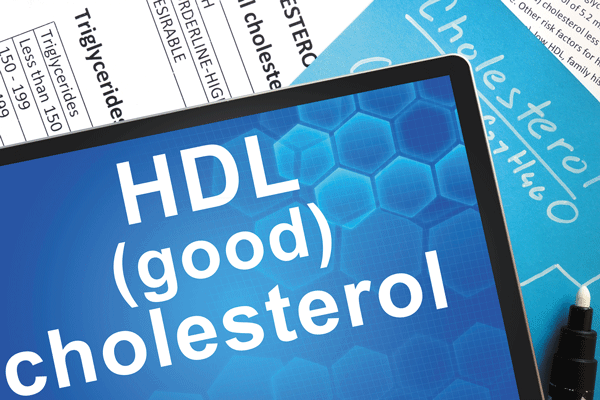
HDL cholesterol: How much is enough?
Research suggests that raising good cholesterol beyond a certain point doesn't offer any extra benefit for the heart.
Image: designer491/Thinkstock
When it comes to cholesterol, it's mostly about the numbers. You want less of the "bad" low-density lipoprotein (LDL) cholesterol and more of the "good" high-density lipoprotein (HDL) kind. This combination is often associated with a lower risk of cardiovascular disease. Sounds simple—and it is, for the most part. But while most attention is spent on driving down bad LDL, you still have to keep your eyes on the good HDL, as some research suggests that after a certain threshold, higher levels don't offer extra protection.
The role of cholesterol
Balancing act
One reason higher HDL may not always be effective is that it needs help to do its job. Another study found that HDL's protective role depends in part on the levels of both LDL and triglycerides (another type of blood fat that helps make up your total cholesterol).
The research, published online May 10, 2016, by Circulation: Cardiovascular Quality and Outcomes, analyzed data over 25 years on about 3,500 people. Researchers looked at people with both low and high HDL levels and those with normal and high levels of LDL and triglycerides.
They found that for optimal protection against cardiovascular disease, there needs to be a balance among all three. Higher HDL (40 mg/dL or higher) helped to reduce cardiovascular disease only when LDL and triglycerides were low (100 mg/dL or less). When LDL and triglycerides rose above 100 mg/dL or 150 mg/DL, respectively, higher HDL had no effect.
The ideal numbers
Men: talk with your doctor about resuming sex after a heart attack
A majority of men do not talk about resuming their sex life after a heart attack, which may lead to sexual problems like lack of interest and erectile difficulties. Researchers say that before being discharged from the hospital, men should expect to have a conversation with their physician about when it’s okay to resume all regular activities, including sex. If the topic does not come up, men should take the initiative.
Throughout life, heart attacks are twice as common in men than women
Throughout life, men seem to be twice as likely to have a heart attack as women. This risk appears to persist even after accounting for risk factors such as high cholesterol, high blood pressure, and diabetes.
Ask the doctor: Herbal supplements to treat erectile dysfunction?
Herbal supplements are sometimes advertised to improve a man’s sex life by increasing blood flow to the penis, but many are not proven effective for treating ED and may cause serious side effects.
Treatment versus monitoring of prostate cancer: Survival rates the same after 10 years
Charles Schmidt A pair of new studies provides useful information to men facing challenging decisions about what to do after being diagnosed with early prostate cancer. Researchers tracked men for 10 years and found that virtually none died of the illness, even if they decided against treating it. Early prostate tumors confined to the prostate […]

Six things you should know about breast cancer risk
There's no one big way to reduce your risk for breast cancer, but a combination of approaches could make a difference.
In recent years the statistical picture of breast cancer has brightened, thanks to early detection and advances in treatment. More tumors are being caught at an early stage; the rise in incidence of the disease has slowed; and the death rate has dropped. Nevertheless, breast cancer is still the most commonly diagnosed cancer in women and the second most likely (after lung cancer) to take their lives.
Data aside, breast cancer looms large in our health concerns because most of us know it personally. Some of us have had the disease ourselves, and others have experienced it through friends or relatives. Particularly unsettling is its seeming randomness: Nothing seems to explain why one woman develops breast cancer and another doesn't. Granted, family history and certain gene mutations can substantially increase risk. But such factors aren't involved in most breast cancers. Moreover, we can't do much about them, or about many of the other risks associated with the disease, including older age (the 10-year risk of developing breast cancer jumps from 1 in 48 at age 40 to 1 in 26 at age 60), early menarche (first menstrual period), having no children (or bearing the first at a later age), and late menopause.
Your mom was right: “Morning sickness” means a lower chance of miscarriage
A majority of women experience some sort of nausea (morning sickness) during pregnancy. Many have speculated that nausea is a good sign that indicates a healthy pregnancy. Until recently, there was little solid evidence to support this belief, but a recent study suggests there is some truth to this old wives’ tale.

Can hormonal birth control trigger depression?
Research from Denmark found an association between the use of hormonal birth control and an increased likelihood of depression. While the risk of depression among women using hormonal forms of birth control was clearly increased, the overall number of women affected was small and was found to be highest in women under 20.
CoQ10: Should you take this popular supplement if you're on a statin?
Microplastics: A hidden health threat?
Oat vs. dairy milk: Nutrition, benefits, and downsides
What is tempeh? Benefits, nutrition, and how to use it
Healing after food poisoning
Children of centenarians may stay healthier and live longer too, study finds
Light exposure at night may raise risk for heart disease
Whole grains may improve several heart risk factors at once
A lumbar belt may help ease low back pain
Signs of pneumonia: Sometimes vague and unexpected
Free Healthbeat Signup
Get the latest in health news delivered to your inbox!
Sign Up
