










Light exposure at night may raise risk for heart disease
News briefs
- Reviewed by Robert H. Shmerling, MD, Senior Faculty Editor, Harvard Health Publishing; Editorial Advisory Board Member, Harvard Health Publishing
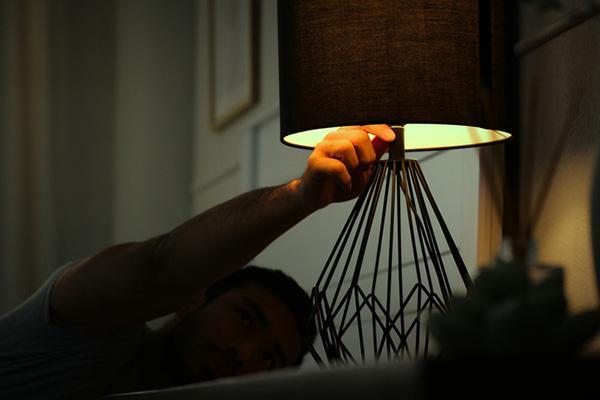
A key recommendation experts offer for improving sleep is to keep your room dark. Not only will you sleep better, but you may also be protecting your heart. A study published online Sept. 9, 2026, by the European Heart Journal found a link between light exposure at night and elevated risk of heart disease.
Researchers analyzed health data on more than 11,000 adults who did not have heart disease when the study began. They wore wrist devices for one week that measured movement and surrounding light. About three years later, they underwent cardiovascular MRI, a test that can detect changes in the structure and performance of the heart. Compared with people who had no nighttime light exposure, those with the highest exposure were more likely to have left ventricular hypertrophy, which is a thickening of the wall of the main pumping chamber in the heart. Their hearts were also less efficient at contracting and relaxing, and they had small changes in the size and function of other heart chambers.
The researchers also analyzed data on a group of about 70,000 adults who were followed for eight to 10 years. Compared with people who had no nighttime light exposure, those with the highest exposure had a 29% higher risk of heart failure, 15% higher risk of atrial fibrillation (a heart rhythm abnormality), 24% higher risk of heart attack, 33% higher risk of stroke, and 26% higher risk of death from heart disease.
Because this was an observational study, it doesn’t prove that nighttime light caused the higher risk. Still, the findings raise the possibility that sleeping in a dark room may provide a variety of cardiovascular benefits.
Here’s how to reduce light exposure: Cover windows with blackout shades, blinds, or curtains. Turn off all household lights at night (use a motion-sensor night light for bathroom trips). Disable display lights on electronic devices. Wear a sleep mask if needed.
Image: © DMP/Getty Images
About the Author
Lynne Christensen, Staff Writer
About the Reviewer

Robert H. Shmerling, MD, Senior Faculty Editor, Harvard Health Publishing; Editorial Advisory Board Member, Harvard Health Publishing
Disclaimer:
As a service to our readers, Harvard Health Publishing provides access to our library of archived content. Please note the date of last review or update on all articles.
No content on this site, regardless of date, should ever be used as a substitute for direct medical advice from your doctor or other qualified clinician.


