










Using a vibration plate: What it can — and can't — do for your body
From weight loss to bone health, vibration plates are marketed as a cure-all. But the science is more limited.
- Reviewed by Elizabeth Matzkin, MD, Contributor
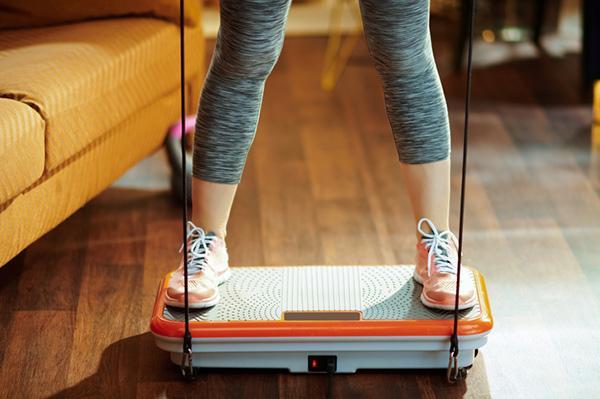
Watching someone step onto a vibration plate is mesmerizing: within seconds, their whole body begins to tremble, a subtle ripple running through muscles and skin.
Social media is rife with such images, which are unquestionably entertaining. But they also spur questions: What is a vibration machine, and why is it trendy? More importantly, what health benefits does whole-body vibration claim to offer — and does it deliver?
The answer is nuanced, but many of the purported advantages of using a vibration plate represent hype, not facts, says Dr. Elizabeth Matzkin, chief of Women’s Sports Medicine at Harvard-affiliated Brigham and Women’s Hospital.
What is a vibration plate, and how does it work?
A vibration plate is a platform you stand, sit, or exercise on that briskly shakes beneath you. The vibrations cause your muscles to contract and relax many times each second, essentially adding a small extra challenge to standing or moving.
Proponents say vibration plate benefits include improvements to bone and muscle strength, balance, weight loss, and circulation, among others. But Dr. Matzkin is skeptical. “Even though there’s some scientific evidence behind these vibration plates, I’m not sure the data supports their use as a wellness tool,” she says.
Can vibration plates strengthen muscles and bones?
Research on vibration plate benefits has yielded inconsistent findings. Some studies have suggested benefits, but the analyses used different vibration frequencies and intensities, making results difficult to generalize, Dr. Matzkin says.
As for claims that whole-body vibration can benefit muscles and bones, Dr. Matzkin highlighted these points:
Muscles. No scientific evidence suggests a vibration plate can make you stronger, but it could be useful for older adults or those unable to participate in conventional strength training. “For those already doing strength training, a vibration plate can add a little extra to your workout,” she says. “But it’s definitely not a substitute.”
Bones. Evidence is spotty to reinforce the notion that using a vibration plate can stimulate bone cells — which are constantly replacing themselves — to build back stronger. “Some studies have shown minimal improvements in bone density in the lower spine in postmenopausal women, but most data are not robust,” she says. “I’d rather see people lifting weights, walking, running, or jumping rope to maintain their bone health for the long term.”
Do vibration plates help with weight loss or lymphatic drainage?
Similarly, here are Dr. Matzkin’s impressions regarding two less intuitive claims for vibration plates’ potential effects.
Weight loss. Some vibration plate proponents suggest simply standing on one can burn significant calories. But no research backs this up. “I’ve seen claims that say 10 minutes on a vibration plate is like an hour at the gym,” she says. “Those claims are unfounded.”
Lymphatic drainage. Vibration plates are promoted as a way to reduce puffiness in the face and body. “I think vibration plates are seen as a way to 'detox’ your body — to get rid of the bad stuff,” Dr. Matzkin says. “But the social media claims are ahead of the science.”
Can vibration plates improve circulation or balance?
Lastly, Dr. Matzkin tackles claims of vibration plate benefits for circulation and balance.
Circulation. You might think all that shaking would get your blood moving, and that’s plausible. But the effect lasts only as long as the vibration plate is in motion. “It can improve blood flow just like walking can — but unlike walking, it has never been shown to have longer-term health benefits from a vascular or cardiovascular standpoint,” she says.
Balance. This may be the only benefit of whole-body vibration that’s backed by research. Since vibration plates stimulate sensory systems — along with muscles in the lower legs, ankles, and feet — that maintain balance, they appear to bolster balance in some older adults. “For someone older or weak who can’t walk far or go to the gym, maybe this is a good starting point,” she says.
Are vibration plates safe? Who should avoid them?Using a vibration plate is harmless for most people. But people with certain health problems should be cautious, says Dr. Elizabeth Matzkin, chief of Women’s Sports Medicine at Brigham and Women’s Hospital. If you have balance problems, using the device might cause a fall. And she advises being wary about vibration machines if you have stress incontinence, which causes you to release urine unintentionally when coughing, sneezing, exercising, or — in this case — vibrating. |
Image: © CentralITAlliance/Getty Images
About the Author

Maureen Salamon, Executive Editor, Harvard Women's Health Watch
About the Reviewer

Elizabeth Matzkin, MD, Contributor
Disclaimer:
As a service to our readers, Harvard Health Publishing provides access to our library of archived content. Please note the date of last review or update on all articles.
No content on this site, regardless of date, should ever be used as a substitute for direct medical advice from your doctor or other qualified clinician.


