










Microplastics: A hidden health threat?
These tiny particles have been found in blood, fatty plaque inside arteries, as well as the brain, lungs, and other organs. But our understanding of the health effects of microplastics is still in its infancy.
- Reviewed by David Christiani, MD, MPH, MS, Contributor
Microplastics found in blood and in the plaque inside the arteries of the neck have been associated in small studies with heart attack, stroke, and death. While these preliminary findings don’t prove that microplastics contribute to heart disease, they’re still a cause for concern, says Dr. David Christiani, the Elkan Blout professor of environmental genetics with the Harvard T.H. Chan School of Public Health.
“Microplastics are ubiquitous in the environment and are found in food, water, and air,” he says. Detected in tissues throughout the body, microplastics also have been associated with the development of obesity, diabetes, lymphoma, and infertility. But unraveling the connection between microplastics and human health is complicated (see “Microplastics research: Challenges and future directions”).
What are microplastics, and how do they enter the body?
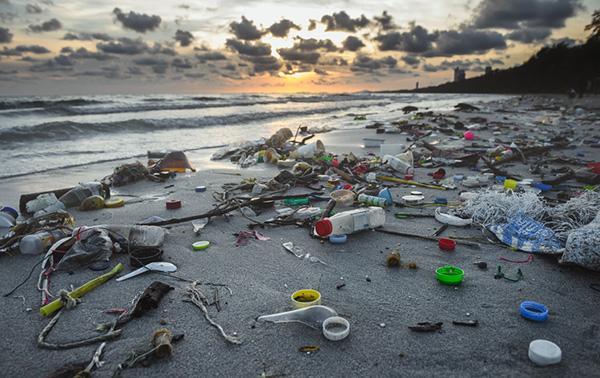
Microplastics are tiny plastic fragments that range in size from five millimeters (the size of a pencil-top eraser) down to one micrometer (a human hair is about 100 micrometers thick). Even tinier particles — less than one micrometer in size — are known as nanoplastics. Both form when plastic waste breaks down with exposure to wind, waves, sunlight, and heat. Water and soil polluted with microplastics then ends up in the produce, seafood, and meat we eat. We also ingest microplastic particles that seep into food and beverages packaged in single-use plastic containers.
“Single-use plastics account for about 40% of current plastic production,” says Dr. Christiani, who coauthored a 2025 article about microplastics and human health. These products, which include water bottles, food packaging, and takeout containers, contribute disproportionately to the accumulation of plastic waste, he adds. Worldwide, only about 9% of plastic is recycled. Most ends up in landfills, dumped elsewhere in the environment, or incinerated.
The air we breathe also contains invisible microplastics from incinerator smoke and other outdoor sources (such as industrial emissions, wildfires, and tire and brake wear), as well as indoor sources (such as synthetic clothing, upholstery, carpets, and cleaning products). The tiniest microplastic particles can enter the bloodstream via the lungs.
Where have microplastics been found in the human body?
Microplastics in the human body have been detected in multiples tissues, including the brain, heart, liver, stomach, ovaries, testes, lymph nodes, and placenta, as well as in plaque lining the carotid arteries (located on both sides of the neck). They’ve also been found in blood, urine, breast milk, semen, and meconium (a baby’s first stool). Along with concerns about the direct effects of microplastics is worry about their role as potential “toxin vectors.” Other harmful contaminants — including metals and microbes — can coat the particles and enter the body, says Dr. Christiani.
How can you reduce your exposure to microplastics?
In addition to minimizing reliance on single-use plastics, these small, practical steps can lower your personal microplastic exposure:
- Use glass or stainless-steel reusable bottles and containers whenever possible.
- Avoid microwaving food in plastic containers. Transfer leftovers to glass or ceramic instead.
- Replace plastic kitchen items like cutting boards and utensils with wood or metal versions.
- Wash synthetic clothing less frequently at cooler temperatures and hang dry.
- Look for clothing made from natural fibers (like cotton, linen, or wool) instead of fully synthetic materials.
Microplastics research: Challenges and future directionsUntil recently, researchers didn’t have tools sensitive enough to detect microplastics in human tissue, and they’re still refining techniques to accurately measure the myriad types of microplastics. “Plastics can contain more than 16,000 different chemicals, more than 4,200 of which have been classified as potentially hazardous,” says Dr. David Christiani, professor of medicine at Harvard Medical School. Among the 10 most worrisome classes, those that people may have heard of include per- and polyfluoroalkyl substances (PFAS), phthalates, bisphenols, and polycyclic aromatic hydrocarbons. Another challenge is the possibility of reverse causation. “When we find something unusual in people who have a disease versus those who don’t, it’s possible the disease itself may be responsible for the finding,” Dr. Christiani explains. In this case, illness may alter metabolism in a manner that affects how the body handles microplastics, causing abnormal accumulations. Timing is another issue. To pinpoint microplastics as the problem, the exposure must occur before the disease develops. One potential solution for both problems: evaluating samples from long-term epidemiological studies, such as the Nurses’ Health Study. Researchers could check microplastic levels in decades-old, stored blood and see if they correlate with higher rates of disease. “We still have a lot of work to do,” Dr. Christiani says. |
Image: © Nopadol Uengbunchoo/Getty Images
About the Author

Julie Corliss, Executive Editor, Harvard Heart Letter
About the Reviewer

David Christiani, MD, MPH, MS, Contributor
Disclaimer:
As a service to our readers, Harvard Health Publishing provides access to our library of archived content. Please note the date of last review or update on all articles.
No content on this site, regardless of date, should ever be used as a substitute for direct medical advice from your doctor or other qualified clinician.


