The surprising link between ovarian cancer and the fallopian tubes
New research is challenging long-held assumptions about one of the most difficult cancers to diagnose.
- Reviewed by Katharine Esselen, MD, Contributor
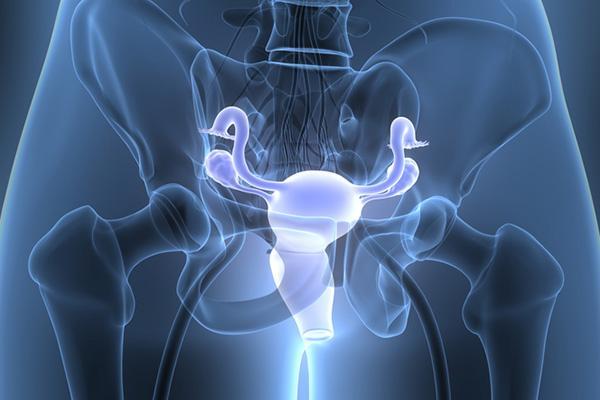
Medicine has long named cancers for where they originate. But that practice may be tipped on its head (in at least one instance) by mounting evidence that most cases of ovarian cancer actually start not in the ovary, but in the nearby fallopian tube.
This surprising shift in understanding began to take shape in recent years as scientists increasingly found precancerous lesions in the fallopian tubes — especially the finger-like projections known as fimbriae — when they examined tubes removed from women at high genetic risk of ovarian cancer. The disease is diagnosed in 21,000 women each year and kills more than 12,000, according to the American Cancer Society.
Since the fimbriae sit right next to the ovary, it’s an easy target for abnormal cells that can shed directly onto its surface. By the time a woman is diagnosed, the ovary may contain the obvious tumor even though it wasn’t where the malignancy began.
Scientists don’t yet know exactly what proportion of all ovarian cancers begin in the tubes, but it could be as high as 80%, says Dr. Katharine Esselen, a gynecologic oncologist at Harvard-affiliated Beth Israel Deaconess Medical Center.
The discovery is changing how doctors think about ovarian cancer’s origins — and how to improve ovarian cancer prevention.
Which ovarian cancers may start in the fallopian tubes?
Ovarian cancer isn’t a single disease; it’s a collection of different malignancies with various origins and cell types. Regardless of subtype, however, one of the longstanding challenges of combating ovarian cancer is the lack of a reliable screening method.
The disease is especially deadly because three-quarters of women who have it aren’t diagnosed until it has spread, by which point it’s extremely difficult to cure. Part of the problem is that early ovarian cancer symptoms can be subtle and vague, including bloating, urinary urgency, or feeling full quickly.
High-grade serous carcinoma is the deadliest subtype, and it accounts for about 70% of ovarian cancers. A study of nearly 86,000 women published Feb. 2, 2026, by JAMA Network Open suggested that fallopian tube removal during another pelvic surgery — while leaving the ovaries in place — may reduce an average-risk woman’s odds of developing this subtype by 78%.
“This adds to other studies that showed a 50% risk reduction when completely removing the tubes, which is substantial in a disease where we don’t have a good way of screening women,” Dr. Esselen says.
How does this discovery affect ovarian cancer prevention?
Women with BRCA1 or BRCA2 genetic mutations, who carry significantly higher risk of developing ovarian cancer, have long been advised to have both their ovaries and fallopian tubes removed after they’re done having children.
Now, major medical organizations are recommending that healthy women who are undergoing pelvic or abdominal surgery for other reasons — including hysterectomy, gallbladder removal, or appendectomy — be offered the removal of both fallopian tubes when they would otherwise be left in place.
These women wouldn’t be undergoing surgery solely to prevent ovarian cancer. The fallopian tube removal would be done during an operation done for other reasons, adding minimal time and risk.
“We already recommended it if a woman was undergoing sterilization or a hysterectomy, but now we’re broadening those guidelines,” Dr. Esselen says.
Fewer cases of ovarian cancer?
All women should be advised, however, that removing the fallopian tubes won’t eliminate the possibility of developing ovarian cancer, since a small number likely do arise in the ovary, Dr. Esselen notes.
The new prevention approach isn’t yet widespread, but Dr. Esselen predicts it will gain traction over the next handful of years.
“This has shifted our focus from reducing risk in very high-risk patients to a population-level risk-reduction strategy I think is going to become more and more widespread in coming years,” she says. “Perhaps we’ll see a dramatic shift in the incidence of these cancers in coming years, too.”
Why not remove the ovaries too?The fallopian tubes don’t produce hormones, so there appears to be no direct health implications of removing them to prevent ovarian cancer, says Dr. Katharine Esselen, a gynecologic oncologist at Beth Israel Deaconess Medical Center. By contrast, removing the ovaries in premenopausal women immediately puts them into menopause, with “ramifications for bone health, cardiovascular health, and, of course, menopause symptoms such as hot flashes and vaginal dryness,” she explains. “So we wouldn’t want to electively remove the ovaries in an otherwise average-risk woman before menopause without extensive counseling.” |
Image: © magicmine/Getty Images
About the Author

Maureen Salamon, Executive Editor, Harvard Women's Health Watch
About the Reviewer

Katharine Esselen, MD, Contributor
Disclaimer:
As a service to our readers, Harvard Health Publishing provides access to our library of archived content. Please note the date of last review or update on all articles.
No content on this site, regardless of date, should ever be used as a substitute for direct medical advice from your doctor or other qualified clinician.