










For sleep apnea, a dental device may be as effective as CPAP
News briefs
- Reviewed by Robert H. Shmerling, MD, Senior Faculty Editor, Harvard Health Publishing; Editorial Advisory Board Member, Harvard Health Publishing
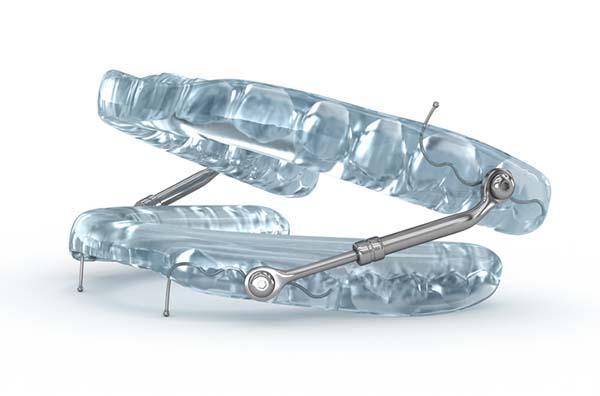
Continuous positive airway pressure (CPAP) is the best-known treatment for sleep apnea, a disorder that raises the risk of high blood pressure and other health problems. A new study suggests that using a mandibular advancement device (MAD) is just as effective as CPAP for reducing blood pressure in people with sleep apnea at risk for cardiovascular disease.
Published in the October 2026 issue of The American Journal of Medicine, the study reported findings from 180 people (85% men) with moderate or severe sleep apnea and high blood pressure who were randomly assigned to use either CPAP or a MAD for 12 months.
A CPAP machine delivers a stream of pressurized air through a mask to keep your airway open during sleep, but many people find them uncomfortable. Made of custom-molded hard plastic, a MAD fits over your lower and upper teeth, with metal hinges and screws that tighten to reposition your jaw or tongue to open your airway.
People in the MAD group used the device a median of 5.5 hours per night versus a median of 4.9 hours for the CPAP group. Average blood pressure reductions in both groups were similar and modest: 1 point for the CPAP group and 2.3 points for the MAD group. Both groups reported a drop in excessive daytime sleepiness, another common problem caused by sleep apnea. In addition, unplanned hospitalizations declined in both groups after the first six months. The main side effects of MAD were jaw pain and tooth discomfort; for CPAP, they included dryness and pain in the nose and mouth.
CPAP should still be considered as the preferred therapy for people with moderate to severe sleep apnea, including those with hypertension and additional cardiovascular risk factors. However, many people can’t tolerate CPAP or just don’t use it as directed. The results of this small study suggest that MAD may provide similar blood pressure control and less daytimes sleepiness as CPAP.
Image: © alex-mit/Getty Images
About the Author

Julie Corliss, Executive Editor, Harvard Heart Letter
About the Reviewer

Robert H. Shmerling, MD, Senior Faculty Editor, Harvard Health Publishing; Editorial Advisory Board Member, Harvard Health Publishing
Disclaimer:
As a service to our readers, Harvard Health Publishing provides access to our library of archived content. Please note the date of last review or update on all articles.
No content on this site, regardless of date, should ever be used as a substitute for direct medical advice from your doctor or other qualified clinician.


