










Rosacea treatments: What works?
A range of therapies can address the facial redness, pimples, and other symptoms of this chronic skin condition.
- Reviewed by John Barbieri, MD, MBA, Contributor
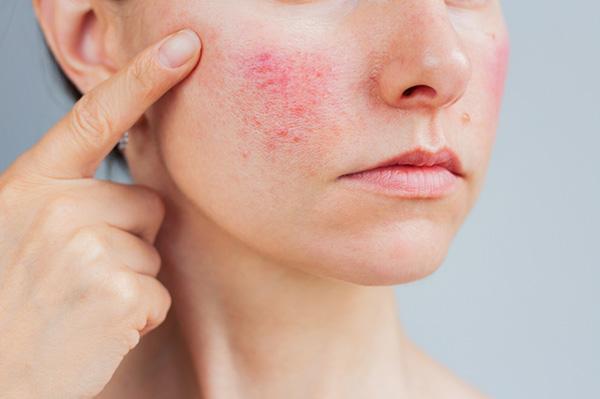
There’s no cure for rosacea, a skin condition marked by flushing, redness, and pimple-like bumps, mainly on the cheeks and nose. While many prescription creams and gels can help manage rosacea symptoms, a new scientific review suggests that two products—ivermectin 1% cream (Soolantra) and encapsulated benzoyl peroxide cream (Epsolay) — are the most effective topical options for bumps (see “A review of rosacea treatments”).
“The findings aligned with what we often see when treating people with rosacea,” says lead author Dr. John Barbieri, a dermatologist who specializes in inflammatory skin diseases at Harvard-affiliated Brigham and Women’s Hospital. But rosacea can cause a range of symptoms that can appear at different times, either alone or in combination. As a result, the optimal treatment for each individual might include one or more medications, including those you spread on the affected area (topical), take as a pill (oral), or that are light-based (such as laser therapy).
A review of rosacea treatmentsA scientific review published Aug. 1, 2026, in JAMA Dermatology looked at 32 trials of topical treatments for rosacea involving a total of 11,399 adults with moderate to severe rosacea. The trials (most of which lasted eight to 16 weeks) compared 10 rosacea medications to either a placebo or another drug. When researchers assessed how well the different treatments reduced redness and the number of pimple-like bumps, two medications stood out: ivermectin 1% cream (Soolantra) and encapsulated benzoyl peroxide cream (Epsolay). |
What is rosacea?
Rosacea usually begins between the ages of 30 and 60. While the exact cause is unknown, experts believe genetic factors play a role, along with a weak skin barrier (which lets irritants in and moisture out), inflammation, and certain microorganisms like bacteria and Demodex mites (which are naturally present on everyone’s skin). “People with rosacea may also have extra-sensitive blood vessels and nerves, or what’s called neurovascular reactivity,” says Dr. Barbieri. That likely explains the recurrent flushing and redness, which can affect the cheeks, nose, chin, or forehead.
Over time, the redness may become more pronounced and persistent, and people may develop small, pimple-like bumps, known as papules or pustules. “Some people have tiny, broken blood vessels called telangiectasia. And some develop rhinophyma, which is a thickening of the skin on the nose,” says Dr. Barbieri. Rosacea can also cause irritation of the eyelids and eyes, which may appear bloodshot.
Rosacea is more common in women, who are more likely to have flushing and redness. Men are more likely to develop rhinophyma, but both sexes can experience all of the symptoms.
What causes rosacea flares?
Rosacea symptoms often flare up in response to certain environmental or lifestyle factors. Common examples include sun exposure, emotional stress, hot or cold weather, hot drinks, alcohol, and spicy foods. All can increase blood flow and cause the small blood vessels in the face to widen. “If you have rosacea, it can help to be aware of your triggers and try to avoid them when possible, but don’t make yourself miserable by being too restrictive,” Dr. Barbieri advises.
The best rosacea treatment for you
The best treatment for anyone with rosacea should be tailored to address the most bothersome symptoms. Ivermectin cream works by killing Demodex mites and helps calm inflammation. Benzoyl peroxide, which has antibacterial and anti-inflammatory properties, is also used to treat acne, but it can irritate the skin. The encapsulated version is formulated to help minimize irritation. Even so, the recent review found that compared to people using other products, those using encapsulated benzoyl peroxide were more likely to stop due to side effects such as pain, itching, and swelling. Other topical treatments for pimple-like bumps include metronidazole (MetroCream, MetroGel) and azelaic acid (Azelex, Finacea). They help eradicate the bacteria thought to contribute to rosacea, says Dr. Barbieri.
If papules and pustules don’t improve with topical medications, dermatologists may prescribe oral antibiotics such as doxycycline (Oracea) or minocycline (Emrosi). These are usually taken for several months and sometimes longer. These pills may also help people with ocular rosacea, which causes eye-related symptoms such as redness and dryness, and affects about 10% of people with rosacea.
For people whose main symptoms are flushing and redness, medications that constrict the tiny blood vessels on the face can help. These include the topical drugs brimonidine (Mirvaso) and oxymetazoline (Rhofade). Procedures such as vascular laser therapy can also be helpful, especially for telangiectasia.
Image: © Olga Shefer/Getty Images
About the Author
Julie Corliss, Executive Editor, Harvard Heart Letter
About the Reviewer
John Barbieri, MD, MBA, Contributor
Disclaimer:
As a service to our readers, Harvard Health Publishing provides access to our library of archived content. Please note the date of last review or update on all articles.
No content on this site, regardless of date, should ever be used as a substitute for direct medical advice from your doctor or other qualified clinician.


