

Signs of pneumonia: Sometimes vague and unexpected

The surprising link between ovarian cancer and the fallopian tubes

Using a vibration plate: What it can — and can't — do for your body

People who walk more or walk faster live longer, study finds

Rosacea treatments: What works?

For sleep apnea, a dental device may be as effective as CPAP

Carb cycling: What is it, and does it work?

Understanding orthorexia: Have your healthy eating goals gone too far?

Melatonin or magnesium: Can either supplement help you sleep?

Salmonella, E. coli, Cyclospora, and other germs that cause food poisoning: What you need to know
Skin and hair
- Reviewed by Rebecca Gaffney, MD, Editorial Advisory Board Member, Harvard Health Publishing
The skin and hair health market continues to expand as people seek treatments for concerns such as aging skin, acne, and hair thinning. The American Academy of Dermatology estimates that skin disease affects 84.5 million Americans, while hereditary hair loss affects approximately 80 million — 50 million men and 30 million women.
Genetics play an important role in how our skin and hair change over time. However, environmental and lifestyle factors, including sun exposure, nutrition, stress, and hormonal changes, can also affect skin appearance, hair growth, and scalp health. Sun exposure is also a major risk factor for skin cancer.
When it comes to skin and hair health, it’s important to choose products and treatments with care. Look for ingredients and claims supported by reliable evidence, follow product instructions, and be skeptical of claims that promise dramatic results. For invasive skin or hair procedures, research the potential benefits and risks and check the reputation, qualifications, and accreditation of professionals or clinicians performing them.
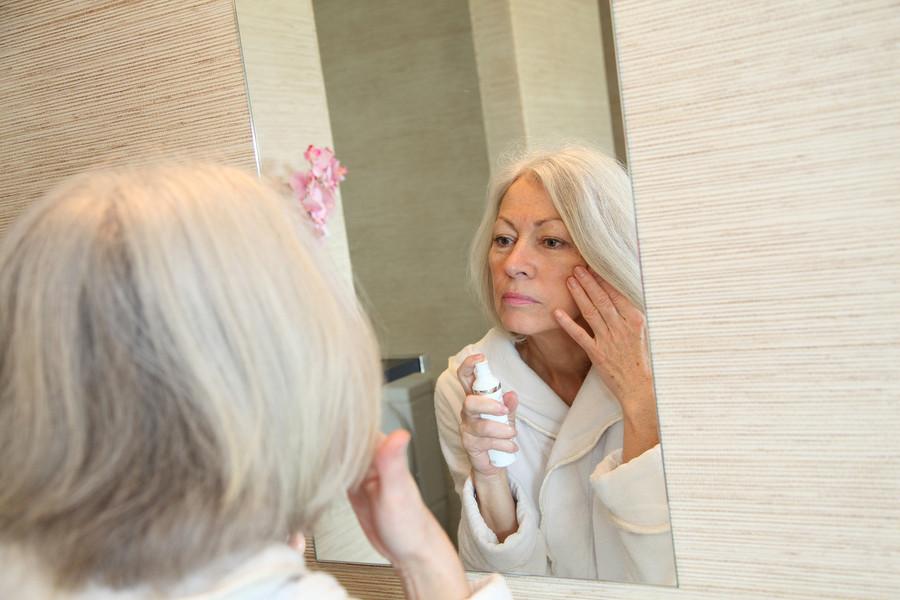
How do I get healthy skin?
Healthy skin is about more than appearance, as it plays an essential role in keeping you well. Your skin serves as a protective barrier against environmental exposures, pathogens, and moisture loss. It also plays an important role in immune defense. A healthy skin barrier also helps retain moisture and protect against irritation. But skin it is not merely a passive wall. In the outermost layer of skin, cells actively ward off infections, forming the front-line defenses of the immune system.
The importance of skin care
Your skin undergoes “wear and tear” in response to the elements, making caring for aging skin an important part of your daily routine. Chronic sun exposure contributes to premature skin aging, including wrinkles, uneven pigmentation, and changes in skin texture, and also increases the risk of skin cancer. Over the years, everyday stresses and exposures also can alter your skin’s tone, texture, and contour.
This is why proper skin care is so crucial. A daily skin care routine is the foundation for keeping skin protected and healthy. It includes properly cleaning the skin and using skin care products like sunscreen and moisturizers. For sun protection, daily use of a broad-spectrum sunscreen with SPF 30 or higher, along with protective clothing and shade, can help prevent sun damage.
What foods and vitamins are good for your skin?
A balanced diet rich in fruits, vegetables, whole grains, healthy fats, and adequate protein provides nutrients important for maintaining healthy skin. Most people can obtain the vitamins and minerals they need through their diet without additional supplementation. For example:
Vitamin A. Vitamin A plays an important role in normal skin cell growth, differentiation, and immune function. Dietary sources include liver, dairy products, and fortified foods, while beta carotene, which the body can convert into vitamin A, is found in foods such as carrots and sweet potatoes. Vitamin A is a fat-soluble vitamin, which means the body stores what it doesn't use.
B vitamins. B vitamins support many normal cellular functions, including those important for maintaining healthy skin. Deficiencies in certain B vitamins can cause skin changes, but supplementation has not been shown to improve skin appearance in people who already have adequate levels. Most people can obtain sufficient B vitamins through a balanced diet. They are water-soluble, meaning the body excretes excess amounts. Many foods contain B vitamins, such as fortified breakfast cereals and milk, meat (beef, pork chops, chicken, turkey, tuna, trout), rice, black beans, almonds, and peanuts.
Vitamin D. Vitamin D plays a role in normal skin and immune function. The body produces vitamin D in response to sunlight, which is why it is sometimes called the "sunshine vitamin." However, the amount produced varies considerably depending on factors such as geographic location, season, skin pigmentation, and age. Because ultraviolet exposure also contributes to skin aging and skin cancer risk, prolonged or intentional unprotected sun exposure is not recommended as a way to obtain vitamin D. Dietary sources and supplements, when needed, can help maintain adequate vitamin D levels.
Vitamin C. Vitamin C is important for collagen production and also functions as an antioxidant. Foods rich in vitamin C include citrus fruits (oranges and grapefruit), cantaloupe, strawberries, and vegetables like spinach and green and red peppers.
What are common skin conditions?
Even if you eat right and protect yourself from sun damage, skin problems like rashes and acne can still arise.
Skin rashes
Rashes can cause changes in skin color or texture and may be accompanied by itching, burning, or discomfort. They should be checked by your doctor, as they could be caused by diseases and conditions like shingles and eczema. Yet the rash that affects most people is contact dermatitis, which occurs after the skin comes in contact with an offending substance. It can be caused by an allergic reaction like poison ivy and oak, or by simple irritation from household items such as detergents, harsh soaps, and nail polish. Certain medications such as topical antibiotics and anesthetics can suddenly trigger this type of rash. If you take medication and develop a rash, you should report this to your doctor promptly.
Treatment focuses on avoiding the triggering substance and using gentle skin care products and moisturizers to support the skin barrier. Over-the-counter hydrocortisone cream may help mild cases, while more significant inflammation may require prescription topical corticosteroids. If the rash persists or the cause is unclear, a dermatologist may recommend patch testing to identify potential allergens.
Acne
Although most common during the teenage years, acne may appear for the first time or worsen in midlife. Acne results from inflammation around the hair follicles and oil-producing skin sebaceous glands. It appears as whiteheads, blackheads, and swollen red bumps, often filled with pus. Several treatments are available to clear up acne, including some that you apply to your skin and others you take in pill form. First-line topical treatments typically fall into these categories:
- Topical retinoids. Medications such as adapalene help prevent clogged pores and treat both blackheads and inflammatory acne. Adapalene is available over the counter, while other topical retinoids require a prescription.
- Benzoyl peroxide. Available in washes, creams, and gels, benzoyl peroxide reduces acne-associated bacteria and inflammation.
- Salicylic acid. Commonly found in over-the-counter acne products, salicylic acid helps unclog pores and may be useful for mild acne, particularly blackheads and whiteheads.
How do I get healthy hair?
Adopting proper hair care can help your thousands of individual hairs stay strong and healthy. Good scalp health is also an important part of maintaining strong, healthy hair. It involves providing your hair with certain nutrients, practicing basic hygiene, and following certain guidelines for using shampoo and other hair care products.
A balanced diet that includes adequate protein, iron, and essential vitamins and minerals supports normal hair growth. Nutritional deficiencies can contribute to hair shedding, but supplements generally do not improve hair growth in people without a deficiency. Although biotin and other B vitamins are commonly marketed for hair growth, evidence supporting supplementation in people without a deficiency is limited. High-dose biotin can also affect the accuracy of some laboratory tests.
Keeping your hair clean is also essential for proper hair care. How often you should wash your hair depends on your scalp's oil production, hair type, and styling practices. Some people benefit from daily washing, while others may wash less frequently. The goal is to keep the scalp clean without causing excessive dryness or irritation. The right “schedule” can depend on your hair type and texture.
What are common hair problems and diseases?
Hair and scalp problems can affect people of all ages and may range from mild, temporary concerns to conditions requiring medical treatment. Two of the most common problems are dry or itchy scalp and thinning hair or hair loss.
Dry or itchy scalp
A dry, itchy scalp may result from dry skin, product irritation, dandruff, seborrheic dermatitis, scalp psoriasis, or eczema. Dandruff commonly causes white or gray flakes and itching, while seborrheic dermatitis may cause greasy or flaky scales, redness, and itching on the scalp, eyebrows, ears, or around the nose. Medicated dandruff shampoos may help manage mild cases, and many over-the-counter options are available. Talk with your doctor or dermatologist for recommendations and to determine whether a prescription shampoo, antifungal medication, or anti-inflammatory treatment may be appropriate.
Thinning hair and/or hair loss
It’s normal to lose up to 100 hairs per day. Still, you may notice unusual amounts of hair falling out. You may notice more hair in your brushes, covering clothing, and clogging bathroom drains. Look in the mirror: you may see your hair has become thinner, your part wider, and your hairline higher. Even small bald patches may have suddenly appeared.
When this happens, it’s often the sign of an inherited condition known as androgenic alopecia, also known as male-pattern and female-pattern baldness. It is the most common cause of premature hair loss and thinning hair. Androgenetic alopecia, also called male- or female-pattern hair loss, is influenced by genetics, age, and the sensitivity of hair follicles to androgens. Most people with this condition have normal circulating hormone levels.
In male-pattern baldness, the hairline along the forehead usually recedes first, followed by thinning at the top of the head and even over much of the scalp. Gradually, the crown area becomes bald, leaving a fringe of hair around the back and sides of the head. In women, pattern hair loss commonly causes gradual thinning over the central scalp and widening of the hair part, although patterns can vary.
Hair loss also can occur from medical conditions. One of the more common is the immune disorder alopecia areata. Here, the body's immune system attacks hair follicles, resulting in hair loss. The exact trigger for this immune response is unknown, although environmental factors, genetics, and stress may all play a role. Alopecia areata usually begins as a sudden appearance of small, round patches of hair loss without redness or scarring. Rarely, this can progress to a complete absence of body and scalp hair, including eyebrows and eyelashes.
Another common cause of hair shedding is telogen effluvium, which can occur several months after an illness, surgery, significant stress, childbirth, or other physiologic changes. It typically causes diffuse shedding rather than distinct bald patches, and often improves once the underlying trigger resolves.
How do I increase hair growth?
Early evaluation may help prevent further hair loss when thinning or shedding becomes noticeable or if it affect your self-confidence. Talk to your doctor or a dermatologist to identify the underlying cause and discuss appropriate treatment options.
Many forms of hair loss can be treated or managed, particularly when the underlying cause is identified early. Treatment options depend on the type and severity of hair loss. Depending on the cause, treatment may include medications, surgical procedures, and laser and platelet-rich plasma treatments which may help support hair growth.
Medications. Commonly used medications include:
- Minoxidil (Rogaine). Topical minoxidil is an FDA-approved treatment for male- and female-pattern hair loss. It is available over the counter in 2% and 5% formulations, with application frequency depending on the product. Low-dose oral minoxidil is also increasingly used off-label for certain types of hair loss, although it requires medical supervision because of potential side effects.
- Finasteride (Propecia). This prescription medication reduces the conversion of testosterone to dihydrotestosterone (DHT), a hormone involved in pattern hair loss. It is FDA-approved for male-pattern hair loss and is sometimes prescribed off-label for selected women. Finasteride must be avoided during pregnancy because of the risk of fetal harm.
- Spironolactone (Aldactone, generic).This prescription medication blocks the effects of androgens on hair follicles and is sometimes prescribed off-label for female-pattern hair loss, even when circulating hormone levels are normal.
Surgical treatments. Hair transplantation involves moving healthy hair follicles from areas of the scalp with preserved hair growth to areas affected by hair loss. It may be an option for selected patients with stable pattern hair loss and adequate donor hair.
Laser therapy. Low-level light therapy devices, including caps, combs, and helmets, may provide modest improvements in hair growth for some patients with pattern hair loss. However, results vary, and the evidence supporting these treatments is less robust than for established medications.
Platelet-rich plasma (PRP). This treatment involves drawing a patient's blood, concentrating the platelets, and injecting the platelet-rich plasma into the scalp. Some studies suggest that PRP may improve hair density in patients with pattern hair loss, but treatment protocols vary and additional research is needed to establish its long-term effectiveness.
Signs of pneumonia: Sometimes vague and unexpected
The surprising link between ovarian cancer and the fallopian tubes
Using a vibration plate: What it can — and can't — do for your body
People who walk more or walk faster live longer, study finds
Rosacea treatments: What works?
For sleep apnea, a dental device may be as effective as CPAP
Carb cycling: What is it, and does it work?
Understanding orthorexia: Have your healthy eating goals gone too far?
Melatonin or magnesium: Can either supplement help you sleep?
Salmonella, E. coli, Cyclospora, and other germs that cause food poisoning: What you need to know
Free Healthbeat Signup
Get the latest in health news delivered to your inbox!
Sign Up
