Salmonella, E. coli, Cyclospora, and other germs that cause food poisoning: What you need to know
Here's how to lower the odds of infection and speed recovery if you do become ill.
- Reviewed by Elizabeth Hohmann, MD, Contributor
|
Summary Bacteria, parasites, and viruses can all cause food poisoning. Proper handling, cooking, and storage of food help reduce the chances of an infection. If you get food poisoning, it usually can be treated at home by replenishing lost fluids and electrolytes. |
Each year, food poisoning affects an estimated 48 million Americans, or one in six, according to the CDC. In one recent example, an outbreak of cyclosporiasis (caused by the parasite Cyclospora) earlier this year killed two people and sickened more than 19,000 across the United States.
And while food safety measures can help prevent foodborne illness, it’s easy to make mistakes. For instance, “Someone will cut a raw chicken on a cutting board and just rinse it off, not scrub it,” says Dr. Elizabeth Hohmann, an infectious disease specialist at Harvard-affiliated Massachusetts General Hospital. That kind of slip can be risky, since harmful microorganisms like Salmonella can hide in the board’s nooks and crannies and lead to cross-contamination — a transfer of germs from one food to another — when the board is next used.
Understanding how food becomes contaminated, how to reduce your risk, and what to do if you become ill can help you prevent food poisoning and recover safely if you are impacted.
What is food poisoning?
Food poisoning is an illness caused by infection-causing germs or unsafe substances in food. Food can become contaminated at any stage between farm and table, from growing and processing to storage, preparation, cooking, and serving.
People who eat tainted food commonly experience symptoms such as an upset stomach, diarrhea, and even vomiting within hours or days afterwards. Most people who get food poisoning have a mild bout and are able to recover without medical care. Sometimes, however, food poisoning can lead to more serious illness or complications.
Although you can get food poisoning year-round, it is more likely to occur during warm weather. “Summertime is the window in which we see more GI [gastrointestinal] infections,” Dr. Hohmann says. “People are going to picnics and putting food out on the picnic table, where it sits for an hour or more.” Microorganisms that cause food poisoning grow faster in hot, humid environments and can make food that has been sitting out too long in the heat unsafe. But even at room temperature, some harmful bacteria tainting food can double every 20 minutes. Also, when people eat outdoors more often, food may not be properly refrigerated or cooked, and it may not be as easy to wash your hands.
Common causes of food poisoning
The following pathogens commonly cause food poisoning in the United States.
Campylobacter. Types of this bacterium may be found in unpasteurized milk and in raw or undercooked meat, poultry, or shellfish. The incubation period (the amount of time that elapses between consuming a tainted food and first experiencing symptoms) is two to five days.
Cyclospora. This parasite can contaminate raw produce, including berries, lettuce, and fresh herbs (such as cilantro and parsley). The incubation period is seven to 10 days or longer, which makes it “harder for investigators to figure out what links the cases,” says Bill Hanage, professor of epidemiology at the Harvard T.H. Chan School of Public Health. “Can you remember everything you ate a week ago?”
E. coli. Certain strains of this bacterium can cause food poisoning by infecting the intestinal tract directly or by producing a toxin. These strains can be picked up from undercooked beef (especially ground beef); unpasteurized milk and juices; and raw flour, fruits, and vegetables. The incubation period varies: if toxin is produced, the range is typically three to four days but may extend up to nine days. If there is no toxin produced, symptoms may begin within 12 to 36 hours.
Listeria. These bacteria can contaminate soft cheeses; raw milk and unpasteurized milk products; meats, including cold cuts and raw hot dogs; and ready-to-eat salads. Intestinal illness usually begins within a few hours to two or three days. Illness can spread beyond the intestines and can be life-threatening. Pregnant women, newborns, older adults, and people with weakened immune systems are the most vulnerable.
Norovirus. A group of related viruses can cause norovirus infection, the leading cause of foodborne illness in the United States. High-risk foods include raw or undercooked shellfish, leafy greens, fruit, ready-to-eat (or take-out) sandwiches, salads, and bakery items. The incubation period is 12 to 48 hours. Norovirus can also be transmitted via inanimate objects; for example, a contaminated toy or door handle.
Salmonella. This bacterium can taint raw and undercooked poultry, eggs, meat, and seafood; unpasteurized juice; raw (unpasteurized) milk and dairy products made from raw milk; pasteurized cheese; raw fruits and vegetables; nuts and nut products; and spices. The incubation period is typically six to 72 hours.
Shigella. These bacteria can taint raw fruits and vegetables; ready-to-eat salads or sandwiches; deli meats; raw or undercooked shellfish, poultry, and eggs; and unpasteurized milk and dairy products. The incubation period is one to two days.
Food poisoning symptoms
Symptoms of food poisoning can vary depending on the germ that’s responsible, but common symptoms include stomach cramps or pain, diarrhea (sometimes bloody), nausea, vomiting, and fever.
Cyclosporiasis, the illness caused by the Cyclospora parasite, is known for causing watery diarrhea with frequent, sometimes explosive bowel movements.
Less common food poisoning symptoms include headache, blurred or double vision, and weakness. Some foodborne germs can also cause serious systemic disease and lead to bacteria in the bloodstream, meningitis (inflammation around the brain and spinal column), blood clots in the kidneys, or sepsis (an immune system overreaction that harms the body’s own tissues). Older people and those with a weakened immune system or other medical conditions are most vulnerable to systemic infection.
How is food poisoning treated?
Most foodborne illness can be safely treated at home. Food poisoning treatment focuses on drinking plenty of liquids (see “What are home remedies for food poisoning?”). It’s important to replace lost fluids and electrolytes. You can do this with oral rehydration drinks like Pedialyte or Liquid I.V. Take small sips to help avoid feeling nauseous. An over-the-counter medicine such as bismuth subsalicylate (Pepto-Bismol) may help relieve symptoms.
When your appetite returns, you usually can return to eating your normal diet.
How long does food poisoning last?
With most types of food poisoning, the symptoms tend to last only 12 to 48 hours. But some may linger: Illness caused by Salmonella or E. coli may last for up to seven or nine days, respectively, and undiagnosed cyclosporiasis may drag on for a month or more, sometimes with cycles of improvement and relapse.
When should you seek medical care for food poisoning?
Staying hydrated can be difficult when you’re dealing with a bout of foodborne illness. “Sometimes people have nausea and vomiting such that they can’t take in any fluids or they vomit them up,” Dr. Hohmann says. “They can’t maintain hydration status, and that’s probably the biggest reason for seeking medical care.” Signs of dehydration include not urinating much, having a dry mouth and throat, or feeling weak, dizzy, or lightheaded when standing. “Those are red flags for seeking medical care,” she adds.
Additional reasons for consulting a doctor include
- bloody diarrhea or diarrhea that lasts more than three days
- high fever (temperature over 102° F)
- vomiting so often that you can’t keep liquids down.
Dr. Hohmann notes that people who have an underlying condition such as heart or kidney disease are more vulnerable to shifts in body fluids and electrolyte abnormalities, and to resulting complications. They should seek medical care right away when they develop food poisoning. Also, people with weakened immunity from chemotherapy, organ transplant, or medications that tamp down the immune system should have a lower threshold for seeking care for symptoms of food poisoning, because they are at higher risk of complications and invasive disease.
How to prevent food poisoning
Use these recommendations from Dr. Hohmann, the CDC, the FDA, and the USDA’s Food Safety and Inspection Service to reduce your risk of food poisoning.
Wash your hands. Contaminated objects, surfaces, and food you touch can all carry harmful germs. To avoid getting sick, wash your hands with soap and warm water before eating, before and after handling food, and after using the bathroom, changing diapers, or handling pets.
Check the temperature in your refrigerator and freezer. To prevent food spoilage, your fridge should be kept at 40° F or below and your freezer at 0° F. Use inexpensive appliance thermometers to monitor the temperature and adjust it as necessary.
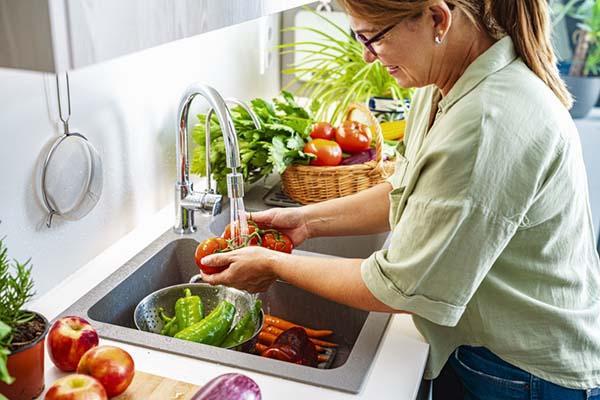
Wash fruits and vegetables. Thoroughly rinse vegetables and fruits under running water prior to peeling, cooking, or eating them. “I always use a salad spinner on my greens, even though they’re usually from a local source and pre-washed,” Dr. Hohmann says. “It doesn’t hurt to do that extra little wash. And peeling things that can be peeled is a standard recommendation. These steps may be especially important if you have a compromised immune system.”
Avoid bagged or boxed lettuces and other “pooled” foods. “Any kind of food poisoning is more likely in food that contains items from many different sources — like bagged lettuce,” Dr. Hohmann says. Similarly, the infectious risk from ground meat (which can combine meat from different sources) is much greater than from a single cut of meat. That's why it's important to make sure ground meat is cooked to a safe internal temperature.
Keep cutting boards and utensils clean. Use hot, soapy water to clean cutting boards and utensils after they have had contact with raw meat, poultry, or seafood or unwashed fruits or vegetables. To avoid cross-contamination, consider using separate cutting boards for fruits and vegetables versus meat, poultry, seafood, and eggs.
Thaw foods safely. Thawing perishable frozen foods at room temperature is unsafe, as bacteria can multiply quickly. Foods should be thawed in the refrigerator overnight, under cold running water, or by microwaving them.
Cook and store foods properly. When cooking, use a meat thermometer to check that the following foods have reached a safe internal temperature. They should be at least
- 145° F for fish and meat (beef, pork, veal, lamb)
- 160° F for ground meat and egg dishes
- 165° F for whole or ground poultry.
- In the refrigerator, store raw meat, seafood, poultry, and eggs separately from other foods, like fruits and vegetables. Refrigerate leftovers in covered containers within two hours (one hour if it’s hotter than 90° F outdoors), or freeze them if you don’t plan to eat them within three or four days.
Avoid certain risky foods if you’re in a higher risk category. Pregnant women, children, older adults, and people with cancer or autoimmune diseases should avoid eating raw, rare, or undercooked meats or poultry; raw fish (such as sushi) and raw or undercooked shellfish; raw milk and other unpasteurized dairy products; raw or undercooked eggs; raw sprouts; and unpasteurized fruit and vegetable juices.
Keep an eye out for food recalls and outbreaks. The FDA and CDC provide information on tainted food. In 2026, food recalls have included eggs, iceberg lettuce, frozen blueberries, and jalapeño peppers, all tainted with illness-triggering microbes. You can check the CDC for current outbreak information, find out what to do with a recalled food product, or sign up for food recalls and safety alerts of FDA-regulated products.
Frequently asked questions
Is food poisoning contagious?
Some types of food poisoning caused by bacteria or viruses can be passed from person to person via vomit or stool that lingers on surfaces or on hands. For example, you can acquire norovirus, Shigella, or hepatitis A, from having close physical contact with an infected person. With Cyclospora, by contrast, “the parasite is not immediately infectious, so person-to-person spread is not a problem,” Hanage says.
If you are dealing with a bout of food poisoning, you can help avoid spreading it by
- staying home from work or school until your symptoms go away
- washing your hands with warm, soapy water after using the toilet
- waiting to prepare food and drinks until your symptoms are gone and you feel better
- disinfecting surfaces in your home that are frequently touched, such as light switches, doorknobs, countertops, remote controls, and toilets (including seats and handles).
What are home remedies for food poisoning?
The main focus of recovery from food poisoning illness is replacing fluid loss caused by diarrhea and vomiting. Water, broth, watered-down clear juices (apple, cranberry), and oral rehydration drinks — which contain minerals such as sodium, potassium, and calcium that can help balance your body’s fluids — are all recommended.
Image: © fcafotodigital/Getty Images
About the Author

Jennifer Cook, Health Writer
About the Reviewer

Elizabeth Hohmann, MD, Contributor
Disclaimer:
As a service to our readers, Harvard Health Publishing provides access to our library of archived content. Please note the date of last review or update on all articles.
No content on this site, regardless of date, should ever be used as a substitute for direct medical advice from your doctor or other qualified clinician.