










Understanding orthorexia: Have your healthy eating goals gone too far?
Know the warning signs of this under-the-radar disordered eating pattern.
- Reviewed by Viviane Fornasaro-Donahue, PhD, RDN, LDN, Contributor
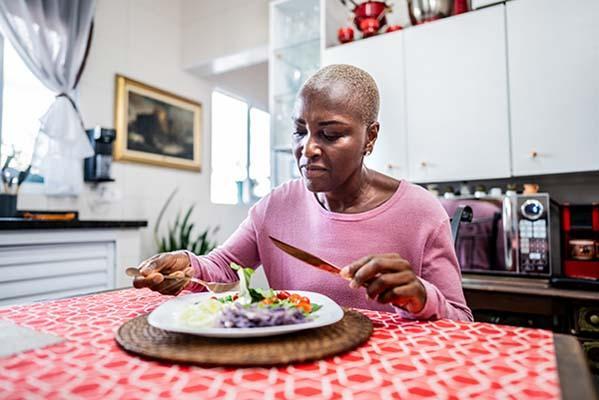
We live in a wellness-obsessed culture that treats eating healthfully as a virtue — and for good reason. Research continues to uncover ways a nutritious diet can boost health, and leading authorities (including the Harvard Medical School–affiliated experts we feature here) encourage making thoughtful choices about what to eat.
But what happens when the pursuit of an ideal diet stops feeling like self-care and starts running your life? For some people, the drive to eat only “pure” or “clean” foods can spiral into rigid rules, anxiety, and sometimes social isolation. This pattern has a name: orthorexia nervosa (commonly called orthorexia) — an emerging eating disorder that goes far beyond typical health-consciousness.
What is orthorexia?
The term orthorexia comes from the Greek ortho (andamp;ldquo;right” or “correct”) and rexia (andamp;ldquo;appetite”), coined in the 1990s to describe an unhealthy fixation on eating “correctly.” Orthorexia involves an excessive preoccupation with food quality and purity that becomes so consuming it interferes with everyday life — work, relationships, and social activities.
Orthorexia is distinct from other well-known disordered eating patterns, says Viviane Fornasaro-Donahue, a registered dietitian at Harvard-affiliated Massachusetts General Hospital. Where anorexia nervosa typically centers on body weight, body image, or caloric restriction, and bulimia involves episodes of binge eating followed by compensatory behaviors such as purging, she explains, “orthorexia centers around the quality and purity of foods, rather than quantity.” And, unlike binge eating disorder, which involves episodes of consuming large amounts of food, orthorexia is defined by restriction and rigid rule-following around what counts as “acceptable” food. Perhaps not surprisingly, people with orthorexic behaviors are likely to have past experience with restrictive dieting.
Orthorexia isn’t recognized as a formal diagnosis in the Diagnostic and Statistical Manual of Mental Disorders, the official guidebook used to diagnose mental health conditions, which makes it something of a “gray area that may share components with other conditions, like obsessive-compulsive disorder [OCD] and generalized anxiety disorder,” says Fornasaro-Donahue. “Still, my colleagues and I converge on a shared picture. We recognize the behaviors, and we validate our patients when they talk about their experiences.”
How orthorexia differs from healthy eating
Healthy eating becomes orthorexia when it tips from intention into a healthy eating obsession. Fornasaro-Donahue lists these orthorexia warning signs:
Self-imposed rigid food rules. “Look at the foods or food groups that you consider off-limits,” she says. Omitting a whole food category — say, anything containing sugars — is a signal that your goals may be too restrictive.
Inordinate amount of time spent reading food labels, planning meals, and procuring food. Reading food labels and making time for meal planning are healthy habits. But checking labels compulsively, or spending many hours shopping for foods and preparing meals — especially if it’s at the expense of your work, hobbies, or relationships — suggests orthorexic behavior.
Anxiety or emotional distress around eating, especially when you’re unable to eat “perfectly.” Eating at a restaurant, a friend’s house, or a work event might trigger real dread because you can’t control the food options. “A healthy eating pattern should give you a sense of satisfaction,” says Fornasaro-Donahue. “Feeling anxious or stressed at the possibility of consuming something 'unhealthy’ is a warning sign.”
A feeling of superiority over others whose eating habits aren’t as pure. Someone with orthorexia might be judgmental of a friend’s eating habits, for example, “and that can lead to avoiding that person and becoming more isolated,” she notes. This may help explain the appeal of “clean eating” social media communities and influencers, where shared beliefs about what constitutes healthy eating can foster a sense of belonging and shared identity.
Orthorexia treatment and recovery
There’s little research so far on the best approach to orthorexia treatment, but the right support can help you manage the behaviors and concerns of orthorexia. Because it touches physical, nutritional, and psychological health, a multidisciplinary team is best, says Fornasaro-Donahue. That might include a dietitian to help you develop a flexible and adequate diet, as well as a behavioral health therapist to teach you how to address disabling thought patterns. Talk therapy can help you challenge black-and-white thinking about food and build healthier coping tools for anxiety. Your doctor might recommend medication for any accompanying conditions like anxiety or OCD.
It might take some time to find clinicians you’re comfortable with, she adds, but it’s worth it. “Ideally, everyone works together in an integrated way to give you the best support possible.”
Image: © FG Trade/Getty Images
About the Author

Joyce Hendley, Staff Writer
About the Reviewer
Viviane Fornasaro-Donahue, PhD, RDN, LDN, Contributor
Disclaimer:
As a service to our readers, Harvard Health Publishing provides access to our library of archived content. Please note the date of last review or update on all articles.
No content on this site, regardless of date, should ever be used as a substitute for direct medical advice from your doctor or other qualified clinician.


