

Whole grains may improve several heart risk factors at once

Light exposure at night may raise risk for heart disease

Children of centenarians may stay healthier and live longer too, study finds

A lumbar belt may help ease low back pain

Signs of pneumonia: Sometimes vague and unexpected

Using a vibration plate: What it can — and can't — do for your body

The surprising link between ovarian cancer and the fallopian tubes

People who walk more or walk faster live longer, study finds

Rosacea treatments: What works?

For sleep apnea, a dental device may be as effective as CPAP
Skin Cancer Archive
Articles

Harvard researchers: Inflammatory diets linked to colorectal cancer
News briefs
Image: © Ben6/Getty Images
Here's another reason to say goodbye to hot dogs, soda, and white bread: A Harvard study published online Jan. 18, 2018, by JAMA Oncology suggests that diets promoting chronic inflammation are associated with colorectal cancer. Researchers analyzed the self-reported eating habits of more than 120,000 men and women, who filled out surveys every four years over a period of 26 years. People in the study who ate the most foods that promoted inflammation — such as red and processed meats, sugary drinks, and refined grains — had a higher rate of colorectal cancer compared with people who ate the least of these foods. For men, the risk was 44% higher; for women, the risk was 22% higher. The people who ate pro-inflammatory diets also ate fewer vegetables and drank less tea, wine, and coffee. A growing number of studies have found that chronic inflammation is associated with cancer. And many other studies have shown links between pro-inflammatory diets and chronic diseases such as type 2 diabetes and heart disease. The bottom line: Anything you can do to reduce the risk of chronic inflammation is a good idea. That could mean cutting out foods that are associated with inflammation, reducing stress, or getting more exercise.

Prescription cream may lower risk for repeat skin cancers
In the journals
A prescription cream called 5-fluorouracil (5-FU, sold as Adrucil and other brands) may help people reduce their risk for squamous cell carcinoma (SCC), according to a study published in the Jan. 3, 2017, JAMA Dermatology. SCC, the second most common cancer in the United States, strikes twice as many men as women.
Researchers recruited 932 people, 98% of whom were men, with an average age of 71. Each had experienced at least two skin cancers — SCC, basal cell carcinoma (BCC, the most common skin cancer), or both — on their face or ears within the past five years. They were randomly assigned to receive either the 5-FU cream or a placebo cream. Everyone applied a thin layer twice a day to their face and ears for up to four weeks. Over the course of a year, the 5-FU group had a 75% lower incidence of SCC compared with the placebo group. They also had a 11% lower incidence of BCC, but this difference was not statistically significant. It's not known why 5-FU helped prevent SCC but not BCC, according to the researchers.
A blood test to screen for cancer may be just around the corner
Research we're watching
Image: © bluecinema/Getty Images
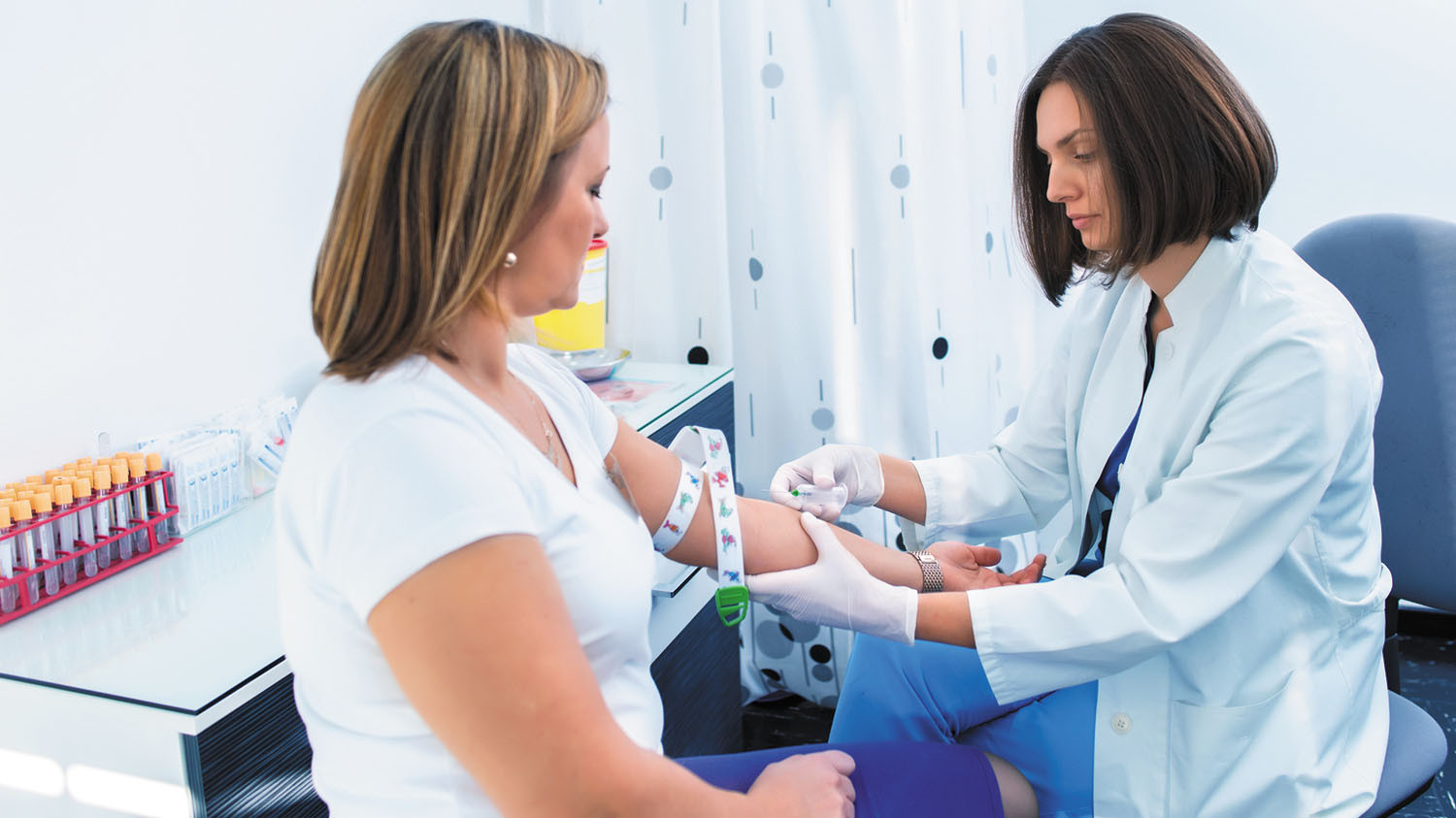
Your doctor may one day be able to use a simple blood test to find out if you have cancer. Researchers from Johns Hopkins University reported in the January 19 issue of Science that they have developed a blood test that can spot early signs of cancer.
The researchers screened blood for DNA and proteins related to eight different types of cancer. They were able to identify early cancers from more than 1,000 patients with different types of cancer that had not yet spread. Over all, the test found 33% to 98% of cancers, depending on tumor type.

A mix of treatments may extend life for men with aggressive prostate cancer
Combining multiple forms of radiation therapy with hormone treatments lengthens survival in men with aggressive prostate cancer.

Fat-dissolving treatments for a double chin
Many people are bothered by double chins and try to conceal them behind turtleneck shirts and scarves. However, recent advancements have expanded the options for jowl removal beyond surgery to in-office treatments.
Cryolipolysis (Cool Mini)
This procedure, also known as "cool sculpting," treats a double chin. The clinician places a handpiece under the chin and chills fat cells there almost to the point of freezing, damaging their membranes so they are absorbed and metabolized by the body. The treatment itself takes about an hour, and results are seen over the subsequent two months. The procedure is usually effective and can be performed more than once. It can also be used to reduce love handles on the waist. The cost is approximately $1,000 per treatment.


FDA approves new drug for men at high risk of prostate cancer spread
Men whose PSA levels continue rising even after surgery or radiation therapy may have a new treatment option with the approval of the drug apalutamide.

A new approach to cancer diagnosis
Liquid biopsies may offer a less invasive alternative than a traditional biopsy.
Image: © fotoquique/Getty Images
A tissue biopsy is the standard test for identifying cancer. Your medical team will use needles or other devices to capture pieces of actual tumor to see if it's malignant or benign. But another approach, called a liquid biopsy, is less invasive and may provide a diagnosis when a biopsy doesn't.
This test uses a person's blood to look for signs of cells or mutated DNA that a tumor has shed into the bloodstream. "By sampling DNA or circulating tumor cells in the blood, we can predict and monitor responses to cancer treatments without subjecting patients to invasive biopsy procedures — and perhaps detect cancer early, before it has had a chance to spread," says Dr. David Miyamoto, assistant professor of radiation oncology at Harvard Medical School.

Screening can often prevent colon cancer
Research we're watching
Image: © Catherine Lane/Getty Images
March is National Colorectal Cancer Awareness month. Have you been screened? Colon cancer is the second leading cause of cancer deaths in the United States, but is also highly preventable through recommended screenings. These screenings enable doctors to spot precancerous lesions that can lead to colon cancer and remove them before they become a problem. Screenings can also find cancers early, when they are most treatable. All people ages 50 to 75 should get recommended colon cancer screenings. Some people should start getting screened earlier if they have certain risk factors for colon cancer, including a family history, a personal history of inflammatory bowel disease (such as Crohn's disease or ulcerative colitis), or a genetic condition that makes colon cancer more likely (such as familial adenomatous polyposis).
There are several tests used for colon cancer screening, including colonoscopy, which uses a device to examine the full length of the colon and rectum; stool tests; flexible sigmoidoscopy, which uses a device to examine a portion of the colon; and CT colonography, a scanning technique that produces images of the colon that are examined by the doctor.
Whole grains may improve several heart risk factors at once
Light exposure at night may raise risk for heart disease
Children of centenarians may stay healthier and live longer too, study finds
A lumbar belt may help ease low back pain
Signs of pneumonia: Sometimes vague and unexpected
Using a vibration plate: What it can — and can't — do for your body
The surprising link between ovarian cancer and the fallopian tubes
People who walk more or walk faster live longer, study finds
Rosacea treatments: What works?
For sleep apnea, a dental device may be as effective as CPAP
Free Healthbeat Signup
Get the latest in health news delivered to your inbox!
Sign Up
