Aldosterone overload: An underappreciated contributor to high blood pressure

Can you retrain your brain to stop excessive drinking?

Beyond statins: New ways to lower LDL cholesterol
What is a cardioversion procedure?

For now, electric cars appear safe for people with implanted heart devices

Can you stop blood thinners after an ablation for atrial fibrillation?

Reversing prediabetes may slash heart disease risk by half
Waking up to urinate at night affects blood pressure

Finding and fixing a stiff, narrowed aortic valve
VO2 max: What it is and how you can improve it
Exercise & Fitness Archive
Articles

Don't just sit there
Stop sitting during TV commercial breaks. Jump up off the couch, and use the time to exercise. Image: Thinkstock |
Easy ways to increase activity and cut down on sedentary time.
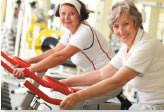
Healthy lifestyle protects women against heart disease
It's no secret that healthy living can reduce your risk for developing heart disease. But ever wonder how much it may help? Up to 92%, suggests a study published Jan. 6, 2015, in the Journal of the American College of Cardiology. It evaluated health habits of 70,000 young and middle-aged women during a 20-year period. The habits included not smoking; exercising for at least 2.5 hours each week; watching TV for fewer than seven hours a week; consuming a diet rich in vegetables, legumes, and whole grains but low in red meat, refined grains, and sugar; consuming no more than one alcoholic drink daily; and having a body mass index in the normal range. Compared with women who had none of those habits, women with all six reduced their risk of developing heart disease by 92%. Why do those habits provide so much protection against heart disease? "Limiting TV watching frees up time for exercise, and the other activities are known to reduce blood pressure, LDL cholesterol, and blood sugar, which reduce the three major risk factors for heart disease—hypertension, high levels of cholesterol and triglycerides, and diabetes," says Dr. Randall Zusman, a cardiologist and Harvard Medical School associate professor. And even though the study involved young and middle-aged women, Dr. Zusman reminds us that it's never too late to adopt a healthy lifestyle.
Image: Thinkstock

Ask the doctor: High-elevation hiking with heart attack history?
Acclimate before hiking at high elevations. |
Q. I had a mild heart attack a few years ago but am now feeling fine. I'm planning a trip to Colorado. Is it safe for me to hike at high elevations?
A. If you're feeling well and don't have any cardiovascular symptoms, hiking in the Rocky Mountains should probably be fine, though you should check with your cardiologist first. Doctors used to advise people with cardiovascular conditions—even just high blood pressure—not to spend time at high altitudes. But there wasn't much evidence behind that recommendation. Now, there's a general consensus that ascending up to 12,000 feet should be fine for most people with heart disease. Exceptions include people with unstable cardiac disease, heart failure, or severe lung disease, such as pulmonary hypertension.

Battling breathlessness
Advanced cardiopulmonary testing can often help diagnose less common causes of breathlessness. Image: Thinkstock |
Hidden causes of shortness of breath can make the problem tricky to treat.

The downside of too much sitting
During the day, make an effort to stand rather than sit, when possible. |
Standing up more throughout the day may help you dodge heart disease and live longer.

Weight-loss drugs and your heart
Weight-loss drugs aren't for people hoping to lose just a few pounds. Image: Thinkstock |
Some first-generation diet pills proved risky to the heart. New drugs may have expanded the options for treating obesity.

Osteoarthritis relief without more pills
It's possible to ease arthritis pain and stiffness without medication, but it takes some work. |
Here are some steps you can take to reduce your reliance on medication to control symptoms and stay functional.

Moderate- and high-intensity workout both burn belly fat
What's better for you: moderate but prolonged exercise, or a shorter but more intense workout? A recent study in Annals of Internal Medicine found that both levels of exercise will help you lose about the same amount of belly fat if you burn the same number of calories. But only high-intensity exercise helped control blood sugar levels.
In the study, 300 people with abdominal obesity walked and jogged on treadmills at a moderate or high intensity, burning equivalent numbers of calories. The 217 people who stuck through the study for the entire six months lost on average 1.75 inches from their waistlines—about 5% to 6% of body weight. It made no difference whether they huffed through the higher-intensity workout or the more moderate regimen.
Core workout can cause muscle soreness
Many popular workouts that aim to strengthen your arms, legs, and abs give short shrift to many of the muscles that form your body's core (the group of muscles that form the sturdy central link connecting your upper and lower body). Strong core muscles are essential to improving performance in almost any sport — and are the secret to sidestepping debilitating back pain.
If you haven't been working your core muscles regularly — or if you challenge yourself with a new set of exercises — expect to feel a little soreness as you get used to your new routine.
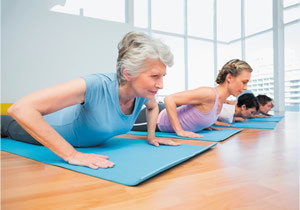
Yoga's health advantages may extend to the heart
New research suggests yoga may be as good as moderate exercise for lowering heart disease risk. Images: Thinkstock |
With its focus on body, mind, and breath, yoga shows promise for improving heart health.
Aldosterone overload: An underappreciated contributor to high blood pressure
Can you retrain your brain to stop excessive drinking?
Beyond statins: New ways to lower LDL cholesterol
What is a cardioversion procedure?
For now, electric cars appear safe for people with implanted heart devices
Can you stop blood thinners after an ablation for atrial fibrillation?
Reversing prediabetes may slash heart disease risk by half
Waking up to urinate at night affects blood pressure
Finding and fixing a stiff, narrowed aortic valve
VO2 max: What it is and how you can improve it
Free Healthbeat Signup
Get the latest in health news delivered to your inbox!
Sign Up