










VO2 max: What it is and how you can improve it
Regular aerobic exercise helps boost your score.
- Reviewed by Howard E. LeWine, MD, Chief Medical Editor, Harvard Health Publishing; Editorial Advisory Board Member, Harvard Health Publishing
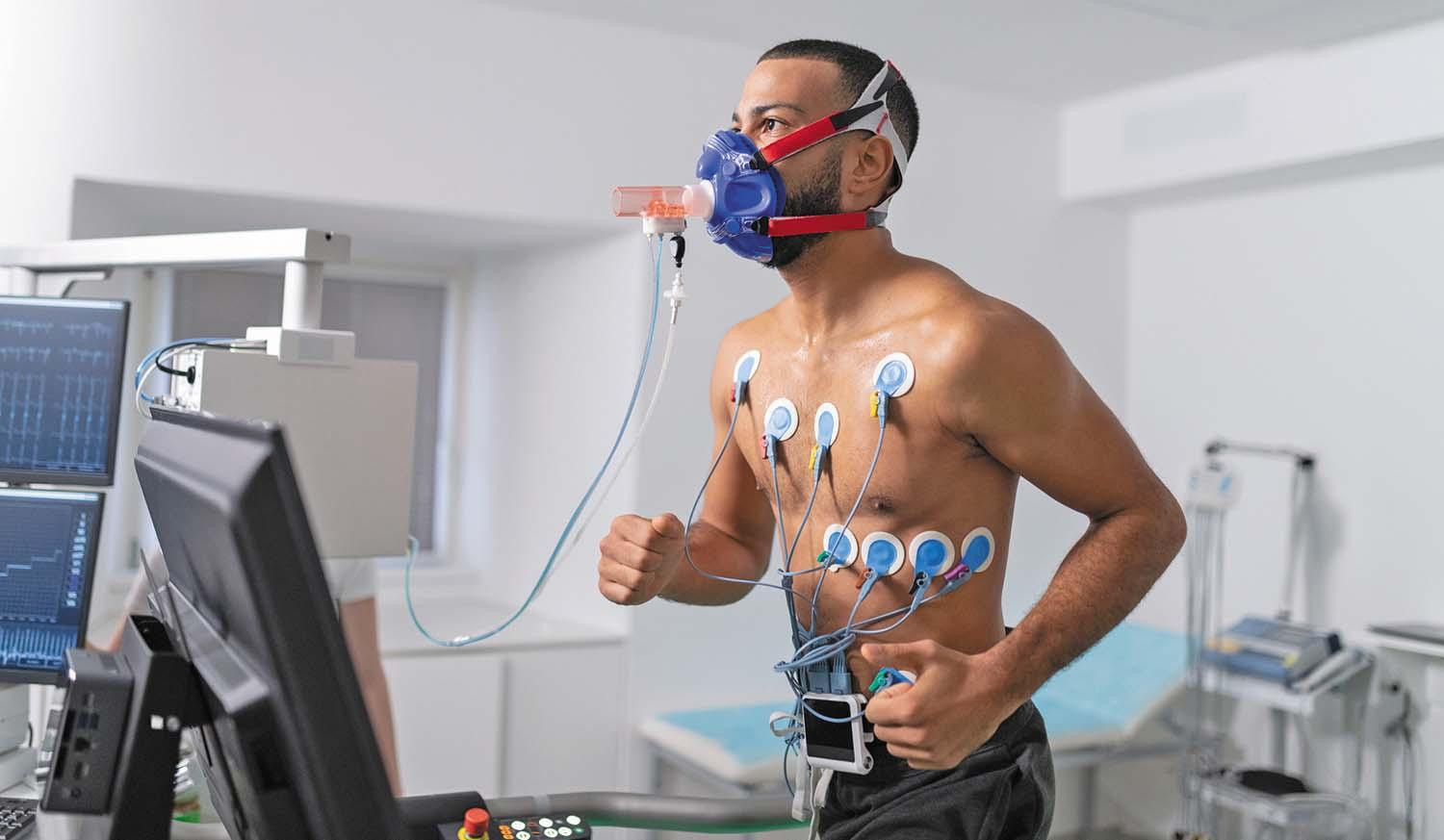
Spend enough time with a group of endurance athletes - swimmers, cyclists, runners, cross-country skiers, or anyone who needs to sustain an aerobic effort - and sooner or later, someone is bound to bring up a way to measure fitness called VO2 max.
A high VO2 max is tied to better health and increased longevity. And if you know your score, you can use it as a tool to help you exercise more efficiently.
What is VO2 max and what does it tell you?
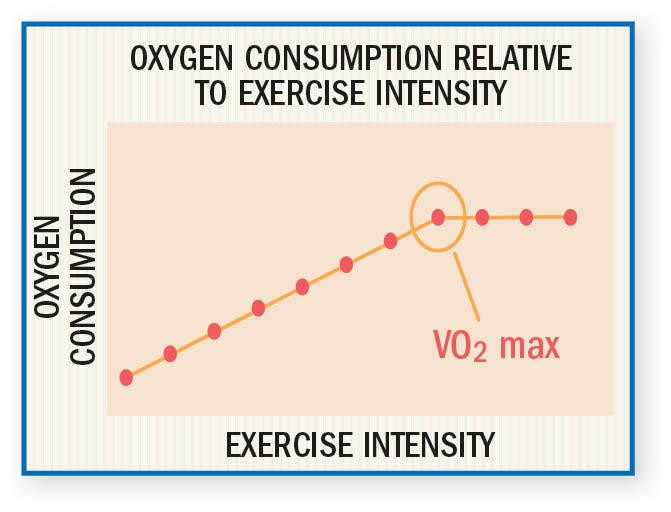
VO2 max measures how much oxygen your body consumes while exercising. (The V in VO2 max stands for volume, while O2 stands for oxygen.) Typically, VO2 max is measured as milliliters of oxygen consumed per kilogram of body weight per minute of exercise (ml/kg/minute). What does oxygen consumption tell us?
When you breathe, your lungs absorb oxygen and transport it your red blood cells, which carry the oxygen to all of your body's organs and muscles. Your muscle cells need oxygen to generate adenosine triphosphate (ATP). ATP provides the main energy source your muscles need to do their work. The more oxygen you can breathe in, the more ATP your muscles produce, creating the energy to fuel your muscles and power your workout. (This is also why you breathe faster while exercising.)
If you have a higher VO2 max, that means your heart and lungs are more effectively supplying blood to your muscles, and that your muscles are efficiently extracting and using oxygen from your blood. That's why a high VO2 max is a good indicator of a high fitness level.
|
A high VO2 max shows that your heart and lungs are effectively supplying blood to your muscles. Image: © blueringmedia/Getty Images |
How V02 max is measured
The most accurate measurement of VO2 max takes place in an exercise medicine lab.
You'll wear a heart rate monitor and a special mask to record how much oxygen you're taking in and how much carbon dioxide you're exhaling while running on a treadmill, riding a stationary bike, or doing any other aerobic activity that gets your heart pumping. The intensity of exercise will slowly ramp up until you're exercising at full capacity. A maximal exercise test is intense, but relatively short - between 10 and 20 minutes total.
Other than athletes, most people don't need to know their exact VO2 max. There are other ways to estimate your VO2 max, such as using online tools. If you are a walker, a good choice for the calculator is the one-mile walk test. Measure the time it takes to walk one mile as fast as you can. Immediately after completing the mile, check your heart rate using a portable monitor or take your pulse. Enter your readings and the other information needed in the calculator.
Once you know your VO2 max, you have a baseline from which to improve.
Age, gender, location elevation, and activity levels all affect your VO2 max score. Of these four factors, the easiest to control is your activity level. While your VO2 max tends to decrease as you age, it's possible to greatly slow its decline by remaining active.
Benefits of improving VO2 max
While your starting VO2 max number can reflect your current fitness level, it's more important to focus on improving your readings over time. Increasing your VO2 max is associated with a reduced risk of heart disease, diabetes, cancer, and stroke. Plus, better fitness is associated with improved sleep and quality of life.
How to improve your V02 max
To boost your VO2 max, try these approaches:
Get your heart pumping. You can improve your VO2 max by doing any aerobic exercise that gets your heart pumping - the more vigorous, the better. If you're not currently active, walking may be vigorous enough to trigger improvements in your VO2 max score.
Incorporate intervals. High-intensity interval training (HIIT) is a fast and effective way to increase VO2 max, even if you're already very active. Try doing an interval training workout several times per week, interspersed with slower, longer-duration activities.
Switch up your workout routine. Your body is constantly adapting. If you're primarily a swimmer, consider cycling. If you usually train at a slow, steady pace, ramp things up. If you usually work out for 30 minutes, add 10 minutes to your routine. All of these changes force your body to work harder to adapt.
Lose weight. Because relative VO2 max is measured relative to your weight, simply losing weight can boost your VO2 max.
For more ideas, check out the Harvard Special Health Report Cardio Exercise.
Image: © Tashi-Delek/Getty Images
About the Reviewer

Howard E. LeWine, MD, Chief Medical Editor, Harvard Health Publishing; Editorial Advisory Board Member, Harvard Health Publishing
Disclaimer:
As a service to our readers, Harvard Health Publishing provides access to our library of archived content. Please note the date of last review or update on all articles.
No content on this site, regardless of date, should ever be used as a substitute for direct medical advice from your doctor or other qualified clinician.


