










Beyond statins: New ways to lower LDL cholesterol
Two new pills may soon join the growing arsenal of cholesterol-lowering drugs.
- Reviewed by Michelle O’Donoghue, MD, Contributor

For more than four decades, statins have been the mainstay treatment for lowering high LDL cholesterol levels when diet and exercise aren’t enough. LDL is a key contributor to cardiovascular disease, including heart attack and stroke, so reducing high LDL levels can literally be lifesaving.
But some people taking the maximum dose of a statin still have higher-than-recommended LDL levels. Others cannot tolerate statin side effects such as muscle pain.
Fortunately, a number of other LDL-lowering drugs have emerged over the past 20 years. One promising new possibility is enlicitide, a pill version of the powerful LDL-reducing injectable drugs known as PCSK9 inhibitors (see “The gene discovery behind the PCSK9 drugs”).
Another is obicetrapib, a pill that lowers LDL through a completely different mechanism than any currently available medications. Both are expected to be submitted for FDA approval over the next year or two.
“These therapies represent an important breakthrough for people who are believed to be statin intolerant or who still have high LDL cholesterol on their current treatment,” says Dr. Michelle O’Donoghue, associate professor of medicine at Harvard Medical School and the McGillycuddy-Logue Endowed Chair in Cardiology at Brigham and Women’s Hospital. Here’s an overview of statin alternatives currently on the market and in the pipeline.
The gene discovery behind the PCSK9 drugs
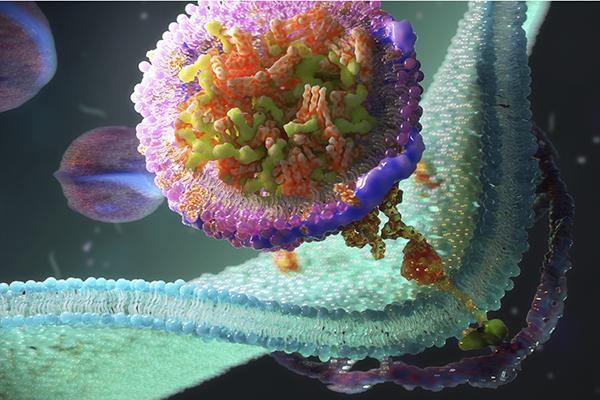
Everyone has a gene that provides instructions for making a protein called PCSK9, which helps regulate LDL levels in the bloodstream. Some people have a variant in this gene that causes high PCSK9 levels and extremely high LDL levels — as high as 300 milligrams per deciliter (mg/dL). People with these variants are prone to heart attacks at a young age. Other people have different variants that have the opposite effect. They make very little PCSK9 and have LDL levels as low as 15 mg/dL. Their risk of heart attack is far below average. The 2005 discovery of these gene variants led to the creation of PCSK9 inhibitors, which essentially mimic the effects of the protective gene variant. Scientists are now testing a gene-editing technique to permanently reduce the production of PCSK9. Image: © Nanoclustering/Science Photo Library/Getty Images |
Non-statin pills that lower LDL: Current options
The first non-statin pill to treat high cholesterol, ezetimibe (Zetia), was approved in 2002. It works by decreasing the amount of cholesterol your body absorbs from the food you eat, and it can lower LDL by about 20%.
Two decades later, the FDA approved bempedoic acid (Nexletol), which can also lower LDL by about 20% to 25%. Like statins, this drug works by reducing the liver’s cholesterol production, but it has fewer muscle-related side effects because it works only in the liver. Ezetimibe is also available in combination with bempedoic acid (Nexlizet) or with simvastatin (Vytorin). These combination pills can cut LDL cholesterol by 40% to 60%.
Injectable drugs to lower LDL
First approved in 2015, the drugs known as PCSK9 inhibitors work by helping the liver remove cholesterol from the blood. They include alirocumab (Praluent) and evolocumab (Repatha), which are given by self-injection once or twice a month. Inclisiran (Leqvio), which was approved in 2021, is a twice-yearly injection administered at a doctor’s office or clinic.
While these drugs are highly effective, slashing LDL cholesterol by 50% to 60%, they unfortunately aren’t widely used, says Dr. O’Donoghue. “Although the price of these medications has dropped dramatically, cost has been one of the key barriers,” she says. Most insurance companies won’t cover the cost of PCSK9 inhibitors (which range from $200 to $500 or more per month) until you’ve tried other therapies without success. Another issue is that some people are frightened or disturbed by the thought of injections, especially when it comes to administering the shots themselves, says Dr. O’Donoghue. While the injections often cause redness and other skin reactions, those effects are usually mild and short-lived.
Who may need extra help lowering their LDL?For most people, taking a statin and following a heart-healthy diet can lower LDL to the recommended target of no more than 100 milligrams per deciliter (mg/dL). But for people with cardiovascular disease or a high risk for it (for example, those who’ve had a heart attack or have diabetes), the target is 70 mg/dL. In fact, many cardiologists are advocating for even lower LDL values (55 mg/dL or lower) for people at high risk, based on growing evidence that the lower the LDL, the better. One group at especially high risk are those with familial hypercholesterolemia. This inherited condition, which affects about one in 250 people, can lead to LDL levels of 190 mg/dL or higher. |
LDL-lowering drugs on the horizon
Experts are enthusiastic about enlicitide, the first PCSK9 pill, say Dr. O’Donoghue. “Although larger trials are still under way, enlicitide appears to be safe and well tolerated so far, without the muscle-related problems described with statins,” she says. Also, many people may prefer the convenience of a daily pill over self-injections, even if the latter are less frequent. A recent clinical trial involved people with familial hypercholesterolemia (FH), an inherited disorder marked by very high cholesterol levels, who were already taking LDL-lowering drugs. In these patients, enlicitide reduced LDL by nearly 60%.
The other investigational drug, obicetrapib, was originally developed to raise levels of HDL (andamp;ldquo;good”) cholesterol. But the drug also lowers LDL by nearly 30%, according to a recent trial done in people with FH or a history of heart disease who were taking other LDL-lowering drugs. Obicetrapib also helps lower levels of another particularly worrisome type of lipid particle known as lipoprotein(a) or Lp(a). Whether that would offer any additional benefit in terms of reducing heart-related problems isn’t clear, says Dr. O’Donoghue.
Ultimately, both doctors and patients would like to see if these new therapies reduce the risk of cardiovascular crises such as stroke and heart attack. Those trials are ongoing, and results are expected in the coming years.
Image: © PeopleImages/Getty Images
About the Author

Julie Corliss, Executive Editor, Harvard Heart Letter
About the Reviewer

Michelle O’Donoghue, MD, Contributor
Disclaimer:
As a service to our readers, Harvard Health Publishing provides access to our library of archived content. Please note the date of last review or update on all articles.
No content on this site, regardless of date, should ever be used as a substitute for direct medical advice from your doctor or other qualified clinician.


