

Whole grains may improve several heart risk factors at once

Light exposure at night may raise risk for heart disease

Children of centenarians may stay healthier and live longer too, study finds

A lumbar belt may help ease low back pain

Signs of pneumonia: Sometimes vague and unexpected

Using a vibration plate: What it can — and can't — do for your body

The surprising link between ovarian cancer and the fallopian tubes

People who walk more or walk faster live longer, study finds

Rosacea treatments: What works?

For sleep apnea, a dental device may be as effective as CPAP
Skin Cancer Archive
Articles

When You Visit Your Doctor - Rash
Rash
Questions to Discuss with Your Doctor:
- How long have you had the rash?
- Where did it start?
- Has it spread?
- Is the rash only on parts of your skin that have been exposed to the sun?
- Does it itch or hurt?
- Is the rash red, pink, or purple?
- Is the rash smooth or bumpy?
- Have you had sores in your mouth, eyes, or other mucous membranes?
- Have you had blisters on your skin?
- Have you had trouble breathing?
- Have you had a fever?
- Have you symptoms of an upper respiratory tract infection (for example, a cold)?
- Have you had vomiting or diarrhea?
- Are you taking any prescription drugs, over-the-counter drugs, herbs, or supplements? Did you start any of them in the past two months?
- Have you had any new exposures to foods or chemicals?
- Any exposure to insects?
- Have you had any recent sun exposure?
Your Doctor Might Examine the Following Body Structures or Functions:
- Temperature
- Examination of your skin, mouth, eyes, mucous membranes, lymph nodes, liver, and spleen
Your Doctor Might Order the Following Lab Tests or Studies:
- Skin scrapings for microscopic analysis or culture (if the rash looks infectious)
- Complete blood cell count or other blood tests (if you appear sick or have a fever)
- Skin biopsy
When You Visit Your Doctor - Shingles
Shingles
Questions to Discuss with Your Doctor:
- Do you have a history of chicken pox?
- Does your skin hurt, itch, or feel numb?
- Is the pain sharp, dull, or piercing? How long have you had it?
- Do you have a rash? If so, for how long?
- Is the rash in more than one place on your skin?
- Is the rash on one side of your body only?
- Has the rash at any time looked like small blisters?
- Do you still have pain even if the rash is gone?
- What triggers the pain (for example, a light touch)?
- Do your symptoms interfere with your ability to sleep or perform activities of daily living?
- Are you taking any medications?
Your Doctor Might Examine the Following Body Structures or Functions:
- Skin exam almost always confirms the diagnosis
Your Doctor Might Order the Following Lab Tests or Studies:
- Skin scraping to examine under the microscope, or for viral culture, immunofluorescence, or polymerase chain reaction testing (rarely needed)
When You Visit Your Doctor - Multiple Myeloma
Multiple Myeloma
Questions to Discuss with Your Doctor:
- Have you had any recent infections?
- Do you know when to call your doctor with symptoms of infection?
- Do you have pain in any of your bones? If so, is it constant, or does it occur only when you move?
- Have you had any recent fractures?
- Do you have pain in your spine? Does it radiate to another part of your body?
- Have you noticed a decrease in sensation or strength in your hands or feet?
- Have you had loss of bladder or bowel control?
- Do you know when to seek medical attention for back pain?
- Have you been fatigued?
- Have you been lightheaded?
- Have you been short of breath with minimal exertion?
- Do your gums bleed when you brush your teeth?
- Do you bruise easily, or get nosebleeds?
- Have you been weak, nauseated, constipated, or confused?
- Have you had a headache or a change in your vision?
- Can you feel any lumps or masses under your skin?
- Are you aware of the possible complications that can develop from multiple myeloma?
- Do you know which symptoms should cause you to call your doctor?
Your Doctor Might Examine the Following Body Structures or Functions:
- Skin
- Heart
- Lungs
- Arms and legs
- Spine
- Neurology examination (to check for strength and sensation in your hands and feet)
- Lymph nodes (neck, axilla, and groin)
Your Doctor Might Order the Following Lab Tests or Studies:
- Blood tests for complete blood count, electrolytes, kidney function, uric acid, calcium, and beta-2 microglobulin
- Serum protein electrophoresis or SPEP
- Urine protein electrophoresis or UPEP
- Quantitative immunoglobulin levels in the urine and blood
- Immunoelectrophoresis
- 24-hour urine collection for protein
- Bone marrow biopsy
- Skeletal radiographs
- CT scan
- MRI scan
Low-tar cigarettes are not a safer choice
Studies show smoking high-tar unfiltered cigarettes, as opposed to medium-tar filtered cigarettes, greatly increases your risk of lung cancer. So, cigarettes labeled as low-tar or ultra light are an even safer choice, right? Wrong. A study comparing the lung cancer risks of different types of cigarettes found this seemingly logical assumption is false.
The study six years and involved over 900,000 Americans over the age of 30. The researchers compared the risk of death from lung cancer among men and women who were smokers, former smokers, or had never smoked. When analyzed according to the tar rating of cigarette smoked, the results of the study showed the risk of lung cancer death was greatest for smokers of high-tar unfiltered cigarettes. The risk of lung cancer death was no different among smokers of medium-, low-, and very low-tar cigarettes.
Pancreatic cancer: Symptoms, treatment, and prevention
Hard to detect and quick to spread, pancreatic cancer is among the deadliest of cancers. Scientists hope that genetic research will make it more like other cancers-a treatable disease. But even if it's caught while confined to the pancreas-and it rarely is-just 16% of patients are alive five years after the initial diagnosis. By comparison, the five-year survival rate for localized breast cancer is 86%. If the cancer has spread beyond the pancreas, the likelihood of living another five years is just 2%. Only the statistics for liver cancer are as grim.
Fortunately, pancreatic cancer is uncommon compared with other major cancers. About 50,000 new cases are diagnosed every year in the United States, in contrast to about 250,000 new cases of breast cancer, and 225,000 new cases of lung cancer. But because it's so untreatable, pancreatic cancer causes about 40,000 deaths each year. It is the 4th leading cause of cancer death.
Testosterone, prostate cancer, and balding: Is there a link?
We can thank the Greeks for the name doctors apply to male hormones. Androgen comes from the words meaning "man-maker," and it's a well-chosen term. Testosterone is the most potent androgen, and it does make the man. It's responsible for the deep voice, increased muscle mass, and strong bones that characterize the gender, and it also stimulates the production of red blood cells by the bone marrow.
In addition, testosterone has crucial, if incompletely understood, effects on male behavior. It contributes to aggression, and it's essential for the libido or sex drive, as well as for normal erections and sexual performance. Testosterone stimulates the growth of the genitals at puberty, and it is one of the factors required for sperm production throughout adult life.
Certain symptoms may be early signs of ovarian cancer
Ovarian cancer has long been called a "silent killer," because symptoms are thought to develop only after the disease has reached an advanced stage and is largely incurable. But health experts have identified a set of physical complaints that often occur in women who have ovarian cancer and may be early warning signs. These symptoms are very common, and most women with them do not have ovarian cancer. But for the women who do, the hope is that greater awareness will lead to earlier diagnosis and treatment.
Four symptoms are more likely to occur in women with ovarian cancer than in women in the general population. These symptoms are bloating or increased abdominal size; pelvic or abdominal pain; difficulty eating or feeling full quickly; and urinary frequency or urgency.
Benefits of moderate sun exposure
Dr. Robert S. Stern, chair of the Department of Dermatology at Harvard-affiliated Beth Israel Deaconess Medical Center , calls them "solar-phobes": people so concerned about getting skin cancer that they stay inside or cover every bit of skin. "They cover up like they were going out into the Arabian Desert ," he says. The marketing of ultrablocking sunscreens and special sun-protective clothing plays into these fears.
There's no getting around the fact that sunlight is hard on your skin. Age gets blamed for wrinkles and rough, dry skin. But the real culprit is a combination of age and sun that dermatologists call photoaging. The short UVB wavelengths that cause sunburn can also damage DNA and suppress the skin's immune system. The longer, more penetrating UVA wavelengths may create highly reactive oxygen molecules capable of damaging skin cell membranes and the DNA inside.

The family history of cancer
If cancer runs in your family, there is much you can do to recognize your potential risk and catch the disease before it strikes.
Image: filipefrazao/Thinkstock
You may remember stories of your father's military service and your mother's hometown, but how much do you know about your family's medical history? In particular, do you know whether anyone on your mom or dad's side ever had cancer?
"Family history can be one of the first lines of defense in preventing cancer," says Dr. Huma Q. Rana, clinical director of the Center for Cancer Genetics and Prevention at Harvard-affiliated Dana-Farber Cancer Institute.
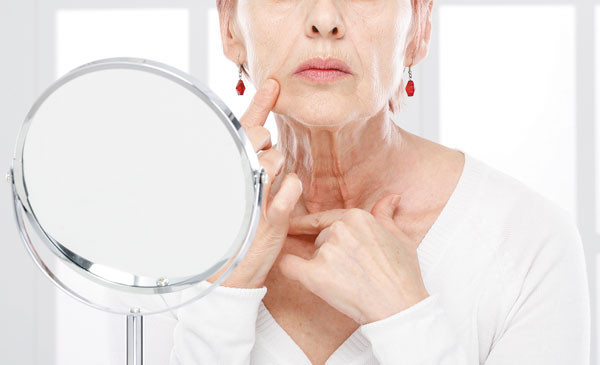
Want to take years off your face? These treatments can rejuvenate your skin
An increasing array of nonsurgical products and procedures aim to reduce the effects of time and sun exposure.
Image: studiokovac/Thinkstock
It's often said that our lives are written on our faces. But if you feel like doing a little editing—erasing a few fine lines, softening a deep furrow, or evening out some patchy spots—there's an increasing array of products and procedures to help rejuvenate skin worn by time and sun exposure. "When it comes to skin treatments, there's lots of good news in therapies for medical conditions as well as cosmetic concerns," says Dr. Kenneth Arndt, adjunct professor of dermatology at Harvard Medical School and medical editor of the Harvard Special Health Report Skin Care and Repair.
A growing population of healthy, active older women who want to look as young as they feel has spurred the development of skin rejuvenation techniques that are more subtle and have much shorter recovery times than facelifts. "It's important to choose your treatments with care and to check and double-check the reputation and accreditation of clinicians performing invasive skin procedures," Dr. Arndt says. You may want to consult a dermatologist to weigh the possible risks and likely benefits of various treatments. Cosmetic procedures aren't covered by insurance, so cost might also be an important factor in choosing a skin rejuvenation procedure.
Whole grains may improve several heart risk factors at once
Light exposure at night may raise risk for heart disease
Children of centenarians may stay healthier and live longer too, study finds
A lumbar belt may help ease low back pain
Signs of pneumonia: Sometimes vague and unexpected
Using a vibration plate: What it can — and can't — do for your body
The surprising link between ovarian cancer and the fallopian tubes
People who walk more or walk faster live longer, study finds
Rosacea treatments: What works?
For sleep apnea, a dental device may be as effective as CPAP
Free Healthbeat Signup
Get the latest in health news delivered to your inbox!
Sign Up
