

Light exposure at night may raise risk for heart disease

Whole grains may improve several heart risk factors at once

A lumbar belt may help ease low back pain

Children of centenarians may stay healthier and live longer too, study finds

Signs of pneumonia: Sometimes vague and unexpected

The surprising link between ovarian cancer and the fallopian tubes

Using a vibration plate: What it can — and can't — do for your body

People who walk more or walk faster live longer, study finds

For sleep apnea, a dental device may be as effective as CPAP

Rosacea treatments: What works?
Diabetes Archive
Articles

The new-old way to treat gout
New guidelines suggest doing more of the same. The problem is that many people don't.
You never forget your first gout attack. The severe pain, swelling, and redness hits hard and fast. The initial attack often strikes your big toe's large joint, but later ones might affect the foot or ankle. Other hot spots include the knees, hands, and wrists.
First-line treatment is quite effective and includes anti-inflammatory medications, ice therapy, and rest. A combination of diet and lifestyle changes and prescription drugs — an approach called urate-lowering therapy, or ULT — is typically recommended if attacks recur or become more severe.

How does inflammation increase the risk for heart attacks?
Ask the doctor
Q. My doctor says I'm at risk for a heart attack because a test shows inflammation. I know about high cholesterol and blood pressure, but how does inflammation increase the risk for heart attacks?
A. I can understand why you're puzzled. In medical school I learned that there is a simple road to a heart attack. First, cholesterol starts building up in the wall of a coronary artery carrying blood to the heart muscle. Over many years, the plaque of cholesterol slowly grows bigger. When it grows large enough that the heart can't get the blood it needs to work hard, the heart cries out in pain — chest pain, a condition called angina. Finally, when the plaque grows large enough, it blocks the flow of blood completely, causing a heart attack. It was a beautifully simple explanation.

Warning signs of a serious eye problem
Eyes aren't exempt from the wear and tear of aging. Some of the age-related changes in the eyes are annoying but not serious — for example, it can become difficult to focus on near objects, and eyelashes may thin out a bit. But other changes can be serious eye problems that threaten vision.
With age, the eyes' ability to stay lubricated starts to wane. This can leave eyes feeling irritated, sticky, dry, or gritty. The lens of the eye can become less elastic. Night vision may also start to suffer, which can pose problems when driving at night. In contrast, cataracts, macular degeneration, and diabetic retinopathy can rob you of your sight.
How do you know if an eye problem is a nuisance or the start of something serious? The following signs and symptoms warrant a call to your doctor. Catching serious eye problems early can help preserve your vision. Even non-vision-threatening eye problems can be treated to keep your eyes comfortable and your eyesight as sharp as possible.
Call your doctor if you experience any of the following:
- Change in iris color
- Crossed eyes
- Dark spot in the center of your field of vision
- Difficulty focusing on near or distant objects
- Double vision
- Dry eyes with itching or burning
- Episodes of cloudy vision
- Excess discharge or tearing
- Eye pain
- Floaters or flashers
- Growing bump on the eyelid
- Halos (colored circles around lights) or glare
- Hazy or blurred vision
- Inability to close an eyelid
- Loss of peripheral vision
- Redness around the eye
- Spots in your field of vision
- Sudden loss of vision
- Trouble adjusting to dark rooms
- Unusual sensitivity to light or glare
- Veil obstructing vision
- Wavy or crooked appearance to straight lines
Image: CentralITAlliance/Getty Images

Fibromyalgia: Exercise helps — here's how to start
For people with fibromyalgia, pain is a part of daily life, and exercising is probably not something they feel like doing. But experts say it’s one of the most effective strategies to help manage the condition. So what’s the best approach to getting started?

Urine color and odor changes
Surprising factors influence urine color and odor including food and medication
Many things can alter the look and smell of your urine. When should you be concerned?
Nearly six and a half cups — that's how much urine the average person produces a day, usually in four to eight trips to the toilet. The ritual is so routine that most of us pay little attention to our urine — that is, unless it happens to look or smell different than usual.

Blood in the urine: What does it mean for your health?
Urinary bleeding can be dramatic and frightening, prompting an appropriate call to your doctor. But sometimes the call travels in the other direction; many people are surprised and alarmed to get a call from their doctors reporting that the urine that looked clear in the specimen jar actually contains red blood cells (RBCs). Either way, blood in the urine, known technically as hematuria, requires medical evaluation. Although the results are often reassuring, hematuria is a warning symptom that you should never ignore.
Blood can enter the urine from any place in the urinary tract. So the first step in understanding hematuria is to understand your anatomy.

Considering cataract surgery? What you should know
The operation to replace a clouded lens is low-risk, fast, and effective, but requires some decision making.
Image: CJ_Romas/ Thinkstock
Cataract surgery—which involves removing the eye's clouded lens and replacing it with a clear synthetic version—once required several days in the hospital and a long recovery period. Today it is performed under local anesthesia on an outpatient basis, and people are back to their normal lives within days. The success rate is high, and the rate of vision-threatening complications is relatively low. For people with cataracts, the decision whether to have surgery may be easy to make. However, two additional decisions might be more difficult: when to have surgery and what type of lens implant to get, says Dr. Laura Fine, an ophthalmologist at Harvard-affiliated Massachusetts General Hospital.
Why you may need cataract surgery
To a great extent, cataracts are a normal consequence of aging. Cataract formation is usually a gradual process that plays out over years. The lenses of our eyes become less transparent, less resilient, and often thicker. By age 80, half of us will have cataracts.

What to do for a sprained ankle
It takes less force to sprain an ankle as we age. A few precautions can help to reduce the severity of these injuries or avoid them altogether.
Few of us have gone through life without spraining an ankle. Sprains are among the most common musculoskeletal injuries in people of all ages, and ankles are particularly vulnerable because of the small size of the joint and the forces exerted on it when the body is in motion. While younger people usually sustain sprains while running or jumping, for older people just stepping off a curb awkwardly or walking on an uneven ground can do it. "As you age, your balance and strength can diminish, especially if you've been immobile, increasing your risk for sprains," says Dr. Holly Johnson, a foot and ankle orthopedic surgeon at Harvard-affiliated Massachusetts General Hospital.
How sprains occur
The injury occurs when one or more of the ligaments — elastic bands of tissue that keep the ankle bones in place — are stretched or torn. The most common type of ankle sprain is an inversion injury, or lateral ankle sprain. The foot rolls inward, damaging the ligaments of the outer ankle. Less common are sprains affecting the ligaments of the inner ankle and sprains that injure the ligaments that join the two leg bones (the tibia and the fibula) just above the ankle.
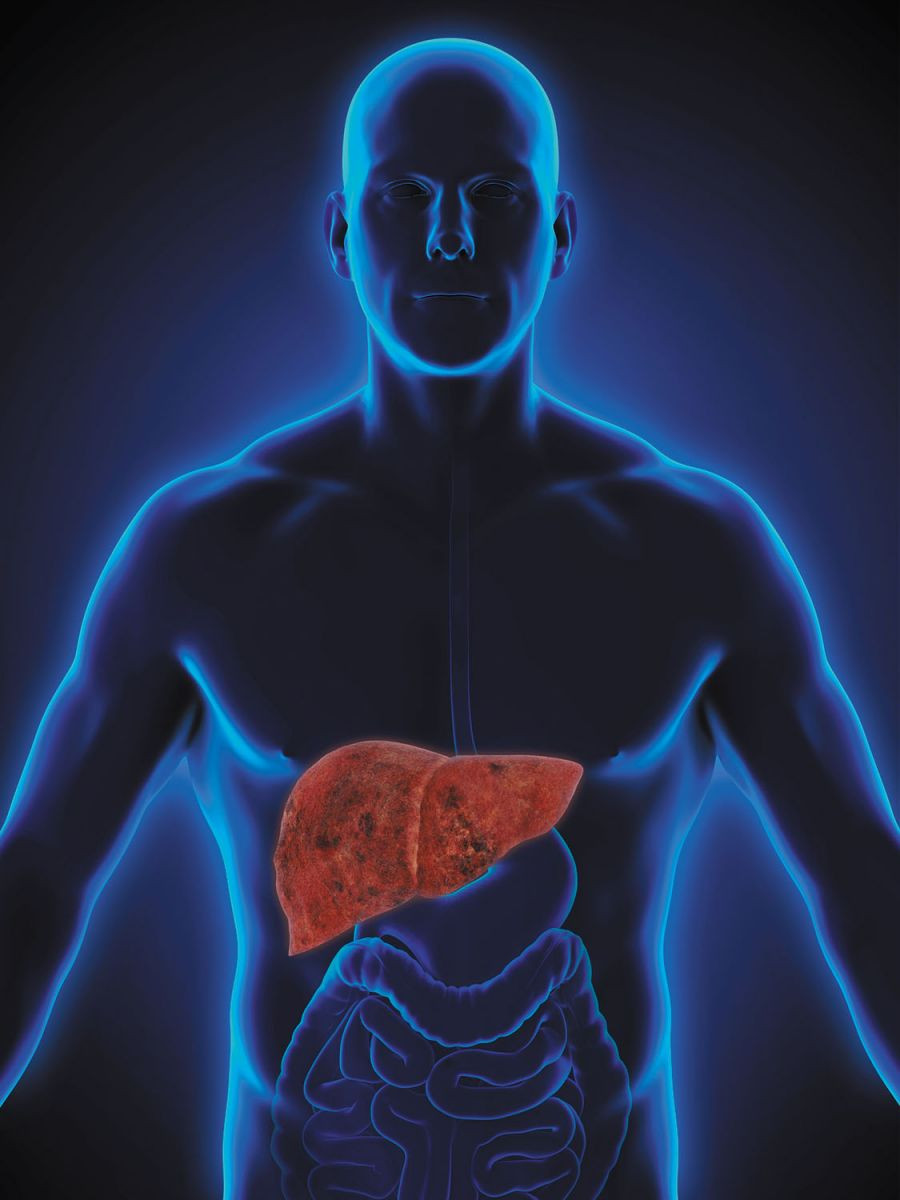
The skinny on fatty liver disease
Rates continue to rise, but there are ways to protect yourself and even reverse the effects of this dangerous disorder.
Your liver is your largest internal organ and your body's workhorse. Among its many jobs are converting food into fuel, processing fat from your blood, clearing harmful toxins, and making proteins that help your blood clot. Yet this hard-working, supersized organ is susceptible to a dangerous and often hard-to-diagnose condition called nonalcoholic fatty liver disease, or NAFLD.
NAFLD is defined as the presence of fat in more than 5% of liver cells. It is the most common liver disease and affects up to 25% of American adults, 60% of whom are men.

Is it a cold or allergies?
Ask the doctors
Q. I feel like I have a perpetual cold all winter, every winter. I'm stuffy and sneezy and it never seems to get better. Do you think it could be allergies? How can I tell the difference?
A. Colds and allergies produce many of the same symptoms: a runny nose, tiredness, and sometimes a sore throat. But they have different causes — a virus causes colds, while allergies are an immune system response to trigger substances, known as allergens. There are ways to distinguish one from the other. Colds sometimes produce a fever, but allergies never do. In addition, if you are suffering from allergies, you may also have itchy, watery eyes, symptoms that won't typically accompany a cold. But perhaps the biggest clue that can help you distinguish between a cold and allergies is the duration of symptoms. Cold symptoms rarely last more than two weeks, but allergies can last as long as you are exposed to the substance that is triggering the reaction. So, if your "cold symptoms" appear at the same time every year and last for an extended period of time, the cause may very well be allergies. Many people with seasonal allergies will experience symptoms for six weeks at a time. If you are allergic to something in your home, such as dust mites, mold, or pet dander, your symptoms could get worse during the winter months, because the house is sealed up and fresh air isn't getting in. In addition, your heating system may be recirculating the allergen. Because your symptoms last for an extended period of time, it may be worth a visit to the allergist.
Light exposure at night may raise risk for heart disease
Whole grains may improve several heart risk factors at once
A lumbar belt may help ease low back pain
Children of centenarians may stay healthier and live longer too, study finds
Signs of pneumonia: Sometimes vague and unexpected
The surprising link between ovarian cancer and the fallopian tubes
Using a vibration plate: What it can — and can't — do for your body
People who walk more or walk faster live longer, study finds
For sleep apnea, a dental device may be as effective as CPAP
Rosacea treatments: What works?
Free Healthbeat Signup
Get the latest in health news delivered to your inbox!
Sign Up
