

Light exposure at night may raise risk for heart disease

Whole grains may improve several heart risk factors at once

A lumbar belt may help ease low back pain

Children of centenarians may stay healthier and live longer too, study finds

Signs of pneumonia: Sometimes vague and unexpected

The surprising link between ovarian cancer and the fallopian tubes

Using a vibration plate: What it can — and can't — do for your body

People who walk more or walk faster live longer, study finds

For sleep apnea, a dental device may be as effective as CPAP

Rosacea treatments: What works?
Diabetes Archive
Articles


Avoiding the pain of kidney stones
If you've had a stone, the problem is likely to recur — but it doesn't have to. Use these strategies for prevention.
The pain associated with kidney stones has been described by some as more excruciating than childbirth. Kidney stones are small, hard stones, formed when high levels of minerals in your urine start to crystallize in your kidneys, forming a pebble-like mass. The pain comes when these stones migrate from your kidneys through the ureters, which are the narrow tubes that carry urine from your kidneys into your bladder.
"Kidney stone pain is not subtle," says Dr. Gary Curhan, a professor of epidemiology at the Harvard T.H. Chan School of Public Health. It typically starts in the flank, at the side of the lower back. Sometimes if the stone moves, the pain migrates to the front of the body.

Is fibromyalgia real?
Ask the doctors
Q. My friend was recently diagnosed with fibromyalgia, but it seems like she might be imagining her symptoms. Is fibromyalgia a real condition?
A. The short answer to your question is yes. Fibromyalgia is a real condition that affects some four million Americans. It's a chronic pain syndrome that experts believe may be caused by a malfunctioning nervous system. Researchers using magnetic resonance imaging to examine the brains of people with fibromyalgia have found abnormalities in the part of the brain that processes pain signals from the body. It appears that this part of the brain is essentially boosting the intensity of normal pain signals, potentially causing the body to feel pain without a physical cause.
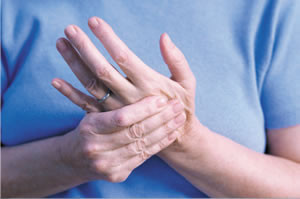
On call: What causes shaky hands?
Q . I've started to notice a slight shakiness in my writing hand. Is this just normal aging or should I get my shaky hands checked out?
A. If the shakiness is sudden or recent, you should talk to a doctor. It may be nothing serious—for example, just a reversible side effect from a medication or from too much caffeine. However, tremors could be an early sign of a more serious condition, like Parkinson's disease. In that case, you could benefit from early diagnosis and starting treatment.

12 minutes of exercise might lower risks for heart disease and diabetes
News briefs
Ever wonder how much exercise time it takes to start reducing your risk for heart disease and diabetes? It could be as little as 12 minutes, according to a Harvard study published Nov. 17, 2020, in Circulation. Scientists analyzed blood from more than 400 middle-aged men and women before and just after they'd pedaled for 12 minutes on cycling machines, reaching a vigorous rate. In particular, scientists measured levels of almost 600 natural body chemicals (metabolites). Exercise produced significant changes in most metabolites. For example, the level of one metabolite linked to heart disease and diabetes fell by 29%. Another metabolite tied to diabetes risk and liver disease fell by 18%. That suggests, but doesn't prove, that 12 minutes of daily exercise (that includes vigorous activity) might reduce the risk of heart disease and diabetes. What if you're more of a moderate-intensity exerciser? "We don't know yet if moderate-intensity exercise would have a similar effect on metabolites. But study participants started off with very light exercise, and each minute the intensity increased," says Dr. Gregory Lewis, the study's senior author and a cardiologist at Harvard-affiliated Massachusetts General Hospital.
Image: © artvea/Getty Images

Can you supercharge the Mediterranean diet?
News briefs
A Mediterranean-style diet is rich in vegetables, legumes, fruits, whole grains, nuts, seeds, poultry, fish, and olive oil, and it's associated with lower risks for heart disease and diabetes. And a "greener" version of the eating style might be even more effective, according to a small, randomized study published online Nov. 23, 2020, by the journal Heart. Researchers — some from Harvard — recruited about 300 sedentary, middle-aged people (mostly men) with high cholesterol or abdominal obesity and divided them into three groups. One received guidance for exercise and a healthy diet; another received exercise guidance and was assigned to eat a calorie-restricted Mediterranean diet; and one group received exercise guidance and was assigned to eat a "greener" calorie-restricted Mediterranean diet with less animal-based and more plant-based proteins (including walnuts and a type of duckweed — an aquatic plant), plus lots of green tea. After six months, people on the "green" diet had lost more weight and inches around their middles, and had bigger drops in cholesterol, than people in the other two groups. "Green" dieters also had steeper declines in insulin resistance, inflammation markers, and diastolic blood pressure (the lower number in the measurement), compared with the other two groups.
Image: © Lilechka75/Getty Images

How do you avoid kidney stone attacks?
On call
Q. I want to avoid another kidney stone attack. What's your advice about diet, coffee, tea, and alcohol?
A. The foods you eat and the amount of fluid you drink can contribute to some types of kidney stones. Certainly, you can help prevent recurrent kidney stones by paying attention to your fluid and food intake.

Novel diabetes drug may help people with heart failure, kidney disease
Research we're watching
A unique diabetes drug shows heart-related benefits in people with diabetes who also have recently worsening heart failure or kidney disease, according to two new studies.
The drug, sotagliflozin (Zynquista), belongs to a class of drugs called SGLT2 inhibitors, which cause the kidneys to release more sugar into the urine. The drug is also an SGLT1 inhibitor, meaning it decreases sugar absorption in the intestines. This dual action lowers high blood sugar, the hallmark of diabetes. In people with kidney disease, sotagliflozin lowered the total number of deaths from cardiovascular disease and hospitalizations and urgent visits for heart failure by about 26% compared with a placebo. In a second study, which included people with recently worsening heart failure, those taking the drug had a 33% decrease in those same heart-related measures compared with a placebo.

The benefits of brief bursts of exercise
Research we're watching
Doing vigorous exercise for just 12 minutes triggers changes in blood levels of substances linked to cardiovascular health, new research finds.
The study used data from 411 middle-aged adults from the Framingham Heart Study. Researchers measured levels of 588 substances involved in metabolism (metabolites) in the volunteers' blood before and immediately after 12 minutes of vigorous exercise on an exercise bike.
Light exposure at night may raise risk for heart disease
Whole grains may improve several heart risk factors at once
A lumbar belt may help ease low back pain
Children of centenarians may stay healthier and live longer too, study finds
Signs of pneumonia: Sometimes vague and unexpected
The surprising link between ovarian cancer and the fallopian tubes
Using a vibration plate: What it can — and can't — do for your body
People who walk more or walk faster live longer, study finds
For sleep apnea, a dental device may be as effective as CPAP
Rosacea treatments: What works?
Free Healthbeat Signup
Get the latest in health news delivered to your inbox!
Sign Up
