

Light exposure at night may raise risk for heart disease

Whole grains may improve several heart risk factors at once

A lumbar belt may help ease low back pain

Children of centenarians may stay healthier and live longer too, study finds

Signs of pneumonia: Sometimes vague and unexpected

The surprising link between ovarian cancer and the fallopian tubes

Using a vibration plate: What it can — and can't — do for your body

People who walk more or walk faster live longer, study finds

For sleep apnea, a dental device may be as effective as CPAP

Rosacea treatments: What works?
Depression Archive
Articles


Physicians and opioids: Part of the solution, but challenges ahead
As doctors acknowledge the role that they have played in the current opioid crisis, they, along with hospitals, medical schools, and other members of the medical community have worked to address the issue on several fronts, including instituting prescribing guidelines and offering continuing education to prescribers.
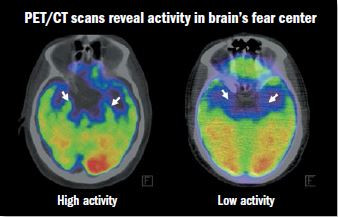
Uncovering the link between emotional stress and heart disease
The brain's fear center may trigger inflammation and lead to a heart attack. But stress reduction techniques can break the chain.
Image: © Cardiology Division, Massachusetts General Hospital
A small, almond-shaped area deep inside the brain called the amygdala is involved in processing intense emotions, such as anxiety, fear, and stress. Now, a new brain-imaging study reveals how heightened activity in the amygdala may trigger a series of events throughout the body that raises heart attack risk.
"This study identifies a mechanism that links stress, artery inflammation, and subsequent risk of a heart attack," says study leader Dr. Ahmed Tawakol, an associate professor of medicine at Harvard Medical School. Earlier animal studies have shown that stress activates bone marrow to make white blood cells. These infection-fighting cells trigger inflammation, a process that encourages the buildup of fatty plaque inside artery walls. "But what we didn't know was, does this happen in humans? And what is the role of the brain?" he says.

Tired of being fatigued
Don't accept regular fatigue as part of aging.
Image: © seb_ra/Thinkstock
Weariness, tiredness, lack of energy. There are many ways to describe those times when you are so fatigued you can't do anything. Often you bounce back after a quick rest or a good night's sleep, but if fatigue is occurring more often and lasting longer, it could be a sign of something more serious.
"Men may chalk up fatigue to aging, but there is no reason you should battle ongoing fatigue," says Dr. Suzanne Salamon, a geriatric physician with Harvard-affiliated Beth Israel Deaconess Medical Center. "Everyone gets tired sometimes, and your endurance may decline with age — you may not move as fast and sometimes tire quicker — but you should never be too fatigued to enjoy an active lifestyle."

Dealing with the symptoms of menopause
You could argue that the physical and mental changes that occur during menopause aren't really "symptoms." The term is usually associated with a disease, which menopause is not. Also, it is often hard to say which changes are a direct result of a drop in hormone levels and which are natural consequences of aging. Some of the symptoms overlap or have a cascade effect. For example, vaginal dryness may contribute to a lower sex drive, and frequent nighttime hot flashes may be a factor in insomnia.
Hot flashes and vaginal dryness are the two symptoms most frequently linked with menopause. Other symptoms associated with menopause include sleep disturbances, urinary complaints, sexual dysfunction, mood changes, and quality of life. However, these symptoms don't consistently correlate with the hormone changes seen with menopause transition.
Depression during pregnancy and after
For too many women, joyfully anticipated pregnancy and motherhood bring depression as an unexpected accompaniment. Children as well as mothers suffer. Depression during pregnancy may result in poor prenatal care, premature delivery, low birth weight, and, just possibly, depression in the child. Depression after childbirth (postpartum depression) can lead to child neglect, family breakdown, and suicide. A depressed mother may fail to bond emotionally with her newborn, raising the child's risk of later cognitive delays and emotional and behavior problems. Fortunately, if the depression is detected soon enough, help is available for mother and child.
Depression During Pregnancy
Depression in pregnant women is often overlooked, partly because of a widespread misconception that pregnancy somehow provides protection against mood disorders. In reality, almost 25% of cases of postpartum depression in womem start during pregnancy, and depression may peak at that time, according to a study published in the British Medical Journal.
Depression and pain
Hurting bodies and suffering minds often require the same treatment.
Pain, especially chronic pain, is an emotional condition as well as a physical sensation. It is a complex experience that affects thought, mood, and behavior and can lead to isolation, immobility, and drug dependence.
In those ways, it resembles depression, and the relationship is intimate. Pain is depressing, and depression causes and intensifies pain. People with chronic pain have three times the average risk of developing psychiatric symptoms — usually mood or anxiety disorders — and depressed patients have three times the average risk of developing chronic pain.

Short circuit migraines before they start
Author and migraine sufferer Joan Didion once wrote, "That no one dies of migraine seems, to someone deep into an attack, an ambiguous blessing." At that time, migraines weren't something that could be prevented. Today, that's a possibility for some people who have severe migraines, frequent migraines (more than three or four times a month), or migraines that don't respond well to treatment.
The cornerstone of migraine prevention is managing triggers like stress or certain foods or strong perfumes. Alternative and complementary therapies (like acupuncture) help some migraine sufferers keep headaches at bay.

What you can learn from wellderlies
Some people live long lives with no disease or serious illness. What can they teach you about healthy living?
Image: Creatas | Thinkstock /Thinkstock
You won't live forever, but it may be possible to live a long and maybe disease-free life by following the lead of "wellderlies."
This is a term to describe a special group of people who have reached ages 90 to 100 without having any major health issue or disease. And if they do get sick, it often happens late in their life and a short period before death.
Light exposure at night may raise risk for heart disease
Whole grains may improve several heart risk factors at once
A lumbar belt may help ease low back pain
Children of centenarians may stay healthier and live longer too, study finds
Signs of pneumonia: Sometimes vague and unexpected
The surprising link between ovarian cancer and the fallopian tubes
Using a vibration plate: What it can — and can't — do for your body
People who walk more or walk faster live longer, study finds
For sleep apnea, a dental device may be as effective as CPAP
Rosacea treatments: What works?
Free Healthbeat Signup
Get the latest in health news delivered to your inbox!
Sign Up
