

CoQ10: Should you take this popular supplement if you're on a statin?

Microplastics: A hidden health threat?

Oat vs. dairy milk: Nutrition, benefits, and downsides

What is tempeh? Benefits, nutrition, and how to use it

Healing after food poisoning

Children of centenarians may stay healthier and live longer too, study finds

Light exposure at night may raise risk for heart disease

A lumbar belt may help ease low back pain

Whole grains may improve several heart risk factors at once

Signs of pneumonia: Sometimes vague and unexpected
Cancer Archive
Articles

Ask the doctor: Medical x-rays and risk of cancer
Image: Thinkstock |
Q. I am currently receiving annual chest CT scans to check for hidden lung cancer (I used to be a heavy smoker). Should I be concerned about the cumulative effects of radiation exposure?
A. Radiation from medical scans can cause cancer, but the level of exposure considered potentially dangerous appears to be many times greater than the average CT scan. In addition, cancer from medical scans takes decades to develop, which makes it less of a concern for men being screened for lung cancer, which is currently only recommended for current or former smokers ages 55 and older. Radiation from CT scans is a bigger concern for children and young adults, who have more time to develop cancer after exposure to medical x-rays.
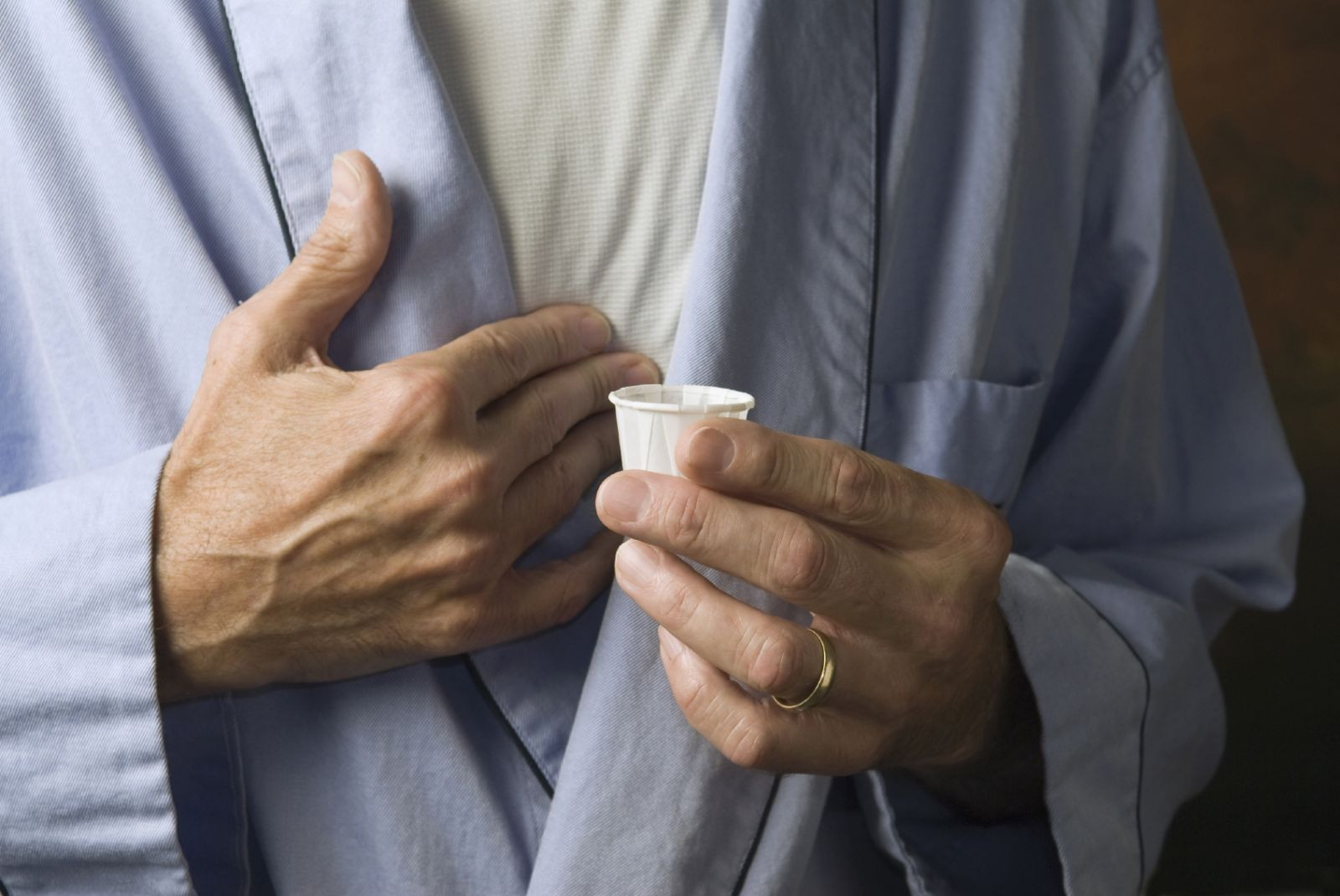
Is your heartburn pill working for you?
| Image: iStock |
For optimal results, you need to take your medication regularly and time it correctly to your meals.
Have you tried to cool the burning discomfort of heartburn with medication and failed to get full relief? If so, a few simple adjustments to optimize your treatment may be all you need.

Easy ways to stay regular
Increasing fluids may help improve regularity. In general, healthy older adults should consume about 3 to 6 cups of fluid per day. |
Improve digestive health by addressing underlying causes of irregularity, as well as fluids, diet, and exercise.

Harvard researchers link coffee with reduced colon cancer recurrence
Image: Thinkstock |
You may drink coffee because it tastes good or helps you wake up. But the popular brew is also associated with health benefits, such as reducing the risk for heart disease, stroke, and type 2 diabetes. Now a study from Harvard-affiliated Dana-Farber Cancer Institute published Aug. 17, 2015, in the Journal of Clinical Oncology suggests that regular consumption of caffeinated coffee may be associated with a reduced recurrence of colon cancer, and even a reduced risk of death. The study included nearly 1,000 people with stage 3 colon cancer. They filled out questionnaires about their dietary patterns during chemotherapy, and then again six months after treatment was completed. People who drank four or more cups of coffee per day were 42% less likely to have cancer return than non-coffee drinkers, and were 34% less likely to die from cancer or any other cause.
This type of study doesn't prove that coffee drinking caused the lower chance of cancer recurrence and death. A randomized trial is needed to show cause and effect. But researchers are encouraged by the results. "Regular coffee intake has been associated with a reduced risk of type 2 diabetes, and it may be that through a similar mechanism, coffee may also improve outcomes for people with advanced colon cancer," says Dr. Charles Fuchs, senior author on the paper.

Should postmenopausal women boost their aerobic exercise time?
Among 400 postmenopausal women who were previously inactive, those who did 300 minutes per week of moderate or high intensity exercise had more success at reducing total fat after one year than those who exercised for 150 minutes per week.
Following low-risk prostate cancers before starting treatment becoming more common
Treatment decisions are complicated for men with low-risk prostate cancer that grows slowly. These cancers may never become deadly during a man’s expected lifespan. And there is no conclusive evidence showing that treatment in these cases extends survival. So cancer specialists have been leaning toward monitoring low-risk prostate cancer carefully and starting treatment only when it begins to spread. This approach was once used only in academic cancer centers, but new research suggests that this strategy is becoming more common in urology practices throughout the United States and other countries as well.

Mediterranean diet may prevent breast cancer, but there are other reasons to pour on the olive oil
The PREDIMED study showed that the Mediterranean diet can statistically lower a person’s risk for cardiovascular disease, including heart attacks, strokes, and death from heart-related causes. The data also suggest that a Mediterranean diet is associated with a reduced chance of getting breast cancer. This small analysis has some limitations, but provides another reason to consider this already healthful way of eating.
Increased mammography may find more breast cancers without lowering deaths
Ideally, screening mammography detects small breast cancers so that they can be removed before they grow, metastasize, and kill. To tell whether screening is succeeding, researchers from Harvard and Dartmouth looked at the rates of mammography, the diagnosis of small breast cancers, large breast cancers, and breast cancer deaths in 16 million women 40 or older in the United States from 2000 through 2010. They found that when mammography rates increased 10%, the number of small cancers detected went up 25%, and the number of large cancers increased by 7%. There was no decline in breast cancer deaths. They concluded that mammography is finding—and women are being treated for—small cancers that may not progress to invasive disease or metastasize to other parts of the body.
The results, which were published online July 6, 2015, by JAMA Internal Medicine, echo those of earlier findings. They underscore a dilemma facing women and their doctors: To get annual mammograms and risk being treated for a tumor that may never become harmful, or have mammograms less frequently and risk missing a cancer until it is larger. The U.S. Preventive Services Task force recommends having a mammogram every one to two years for women ages 50 to 79. The American Cancer Society suggests annual mammograms beginning at age 40. You may want to discuss your personal risk profile, and your preferences, with your doctor.
Heart-healthy diet boosts survival in men with low-risk prostate cancer
Can a healthy diet help men with low-risk prostate cancer live longer? The authors of a new study say “yes.” A long-running Physicians’ Health Study, suggests that a diet that is good for the heart, brain, and other parts of the body may also help keep low-risk prostate cancer at bay. On the flip side, a diet rich in red meat and high-fat dairy foods appears to be hazardous for men with this kind of cancer. It isn’t clear why a diet that protects against heart disease would also protect against death from prostate cancer. Dr. Chavarro speculates that it’s because high-fat foods are easily broken down and absorbed by the digestive system, and so they might provide quick energy sources for growing tumors. Nevertheless, the results suggest that by eating healthily, men with prostate cancer can take a proactive step towards living a long life.

Heartburn and your heart
| Image: Bigstock |
Proton-pump inhibitors offer welcome relief for people with chronic heartburn. Here's what you need to know to use them wisely.
Heartburn didn't get its name by accident. Although the problem stems from excess stomach acid rather than heart-related issues, it provokes searing pain focused directly behind the breastbone. Of the over eight million emergency room visits for chest pain each year, severe heartburn, also known as gastroesophageal reflux disease (GERD), accounts for over half the cases in which actual heart problems are ruled out.
CoQ10: Should you take this popular supplement if you're on a statin?
Microplastics: A hidden health threat?
Oat vs. dairy milk: Nutrition, benefits, and downsides
What is tempeh? Benefits, nutrition, and how to use it
Healing after food poisoning
Children of centenarians may stay healthier and live longer too, study finds
Light exposure at night may raise risk for heart disease
A lumbar belt may help ease low back pain
Whole grains may improve several heart risk factors at once
Signs of pneumonia: Sometimes vague and unexpected
Free Healthbeat Signup
Get the latest in health news delivered to your inbox!
Sign Up
