

What causes knee pain: How doctors make a diagnosis

Study: At-home colorectal cancer screening may significantly cut colon cancer deaths

Where you carry excess weight matters in predicting heart disease risk

Tai chi walking: What is it and does it work?

Fatty liver disease: Should you be tested?

Weight-loss drug may lower risk of heart attacks and infections

Testosterone therapy without evidence of deficiency may boost heart risk

Even a little exercise linked with lower stroke risk in people with afib

FDA approves first mRNA-based flu vaccine

Migraine: How it's diagnosed and what that means
Mental Health Archive
Articles
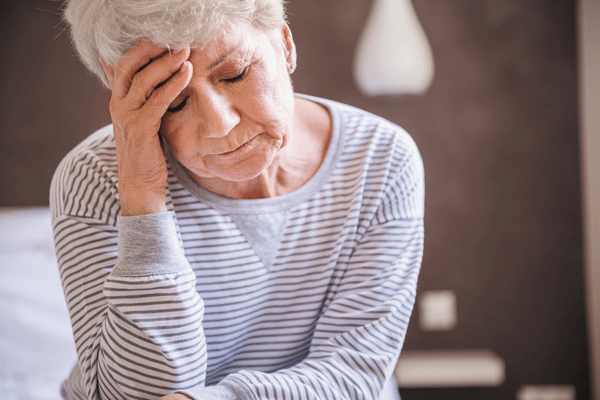
Depression and heart disease: A two-way street
Watch for the warning signs of depression, which is often missed in people with heart disease.
Image: gpointstudio/Thinkstock
All people have days when they feel sad, gloomy, or down in the dumps. But if those feelings last for weeks and you gradually stop feeling hopeful or happy about anything in your life, you may have depression. Like heart disease, depression is common, so it's not unusual to have both conditions together. In fact, depression is about twice as likely to occur in people with heart disease compared with the general population. And people with depression face a heightened risk of heart disease.
"It's really important for people to be aware of this link and to get treatment for depression, because it can be very debilitating," says Dr. Christopher Celano, a psychiatrist at the Cardiac Psychiatry Research Program at Harvard-affiliated Massachusetts General Hospital.

Exercising to relax
How does exercise reduce stress? Surprising answers to this question and more.
How does exercise reduce stress, and can exercise really be relaxing?
Rest and relaxation. It's such a common expression that it has become a cliche. And although rest really can be relaxing, the pat phrase causes many men to overlook the fact that exercise can also be relaxing. It's true for most forms of physical activity as well as for specific relaxation exercises.

What should you do during a psychiatric medication shortage?
With the increased stress caused by the the COVID-19 pandemic, prescriptions for medications to treat mental illnesses have increased, leading to potential shortages of certain psychiatric medications. This means that some people might need to discuss their options with their prescribing clinician.

Will an app keep you on your medication schedule?
News briefs
The use of electronic apps (applications) downloaded to a smartphone or laptop has been revolutionizing the way we do many tasks, including staying healthy and socially connected. And a review of studies published online Jan. 30, 2020, by BMJ Open suggests that certain apps may also help you do a good job of staying on your medication schedule. Researchers combed through nine randomized controlled trials that included about 1,000 mostly middle-aged and older adults with chronic health conditions such as cardiovascular disease, depression, or Parkinson's disease. People who used apps to support them in taking medications were twice as likely to report that they stuck to a medication regimen compared with people who didn't use apps. The study doesn't prove that apps are going to make people take their pills; the information in the study came from self-reported adherence, not objective measures like pill count or blood levels of drugs. But since these were randomized trials, the results probably are valid. And apps can help in many ways: you can use medication apps not only to set reminders to take medications and log when you've had them, but also to look up potential drug interactions, renew prescriptions, identify pills, and even find cheaper drug prices.
Image: Pornpak Khunatorn/Getty Images

How stress can harm your heart
Stressful experiences are hard to avoid and impossible to predict. But taking steps to bolster your resilience may help.
The palpable stress stemming from the COVID-19 pandemic has made things once considered stressful — such as deadlines or traffic jams — seem pretty trivial in comparison. But while you may not be able to avoid the stressful situations that come your way, there are ways to mitigate your body's response to those events.
So far, the evidence that stress management strategies can protect your heart is limited but growing. Yet there's no doubt that stress contributes to heart problems. "The link between stress and cardiovascular disease is well established," says cardiologist Dr. Ahmed Tawakol, an associate professor of medicine at Harvard Medical School.

Make up your mind
Do you struggle with decisions? These strategies can help you make good choices more efficiently.
We make countless choices every day. Most are the mundane variety: what to eat, what to wear, what movie to watch. But often our decisions (or lack thereof) have a significant impact on our well-being.
Poor decision making is often a consequence of natural cognitive decline. This can cloud people's judgment about what is the right course of action or make it harder to weigh multiple options. The result is that people make questionable choices, or they feel overwhelmed and don't make any decision, which is sometimes even worse.

Are video calls a loneliness cure?
If you haven't made a video call yet, give it a try to fight isolation.
When much of the world began lockdowns to battle coronavirus in March 2020, many people turned to video calls to fight off the loneliness that often accompanies social isolation. Tech companies reported that the use of video calls for socializing surged by as much as 80%, enabling people to "see" family and friends. But it doesn't take a lockdown to warrant the use of this technology.
The epidemic of loneliness and isolation
Loneliness affects more than a third of older Americans. Another third of older adults feel isolated: they may be living alone, lack transportation, or live far from loved ones. Or they may have outlived a spouse or friends.

Live in the moment, but also plan for future stress
In the journals
Need help staying positive during trying times? Live more in the moment, but also focus on how to cope with future stresses. This advice comes from a study published online March 25, 2020, by Personality and Individual Differences.
Researchers explored two factors in how people handle stress: mindfulness and proactive coping. Mindfulness is when people live in the moment rather than dwelling on the past or worrying about the future. Proactive coping is when people make efforts to reduce the effect stress has on them.

Is your habit getting out of control?
Stress can raise your risk of developing a substance use disorder. Here's how to get help when you need it.
In recent months, Americans' collective stress level has risen in response to the pandemic and economic fallout. Many people are looking for ways to help themselves feel better. Unfortunately, stress can trigger a number of unhealthy coping strategies — drinking alcohol to excess, bingeing on junk food, engaging in drug use, or other harmful behaviors. If you've ever had a substance use disorder, a bout of significant stress may even put your recovery at risk.
This is likely due to the shift the human brain makes in times of trauma. Instead of focusing on long-term goals, your brain zeroes in on short-term objectives.

Should you use an antidepressant to get through a difficult time?
Before taking pills for a temporary situation, consider the risks.
You might think that using an antidepressant temporarily could help you weather a challenging time, such as a period of grief, extreme stress, or serious illness. But you shouldn't just jump into taking an antidepressant, cautions Dr. Jane Erb, psychiatric director of the Behavioral Health Integration in Primary Care Program at Harvard-affiliated Brigham and Women's Hospital.
"There's no evidence that taking an antidepressant in the short term will help or that it will prevent longer-term consequences of stress, such as post-traumatic stress disorder," she says.
What causes knee pain: How doctors make a diagnosis
Study: At-home colorectal cancer screening may significantly cut colon cancer deaths
Where you carry excess weight matters in predicting heart disease risk
Tai chi walking: What is it and does it work?
Fatty liver disease: Should you be tested?
Weight-loss drug may lower risk of heart attacks and infections
Testosterone therapy without evidence of deficiency may boost heart risk
Even a little exercise linked with lower stroke risk in people with afib
FDA approves first mRNA-based flu vaccine
Migraine: How it's diagnosed and what that means
Free Healthbeat Signup
Get the latest in health news delivered to your inbox!
Sign Up
