

Signs of pneumonia: Sometimes vague and unexpected

Using a vibration plate: What it can — and can't — do for your body

The surprising link between ovarian cancer and the fallopian tubes

People who walk more or walk faster live longer, study finds

For sleep apnea, a dental device may be as effective as CPAP

Rosacea treatments: What works?

Carb cycling: What is it, and does it work?

Salmonella, E. coli, Cyclospora, and other germs that cause food poisoning: What you need to know

Melatonin or magnesium: Can either supplement help you sleep?

Understanding orthorexia: Have your healthy eating goals gone too far?
Medical Tests & Procedures Archive
Articles
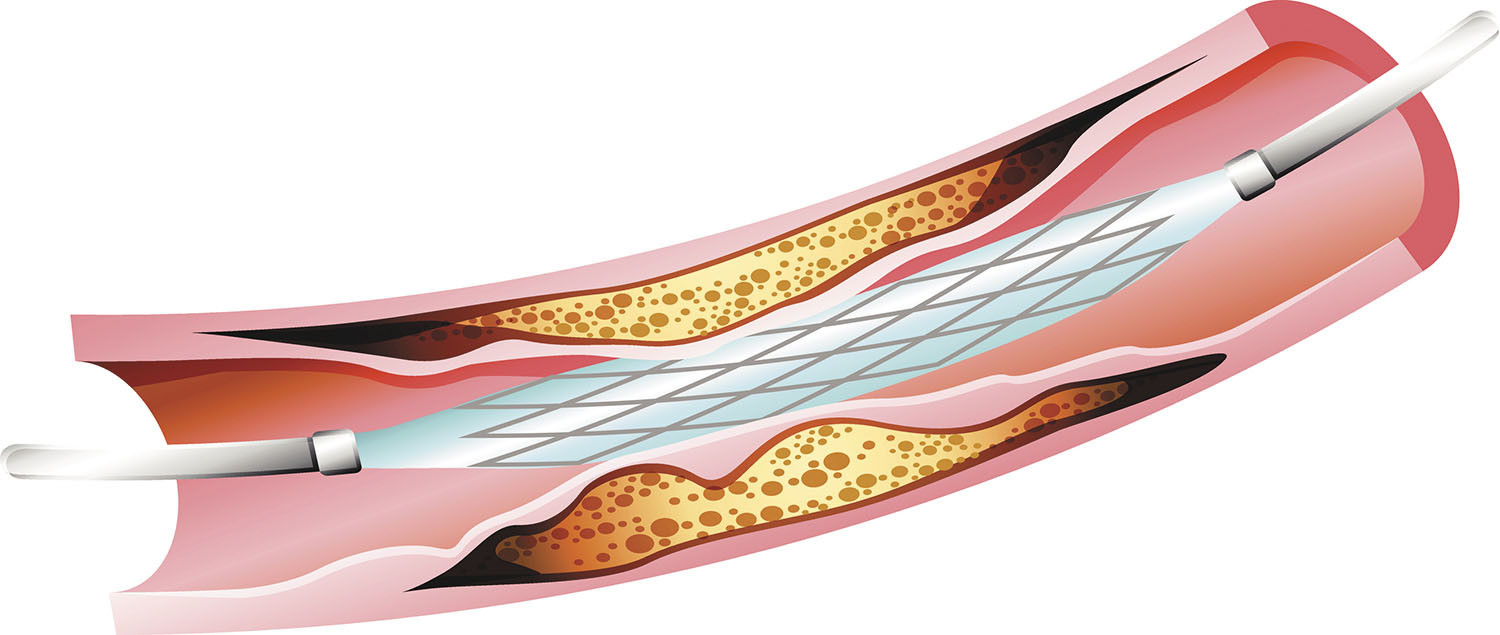
When do you need a heart stent?
A stent can save your life during a heart attack, but can it help prevent one?
Image: © jauhari1/Getty Images
An estimated two million people get coronary artery stents every year, and if you have coronary artery disease, there is a good chance your doctor will suggest you get one.
But do you really need it? In 2013, the American Medical Association issued a report that said stents were one of the most highly overused medical interventions.

The best way to measure your blood pressure at home
Get an approved blood pressure device and follow these steps.
Monitoring your blood pressure at home has always made good sense. Blood pressure is one of the main indicators of cardiovascular health, and taking measurements is an important way to manage chronic conditions between doctor visits.
Now, with a pandemic under way and fewer people visiting their doctors, the case for monitoring blood pressure at home has never been stronger. Home monitoring yields valuable information for you and your physician, who'll be counting on you to provide accurate blood pressure measurements when you talk on the phone or in a video chat.

Telemedicine: A good fit for cardiovascular care?
For monitoring conditions that contribute to heart attack and stroke, virtual doctor visits are much more convenient than in-person appointments. Where is this trend headed?
Virtual doctor visits — when you talk to a physician on a video call instead of during an in-person office exam — have been available in certain places for years. But they never really caught on until the pandemic hit earlier this year. Almost overnight, virtual care became an indispensable tool for managing coronavirus infections and other health conditions during the crisis.
In 2019, virtual visits accounted for fewer than 1% of the appointments at Mass General Brigham, a large health care system founded by Harvard-affiliated Brigham and Women's Hospital and Massachusetts General Hospital (MGH). "But during the peak of the coronavirus surge in Boston, 80% of all visits were done virtually," says Dr. Lee Schwamm, director of the Center for TeleHealth at MGH and vice president of virtual care at Mass General Brigham.

Your breasts may offer clues about your heart health
Could a closer look at your mammogram help guide efforts to prevent heart disease?
Your mammogram could offer a glimpse at more than just the health of your breasts. It may also provide important clues about your heart.
When a radiologist reads a mammogram, she or he sometimes sees little white streaks that look like lines of chalk inside the arteries of your breast. These lines are actually deposits of calcium called arterial calcifications. If you have them, it could mean that you have similar deposits in other arteries inside your body, including those that bring blood to your heart muscle — a known risk factor for heart disease.

A new way to screen for cancer
Blood testing to detect early cancer may be closer to reality than ever before.
When it comes to most cancers, the sooner they're found, the better. "Identifying cancer in its earlier stages offers improved chances for treating it before it can grow and spread," says Dr. Brian Wolpin, director of the Gastrointestinal Cancer Center at Harvard-affiliated Dana-Farber Cancer Institute.
Unfortunately, there are not reliable tools to screen for most cancers. Examples of effective screening tests that do exist now include colonoscopies that look for polyps and early colorectal cancers, as well as imaging tests like mammograms for early signs of breast cancer and chest CT scans for localized lung cancer among former or current smokers.

How do doctors evaluate treatments for heart disease?
Studies of drugs, diets, and devices all come with their own unique set of challenges.
The best way to know if a new medical treatment truly works is with a randomized controlled trial — the "gold standard" of research studies, also known simply as a clinical trial. Volunteers are randomly assigned to receive either the new treatment or the comparison, which may be a placebo (an inactive therapy) or a treatment that's already available.
As the nation's top cause of death, cardiovascular disease has been at the leading edge of evidence generation, says Dr. Robert Yeh, director of the Smith Center for Outcomes Research in Cardiology at Harvard-affiliated Beth Israel Deaconess Medical Center. "We probably have more evidence for cardiovascular treatments than for any other field of medicine," he says. Among the studies with the greatest impact were the clinical trials that heralded new therapies to treat heart attacks. These include clot-dissolving drugs in the 1980s, followed in the 1990s by artery-opening angioplasty procedures, which remain the standard of care today. Stents, the tiny mesh tubes used in these procedures, have also been extensively studied in clinical trials (see "Testing devices: Different dilemmas").


New risk model could better identify people at high risk for pancreatic cancer
Research we're watching
A new tool to identify people who might be at higher risk for pancreatic cancer could help doctors find cases earlier, when they are most treatable. Researchers from the Harvard T.H. Chan School of Public Health created a risk model that did a better job than current models of finding people at high risk for the disease. It takes into account clinical and genetic factors as well as blood levels of biomarkers (substances that could potentially indicate disease). To test the model researchers used data from four large clinical studies. They applied the tool to 500 known pancreatic cancer patients and more than 1,000 people without cancer. The researchers then assessed how well the tool would have predicted the risk of pancreatic cancer. Pancreatic cancer, which is the third leading cause of cancer death in the United States, is challenging to treat because most people already have advanced disease when they are diagnosed. It's hoped that identifying people who are at high risk will eventually allow doctors to screen these individuals to find cancers when they are smaller and more curable.
Image: Raycat/Getty Images

Can high-tech heart scans help prevent heart attacks?
Cardiac CT angiography is gaining ground as a fast, effective way to diagnose coronary artery disease.
If you experience a short-lived squeezing sensation or discomfort in your chest when you exercise or feel stressed, one possible cause is inadequate blood flow to the heart. Known as stable angina, this condition suggests you have heart disease and may be at risk for a heart attack.
Doctors can use a number of different tests to diagnose (or rule out) inadequate blood flow to the heart muscle. The first step is frequently a type of stress test, which checks the heart's electrical activity, muscle function, or blood flow patterns while the heart is under stress from exercise or medication. Stress tests can identify areas of reduced blood flow, which suggest a narrowing in the artery that supplies that part of the heart.

Different types of echocardiography
Ask the doctor
Q. A friend recently had what his doctor called a "3D echocardiogram." How is that different from a standard echocardiogram?
A. All echocardiograms use high-frequency sound waves (ultrasound) to create still and video images of your heart. But there are two different procedures for getting the images and several variations of this common test, which doctors often refer to simply as an echo.
Signs of pneumonia: Sometimes vague and unexpected
Using a vibration plate: What it can — and can't — do for your body
The surprising link between ovarian cancer and the fallopian tubes
People who walk more or walk faster live longer, study finds
For sleep apnea, a dental device may be as effective as CPAP
Rosacea treatments: What works?
Carb cycling: What is it, and does it work?
Salmonella, E. coli, Cyclospora, and other germs that cause food poisoning: What you need to know
Melatonin or magnesium: Can either supplement help you sleep?
Understanding orthorexia: Have your healthy eating goals gone too far?
Free Healthbeat Signup
Get the latest in health news delivered to your inbox!
Sign Up
