

Even a little exercise linked with lower stroke risk in people with afib

Testosterone therapy without evidence of deficiency may boost heart risk

Weight-loss drug may lower risk of heart attacks and infections

What to eat on the DASH diet

Migraine: How it's diagnosed and what that means

Tricep workouts you can do at home

Mindfulness practices to reduce stress and improve focus

Antihistamines may not offer meaningful relief from eczema symptoms

Overweight and taking blood pressure medications: Study finds it's a trend that's working

FDA approves first mRNA-based flu vaccine
Medical devices Archive
Articles
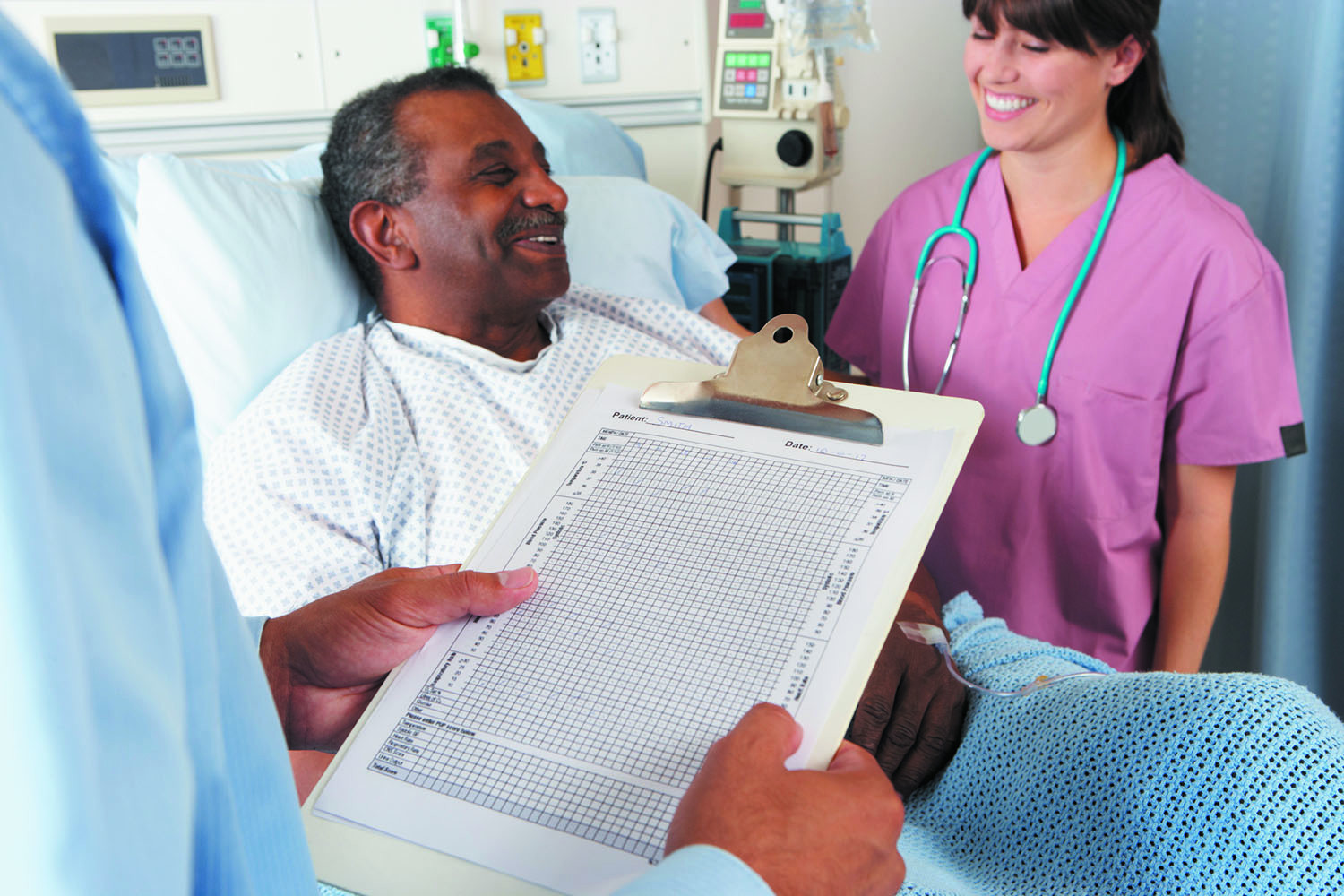
Stay healthy at the hospital
Protect yourself to ensure a speedy recovery and avoid infections and readmission.
Image: © Monkey Business Images Ltd|/Thinkstock
Whether you go in for surgery, testing, or an outpatient procedure, your hospital stay can pose further health risks if you are not careful.
"Your potential risks depend in part on why you have to go into the hospital and the facility itself, but there are steps you can take to minimize your risk, especially when it comes to developing hospital-acquired infections that can lead to a longer hospital stay or readmission," says Dr. Erica Shenoy, an infectious diseases specialist and associate chief of infection control at Harvard-affiliated Massachusetts General Hospital.

7 questions to ask when you’re given a prescription for an opioid
A discussion with your doctor may minimize your chance of becoming dependent on or addicted to these powerful painkillers.
Opioid misuse is now one of most important health problems in the United States, rivaling smoking as a cause of death. Although news reports tend to focus on an opioid crisis among the young, the opioid epidemic is increasingly affecting older people as well. In fact, the rates of hospitalization for opioid overdoses among Medicare recipients quintupled from 1993 through 2012. Although older people are still less likely than younger ones to become addicted or succumb to opioid overdoses, they are more likely to suffer side effects from extended opioid use, including memory and cognition problems and falls.
"Opioid use and pain management is something we deal with constantly," says Dr. Michael L. Barnett, assistant professor of health policy at the Harvard T.H. Chan School of Public Health. According to a report from the U.S. Department of Health and Human Services, nearly one-third of Medicare beneficiaries received at least one prescription for opioids in 2015, and those who did got an average of five such prescriptions or refills. Dr. Barnett and a team of his colleagues decided to investigate how Medicare recipients get opioid prescriptions in the first place.

Do calcium supplements interfere with calcium-channel blockers?
Do calcium supplements interfere with calcium-channel blockers?
Ask the doctors
Q. I've just been prescribed the calcium-channel blocker Norvasc [amlodipine] for high blood pressure. I also take a 600-milligram calcium supplement every day for my bones. Will they cancel each other out?
A. You don't need to worry about taking a daily calcium supplement with a calcium-channel blocker. In the body, calcium not only builds bones but also powers muscle contractions. Calcium-channel blockers lower blood pressure by reducing the amount of calcium available to contract blood vessels. However, they don't prevent calcium in the blood from being incorporated into bone.
Short-term estrogen use doesn’t protect against dementia, study indicates
Research we're watching
Although hormone therapy was once thought to help preserve cognitive function after menopause, there is mounting evidence to the contrary, including a recent report from the Kuopio Osteoporosis Risk Factor and Prevention Study.
Researchers in that project sent questionnaires to all women ages 47 to 56 who lived in the Finnish province of Kuopio in 1987. The women completed questionnaires every five years, providing information about their lifestyles, medication use, and illnesses. The researchers checked the information in the questionnaires against prescription registries and medical records up to 2009.
Fluid around the heart
Ask the doctor
Q. My uncle was told he had fluid around his heart. What does that mean, and how is it treated?
A. The heart is surrounded by a thin, two-layer sac called the pericardium. It protects the heart, limits its motion, and prevents it from expanding too much when blood volume increases. Normally, there isn't any fluid between the pericardium and the heart muscle. But there are many reasons fluid can accumulate in this space, including an infection, a heart attack, surgery, cancer, kidney failure, and a host of other conditions.
Safety of implanted cardiac devices and MRIs: An update
Research we're watching
Contrary to conventional wisdom, most people with older implanted cardiac devices may be able to safely get a magnetic resonance imaging (MRI) scan, according to a study in the Feb. 23, 2017, New England Journal of Medicine.
The devices, which include pacemakers and implantable cardioverter-defibrillators (ICDs), help regulate and restore the heart's normal rhythm. Concerns that the powerful magnets in MRIs could damage these battery-operated devices led to the development of newer, MRI-safe devices. But an estimated two million people in the United States have one of the older devices, and at least half of them might need an MRI in the future.
Aspirin therapy may not lower heart attack risk for those with type 2 diabetes
In the journals
Low-dose aspirin therapy is standard treatment for people who have suffered a heart attack or stroke to protect them from a second one. But what about people who don't have cardiovascular disease, but do have specific risk factors, such as type 2 diabetes? A study published in the Feb. 14, 2017, Circulation found that low-dose aspirin therapy in fact did not lower this group's risk for heart attack or stroke.
The researchers recruited more than 2,500 people, ages 30 to 85, with type 2 diabetes and randomly assigned them to take either 81 mg or 100 mg of aspirin daily, or no aspirin, for three years. At the 10-year follow-up, they found that the aspirin therapy did not lower risk of either heart attack or stroke compared with taking no aspirin at all. The reason is not clear, but the researchers speculated that people with diabetes might not experience the expected anti-clotting action of aspirin.

Prescription bargain hunt
Here's how to get a better deal on your medication.
Image: © Habman_18/Thinkstock
You're not alone if you've ever skipped filling a prescription because it was expensive. Cost is one barrier to keeping people on their medication regimens. "It's a real problem. Medications only work if people take them, and you can't take them if you can't afford them," says Dr. Joshua Gagne, a pharmacist and epidemiologist with Harvard-affiliated Brigham and Women's Hospital.
According to a National Center for Health Statistics survey, about 8% of adults in the United States don't take prescribed medications because they can't afford them.

Should I try a new blood thinner?
Ask the doctor
Image: © bowdenimages/Thinkstock
Q. I've been taking the blood thinner warfarin (Coumadin) for a few years. I know there are new kinds of blood thinners, but I've heard they have downsides. Should I stick with warfarin?
A. Here's what you need to know. Some medical conditions lead to blood clots. The most common one is the irregular heart rhythm called atrial fibrillation. About 20% of all strokes are caused by clots that result from atrial fibrillation — usually because of inadequate treatment with blood thinners.
Implanted defibrillators in older people: What to expect
Research we're watching
Implantable cardioverter-defibrillators (ICDs) are miniature electronic devices placed under the skin below the collarbone to sense and stop abnormal heart rhythms. A study in the Jan. 24, 2017, Journal of the American College of Cardiology provides new information about outcomes in older people who receive these lifesaving devices.
The study included 12,420 people with an average age of 75. All had survived a sudden cardiac arrest and received an ICD. Nearly four in five of the participants survived at least two years. During the two-year period, nearly 65% were hospitalized at some point. Many were admitted to skilled nursing facilities during the study, including about 32% of those ages 80 and older.
Even a little exercise linked with lower stroke risk in people with afib
Testosterone therapy without evidence of deficiency may boost heart risk
Weight-loss drug may lower risk of heart attacks and infections
What to eat on the DASH diet
Migraine: How it's diagnosed and what that means
Tricep workouts you can do at home
Mindfulness practices to reduce stress and improve focus
Antihistamines may not offer meaningful relief from eczema symptoms
Overweight and taking blood pressure medications: Study finds it's a trend that's working
FDA approves first mRNA-based flu vaccine
Free Healthbeat Signup
Get the latest in health news delivered to your inbox!
Sign Up
