Fitness for longevity: Which type matters most?
New research links higher scores on certain fitness tests — including those that assess balance and agility — to a longer life.
- Reviewed by Kristina Dunlea, PT, DPT, NCS, Contributor
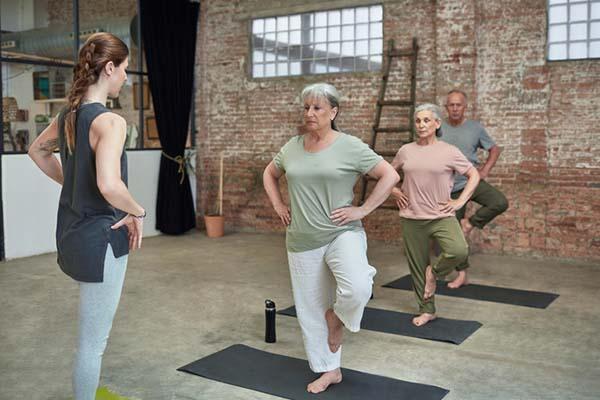
Exercise that gets your heart pumping and strengthens your muscles helps stave off common chronic diseases, boosting your odds of living a long, healthy life. But being able to stand on one leg for 30 seconds is also an important predictor of longevity, according to a study of more than 13,000 older adults (see “A balanced approach to living longer”).
“There is increasing awareness of exercises that help with balance, especially since many community and senior centers now offer tai chi classes,” says Kristina Dunlea, a physical therapist at Harvard-affiliated Brigham and Women’s Hospital. (Tai chi, which combines gentle, flowing movements with deep breathing, is known for improving balance). However, people do not always focus on their balance until it becomes a noticeable concern, often after they have experienced a decline in stability or a fall, she adds.
A balanced approach to living longerIn a study published Aug. 10, 2026, in JAMA Network Open, researchers explored how scores on standardized fitness tests are predictors of longevity. Here’s a summary of the study and its findings. Who: 13,423 community-dwelling adults ages 65 and older. What: Researchers used tests to assess participants for four main types of fitness:
When: Participants completed the tests between 2015 and 2016. During the seven-year follow-up, 1,631 died. Key findings: People who scored highest on a composite score of cardiorespiratory, strength, and balance and agility scores had a 61% lower risk of dying compared to those with the lowest scores. Flexibility scores weren’t tied to lifespan. Balance and agility assessments showed the strongest links to longevity, followed by lower-body strength and cardiorespiratory fitness. Limitations: The findings don’t prove that better performance on these fitness tests can extend a person’s life. The participants were only tested at one point in time, and their willingness to enroll and undergo testing means they may have been healthier than average. A two-minute march may not be an ideal way to assess cardiovascular fitness. Also, people with good balance may simply be less frail and healthier overall, which accounts for their longevity. |
Which types of fitness matter most for a longer life?
As the recent findings suggest, no single type of fitness stands out as being the most important for longevity. What may surprise some people is that balance and agility appear to be just as crucial for longevity as cardiovascular fitness and muscle strength.
Tests used in the study included the one-leg stance (to assess balance) and the 8-foot up-and-go test (to assess agility as well as balance). These and similar tests can be good ways to see if you need to improve those skills.
To test and practice your balance, see the “Single-leg stance” exercise. Be sure to stand near a counter, sturdy chair, or wall if needed for support. The 8-foot up-and-go test involves rising from a chair, walking eight feet forward, around a cone, walking back, and sitting back down.
Why are balance and agility important as you age?
Among adults 65 and older, falls are the leading cause of injury and injury-related death, and the risk of dying from a fall rises with age. “A fall can lead to serious injuries such as a hip fracture, which can significantly increase a person’s risk of dying within the following year,” says Dunlea.
How can you improve your balance and agility?
If you already have balance problems, it’s best to work with a physical therapist before trying balance exercises on your own, Dunlea advises. People who can’t yet stand on one leg can start by shifting their weight gently from side to side, or doing heel raises while holding on to a counter or sturdy chair and building up from there. “An easy way to build balance into your day is to stand on one leg during moments when you’re already still, such as when you’re brushing your teeth or waiting for the kettle to boil. Stay close to a countertop in case you need support,” says Dunlea.
Tai chi classes are a great way to improve balance, strength, and stamina. Doing yoga or dancing has similar benefits, and even just walking and taking the stairs also helps improve your balance, she adds. For more information, see Everyday Balance Exercises, an online guide from Harvard Medical School.
Single-leg stance exercise
Use this exercise to test and practice your balance.
Photo by Michael Carroll |
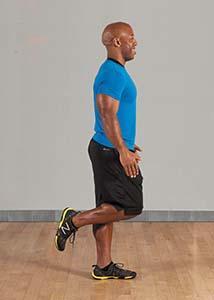
Image: © xavierarnau/Getty Images
About the Author

Julie Corliss, Executive Editor, Harvard Heart Letter
About the Reviewer

Kristina Dunlea, PT, DPT, NCS, Contributor
Disclaimer:
As a service to our readers, Harvard Health Publishing provides access to our library of archived content. Please note the date of last review or update on all articles.
No content on this site, regardless of date, should ever be used as a substitute for direct medical advice from your doctor or other qualified clinician.