

CoQ10: Should you take this popular supplement if you're on a statin?

Oat vs. dairy milk: Nutrition, benefits, and downsides

Microplastics: A hidden health threat?

Healing after food poisoning

What is tempeh? Benefits, nutrition, and how to use it

Light exposure at night may raise risk for heart disease

Whole grains may improve several heart risk factors at once

A lumbar belt may help ease low back pain

Children of centenarians may stay healthier and live longer too, study finds

Signs of pneumonia: Sometimes vague and unexpected
Alzheimer's Disease Archive
Articles
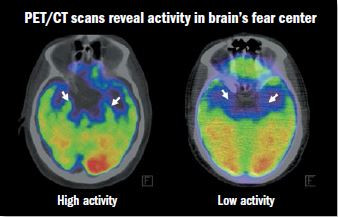
Uncovering the link between emotional stress and heart disease
The brain's fear center may trigger inflammation and lead to a heart attack. But stress reduction techniques can break the chain.
Image: © Cardiology Division, Massachusetts General Hospital
A small, almond-shaped area deep inside the brain called the amygdala is involved in processing intense emotions, such as anxiety, fear, and stress. Now, a new brain-imaging study reveals how heightened activity in the amygdala may trigger a series of events throughout the body that raises heart attack risk.
"This study identifies a mechanism that links stress, artery inflammation, and subsequent risk of a heart attack," says study leader Dr. Ahmed Tawakol, an associate professor of medicine at Harvard Medical School. Earlier animal studies have shown that stress activates bone marrow to make white blood cells. These infection-fighting cells trigger inflammation, a process that encourages the buildup of fatty plaque inside artery walls. "But what we didn't know was, does this happen in humans? And what is the role of the brain?" he says.
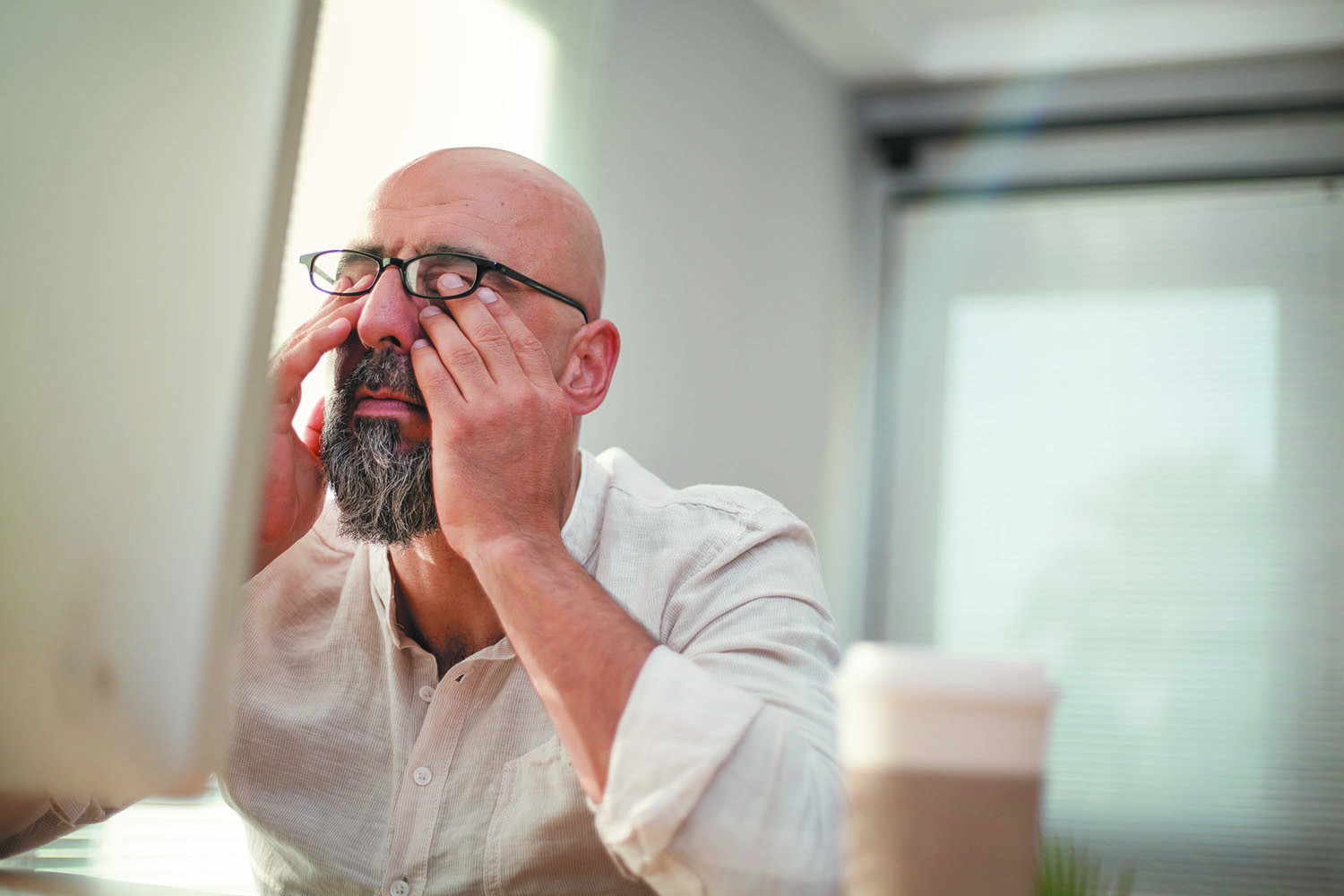
Tired of being fatigued
Don't accept regular fatigue as part of aging.
Image: © seb_ra/Thinkstock
Weariness, tiredness, lack of energy. There are many ways to describe those times when you are so fatigued you can't do anything. Often you bounce back after a quick rest or a good night's sleep, but if fatigue is occurring more often and lasting longer, it could be a sign of something more serious.
"Men may chalk up fatigue to aging, but there is no reason you should battle ongoing fatigue," says Dr. Suzanne Salamon, a geriatric physician with Harvard-affiliated Beth Israel Deaconess Medical Center. "Everyone gets tired sometimes, and your endurance may decline with age — you may not move as fast and sometimes tire quicker — but you should never be too fatigued to enjoy an active lifestyle."

Depression and pain
Hurting bodies and suffering minds often require the same treatment.
Pain, especially chronic pain, is an emotional condition as well as a physical sensation. It is a complex experience that affects thought, mood, and behavior and can lead to isolation, immobility, and drug dependence.
In those ways, it resembles depression, and the relationship is intimate. Pain is depressing, and depression causes and intensifies pain. People with chronic pain have three times the average risk of developing psychiatric symptoms — usually mood or anxiety disorders — and depressed patients have three times the average risk of developing chronic pain.

Emergencies and First Aid - Removing a Speck From the Eye
Removing a Speck From the Eye
Occasionally, an eyelash or speck of dirt gets into the eye and causes irritation. If tears that form do not wash out the object, it can sometimes be removed by pulling the upper eyelid down over the lower eyelid. The lashes of the lower eyelid may brush out any foreign object that is caught under the upper lid.
If this does not work, try either of the procedures described below.

What you can learn from wellderlies
Some people live long lives with no disease or serious illness. What can they teach you about healthy living?
Image: Creatas | Thinkstock /Thinkstock
You won't live forever, but it may be possible to live a long and maybe disease-free life by following the lead of "wellderlies."
This is a term to describe a special group of people who have reached ages 90 to 100 without having any major health issue or disease. And if they do get sick, it often happens late in their life and a short period before death.

Ask the doctor: Do artificial sweeteners cause insulin resistance?
In preliminary research, sucralose and acesulfame potassium increased insulin levels, although more studies are necessary to determine whether they—or other artificial sweeteners—increase the risk of insulin resistance.
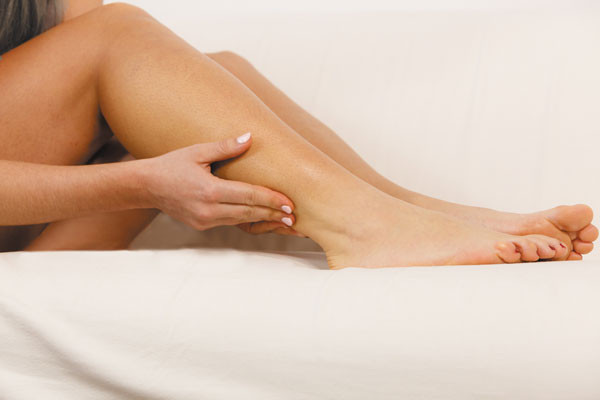
Is there hope for leg cramp sufferers?
Despite the lack of a universally recognized therapy for nighttime leg cramps, a few approaches may be worth trying.
Image: Monkey Business Images/Thinkstock
Few things are more jarring to a night's sleep than shooting calf pains. If you have nocturnal leg cramps, you have lots of company. Although they can strike people at any time of life, they become more common with age. Among people over 60, almost half report having leg cramps, a third say they are awakened by cramps at night, and 15% report weekly episodes.
What causes leg cramps?
Preventing cramps
There are no FDA-approved medications for leg cramps, and the U.S. Preventive Services Task Force hasn't issued guidelines for treating them. However, the American Academy of Neurology (AAN) has issued the following advice on common therapies, based on scientific evidence of effectiveness.
Stretching exercises. The AAN says that there are not enough data to say for sure that stretching helps reduce the frequency of muscle cramps. That doesn't mean that the exercises are ineffective or harmful, and doing them can help contribute to the flexibility of your legs.
Quinine. There is solid evidence that quinine and quinine derivatives are effective in reducing the frequency of muscle cramps, although the magnitude of benefit is small. However, quinine is out-of-bounds for most people. The FDA has issued repeated warnings against using quinine (which is approved only to treat certain types of malaria) to prevent or treat leg cramps because it may cause serious side effects, including bleeding and kidney damage. Although doctors can still prescribe quinine, it is recommended only when cramps are disabling and when the person can be carefully monitored for side effects.
Vitamin B complex. There is some evidence that taking a daily capsule containing eight B vitamins—B1 (thiamine), B2 (riboflavin), B3 (niacin), B5 (pantothenic acid), B6, B7 (biotin), B9 (folate), and B12—may prevent cramps.
Calcium-channel blockers. Evidence indicates that one calcium-channel blocker—diltiazem (Cardizem, Dilacor XR)—is possibly effective.
Ineffective therapies. The AAN found enough evidence to indicate that magnesium supplements and gabapentin (Neurontin) aren't likely to help.
Other remediesIn situations like nighttime leg cramps, where there are no widely accepted treatments, unproven remedies may be worth a try. The following are low-risk and have enthusiastic proponents.
|

Look on the bright side and maybe even live longer
Studies suggest that adopting a sunnier outlook may improve your health and even extend your life.
Image: © lzf /Thinkstock
In these turbulent times, it's sometimes a struggle to maintain a glass-half-full view of life. But if you can, it may serve you well. A growing body of research links optimism—a sense that all will be well—to a lower risk for mental or physical health issues and to better odds of a longer life.
One of the largest such studies was led by researchers Dr. Kaitlin Hagan and Dr. Eric Kim at Harvard's T.H. Chan School of Public Health. Their team analyzed data from 70,000 women in the Nurses' Health Study who, in 2004, had answered questions about how they viewed their futures
Incontinence may reflect body fat, not just weight
The risk of developing stress incontinence or urge incontinence increases along with BMI and body fat percentage. Stress incontinence is also associated with declines in grip strength.

Take steps to prevent or reverse stress-related health problems
The relaxation response appears to manage stress and some chronic conditions at the deepest levels.
Image: © XiXinXing/Thinkstock
Chronic stress takes a toll on the body: it contributes to everything from high blood pressure and heart disease to anxiety, digestive disorders, and slow wound healing. On the flip side, managing stress helps control many chronic conditions or reduce your risk for developing them. Strategies include regular exercise, a healthy diet, and better sleep. And one strategy in particular—eliciting the relaxation response—may enable you to manage stress right down to your genes.
The anti-stressor
Relaxation response and genes
In the past decade, several studies from the Benson-Henry Institute have suggested that the relaxation response is associated with changes in genes that influence health. Among the findings are effects on the following:
Blood pressure. The relaxation response may activate genes associated with dilating the blood vessels and reduce activity of genes associated with blood vessel narrowing and inflammation. "It increases nitric oxide production, which in-creases the elasticity of the blood vessels and relaxes them," says Dr. Mehta. That can help lower blood pressure.
Blood sugar. The relaxation response may improve insulin activity by activating genes that help to control blood sugar.
Digestion. The relaxation response may reduce the activity of genes directly linked to the processes of inflammatory bowel disease (including Crohn's disease and ulcerative colitis). "Stress stimulates the digestive tract, which may cause diarrhea or nausea. The relaxation response returns gastrointestinal movement to a balanced state," explains Dr. Mehta.
Inflammation. "The relaxation response appears to turn off genes implicated in inflammation, and the stress response itself," says Dr. Mehta. While we need inflammation to fight infection and heal the body, chronic stress puts the body in a constant state of inflammation. That can increase plaque buildup inside coronary arteries, which may raise the risk for heart attack, stroke, and chest pain, and can also trigger unregulated cell growth, contributing to cancer risk. Does this mean the relaxation response can prevent health problems, or even reverse health problems that have already appeared? "It's encouraging, and we are studying that question right now," says Dr. Mehta.
Trigger the response
More ways to get there
Other techniques that evoke the relaxation response include mindfulness meditation, tai chi, yoga, and the following methods.
Focused breathing. Focusing on slow, deep breaths can be calming. Make sure your belly moves in and out as you breathe.
A body scan. Concentrate on one part of the body. Imagine it is open, warm, and relaxed, and that you are releasing tension from that area. Move on to another body part and repeat the process.
Guided imagery. Create a soothing scene in your mind that makes you feel relaxed. It may be a place or an experience. Allow your senses to be involved, imagining the smells you are encountering, the sounds you are hearing, and the ways things feel in your hands.
Repetitive prayer. Repeat a favorite prayer from your faith either silently or out loud. You can use a guide (such as your breathing or a rosary) to help with the repetition.
For more information, contact the Benson-Henry Institute for Mind Body Medicine at 617-643-6090 or www.bensonhenryinstitute.org.
CoQ10: Should you take this popular supplement if you're on a statin?
Oat vs. dairy milk: Nutrition, benefits, and downsides
Microplastics: A hidden health threat?
Healing after food poisoning
What is tempeh? Benefits, nutrition, and how to use it
Light exposure at night may raise risk for heart disease
Whole grains may improve several heart risk factors at once
A lumbar belt may help ease low back pain
Children of centenarians may stay healthier and live longer too, study finds
Signs of pneumonia: Sometimes vague and unexpected
Free Healthbeat Signup
Get the latest in health news delivered to your inbox!
Sign Up
