

Even a little exercise linked with lower stroke risk in people with afib

Testosterone therapy without evidence of deficiency may boost heart risk

Weight-loss drug may lower risk of heart attacks and infections

What to eat on the DASH diet

Migraine: How it's diagnosed and what that means

Tricep workouts you can do at home

Mindfulness practices to reduce stress and improve focus

Antihistamines may not offer meaningful relief from eczema symptoms

Overweight and taking blood pressure medications: Study finds it's a trend that's working

FDA approves first mRNA-based flu vaccine
Vitamins, minerals & supplements Archive
Articles

How to stick to a low-salt diet when dining out
Do a little research, follow a few rules, and make polite requests.
Image: © Backyard Production/Thinkstock
Going out for dinner can be a nice way to unwind with family or friends. But if you're watching your salt intake, restaurants aren't always so relaxing. Much of their fare is loaded with sodium, a main component of salt. In fact, some entrees at popular chains contain far more than 2,300 milligrams (mg) of sodium — the recommended limit for an entire day's worth of food (see "Super-salty entree examples").
Limiting sodium is especially important for people with high blood pressure, because excess salt worsens this common condition, leaving you more prone to heart attack and stroke. If you eat out only once a month, you probably needn't worry too much. But Americans tend to eat out far more frequently — about five times a week, on average. So it's worth learning some strategies for staying within your salt budget when you eat away from home.
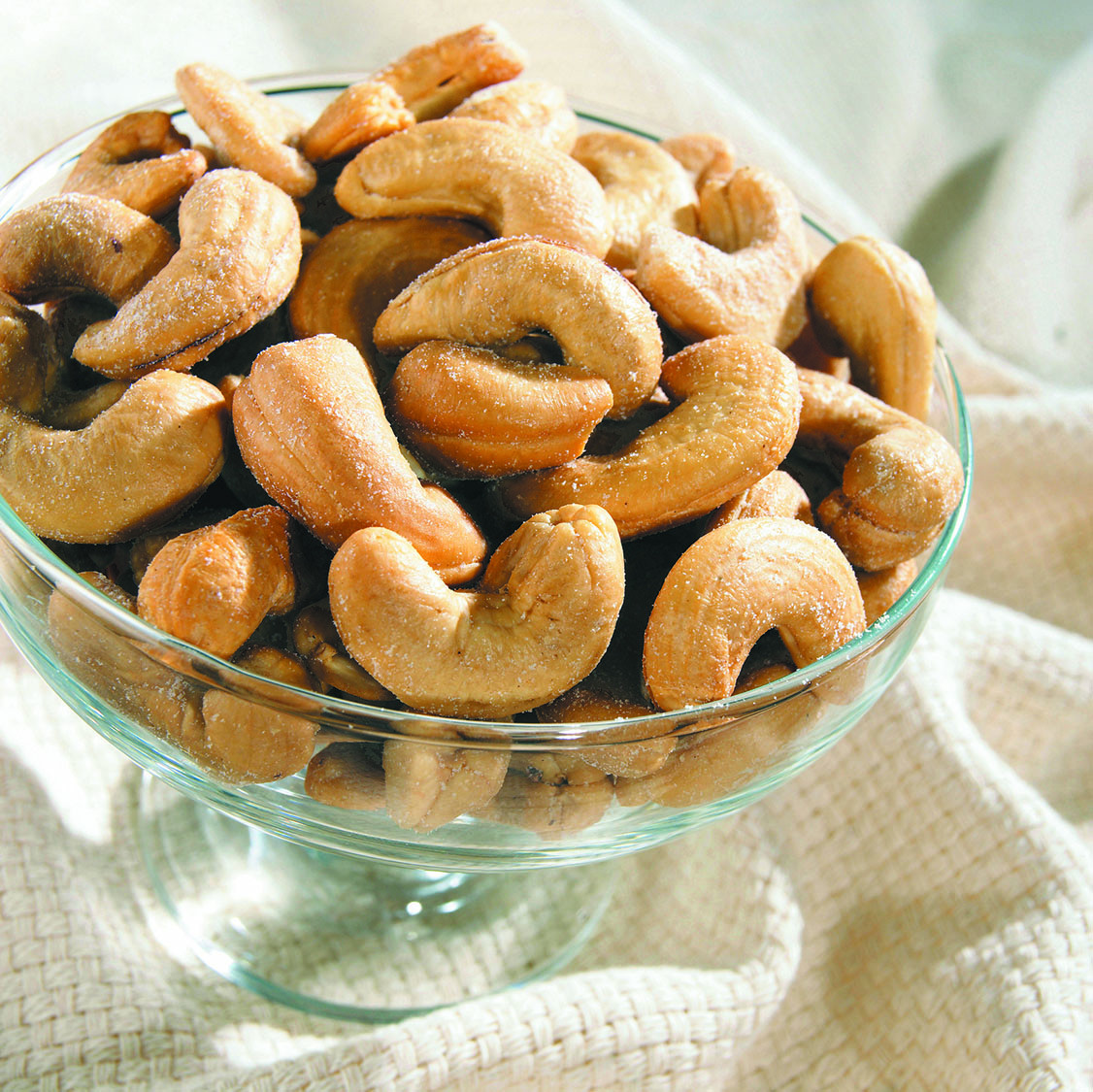
Cashews: A better choice than low-fat chips?
Research we're watching
Image: © Purestock/Thinkstock
If you're craving a crunchy snack, a handful of cashews is a heart-healthy choice, a small study suggests.
Although they're a popular pick in nut mixes, cashews have a bit of a bad rap. Because cashews contain about 20% saturated fat, the FDA omitted them from the qualified health claim suggesting that nuts may lower heart disease risk when eaten as part of a diet low in saturated fats and cholesterol.
When does long-term acid reflux become a serious issue?
On call
Q. I have had acid reflux for many years, but it is well controlled with a proton-pump inhibitor. However, I am concerned about long-term damage from my reflux, even though I feel fine now. Should I have an upper endoscopy to look for possible damage?
A. Long-term acid reflux can damage the esophagus and may lead to a condition known as Barrett's esophagus, which is a precursor to esophageal cancer. Barrett's affects about 3% to 10% of older men, but within this group the risk of developing esophageal cancer is only about four in every 1,000 cases. Over all, men with Barrett's are more likely to die from another cause.

Stay healthy at the hospital
Protect yourself to ensure a speedy recovery and avoid infections and readmission.
Image: © Monkey Business Images Ltd|/Thinkstock
Whether you go in for surgery, testing, or an outpatient procedure, your hospital stay can pose further health risks if you are not careful.
"Your potential risks depend in part on why you have to go into the hospital and the facility itself, but there are steps you can take to minimize your risk, especially when it comes to developing hospital-acquired infections that can lead to a longer hospital stay or readmission," says Dr. Erica Shenoy, an infectious diseases specialist and associate chief of infection control at Harvard-affiliated Massachusetts General Hospital.

Fish oil supplements may not help prevent heart disease
In the journals
Image: © DmitriyDanilchenko/Thinkstock
Omega-3 fish oil supplements can help prevent death from heart disease in patients who've had a heart attack, but a science advisory published March 28, 2017, in Circulation found there is no research to support their use to prevent heart disease in the general population.
Researchers reviewed all randomized clinical trials that evaluated the potential role for fish oil supplements to prevent cardiovascular disease, including two studies published before 2002 and 13 published since then. The studies assessed the clinical impact of fish oil treatment on cardiovascular outcomes, such as heart attacks, strokes, and atrial fibrillation (a heart rhythm disorder).

7 questions to ask when you’re given a prescription for an opioid
A discussion with your doctor may minimize your chance of becoming dependent on or addicted to these powerful painkillers.
Opioid misuse is now one of most important health problems in the United States, rivaling smoking as a cause of death. Although news reports tend to focus on an opioid crisis among the young, the opioid epidemic is increasingly affecting older people as well. In fact, the rates of hospitalization for opioid overdoses among Medicare recipients quintupled from 1993 through 2012. Although older people are still less likely than younger ones to become addicted or succumb to opioid overdoses, they are more likely to suffer side effects from extended opioid use, including memory and cognition problems and falls.
"Opioid use and pain management is something we deal with constantly," says Dr. Michael L. Barnett, assistant professor of health policy at the Harvard T.H. Chan School of Public Health. According to a report from the U.S. Department of Health and Human Services, nearly one-third of Medicare beneficiaries received at least one prescription for opioids in 2015, and those who did got an average of five such prescriptions or refills. Dr. Barnett and a team of his colleagues decided to investigate how Medicare recipients get opioid prescriptions in the first place.

Why nutritionists are crazy about nuts
Mounting evidence suggests that eating nuts and seeds daily can lower your risk of diabetes and heart disease and may even lengthen your life.
If your idea of healthy eating was formed a few decades ago, it may be hard to shake the notion that you should avoid nuts, which are high in calories and fat. But new evidence has overturned that assumption. In fact, a recent analysis of the nation's eating habits and health outcomes suggests that eating too few nuts and seeds is associated with an increased risk of dying from cardiovascular disease or diabetes.
For that study, in the March 7, 2017, Journal of the American Medical Association, researchers from the Tufts Friedman School of Nutrition Science and Policy relied on a model that used data from scores of observational studies on diet and health, including the National Health and Nutrition Examination Surveys, which provided detailed information on Americans' eating habits over the decade ending in 2012. They estimated that in 2012, over 300,000 deaths from heart disease, stroke, or type 2 diabetes — about 45% of all deaths from those conditions — were associated with eating either too much or too little of 10 nutrients.

The "other" incontinence — don't suffer in silence
Most people who are suffer from fecal incontinence do so in silence. As a result, the number of people with the condition — which results in the involuntary release of gas or stool — isn't known. But the scant evidence at hand indicates that it usually begins during one's 40s or 50s.
You don't have to live with incontinence — there are treatment options, which include dietary changes and bowel training regimens, and surgery for some people.


Do calcium supplements interfere with calcium-channel blockers?
Do calcium supplements interfere with calcium-channel blockers?
Ask the doctors
Q. I've just been prescribed the calcium-channel blocker Norvasc [amlodipine] for high blood pressure. I also take a 600-milligram calcium supplement every day for my bones. Will they cancel each other out?
A. You don't need to worry about taking a daily calcium supplement with a calcium-channel blocker. In the body, calcium not only builds bones but also powers muscle contractions. Calcium-channel blockers lower blood pressure by reducing the amount of calcium available to contract blood vessels. However, they don't prevent calcium in the blood from being incorporated into bone.
Even a little exercise linked with lower stroke risk in people with afib
Testosterone therapy without evidence of deficiency may boost heart risk
Weight-loss drug may lower risk of heart attacks and infections
What to eat on the DASH diet
Migraine: How it's diagnosed and what that means
Tricep workouts you can do at home
Mindfulness practices to reduce stress and improve focus
Antihistamines may not offer meaningful relief from eczema symptoms
Overweight and taking blood pressure medications: Study finds it's a trend that's working
FDA approves first mRNA-based flu vaccine
Free Healthbeat Signup
Get the latest in health news delivered to your inbox!
Sign Up
