

Whole grains may improve several heart risk factors at once

Light exposure at night may raise risk for heart disease

Children of centenarians may stay healthier and live longer too, study finds

A lumbar belt may help ease low back pain

Signs of pneumonia: Sometimes vague and unexpected

Using a vibration plate: What it can — and can't — do for your body

The surprising link between ovarian cancer and the fallopian tubes

People who walk more or walk faster live longer, study finds

Rosacea treatments: What works?

For sleep apnea, a dental device may be as effective as CPAP
Stroke Archive
Articles


Ringing in the ear: tinnitus and hearing loss
Many people with hearing loss also have tinnitus, commonly known as ringing in the ear. This phrase is misleading, however, because some people hear ringing while others hear whistles, chirping, or a combination of sounds. Regardless of the particular sound, the distinguishing feature is that it doesn't have an external cause. People with tinnitus hear sounds that people around them don't hear. This isn't to say that tinnitus isn't real—researchers at the National Institute on Deafness and Other Communication Disorders have detected changes in brain activity that occur with tinnitus.
Strategies that can help
Some people with hearing loss and tinnitus find that both problems improve after they get a hearing aid or have a cochlear implant. Others find that their tinnitus symptoms improve somewhat when they cut down on caffeine and alcohol, reduce the amount of fat in their diets, and quit smoking. The following techniques may also help reduce your tinnitus symptoms:

Electronic screen alert: Avoid this vision risk
Looking at a screen too long may lead to computer vision syndrome.
Image: © jacoblund/Thinkstock
There are many reasons to restrict the amount of time you spend in front of an electronic screen. For example, more hours sitting at a computer or smartphone means fewer hours of being physically active, and looking at a computer screen at night can stimulate the brain and make it difficult to fall asleep.
Here's another reason to curb screen time: a problem called computer vision syndrome — an umbrella term for conditions that result from looking at a computer or smartphone screen. "It's most prevalent with computers, and typically occurs when looking at a screen at arm's length or closer," says Dr. Matthew Gardiner, an ophthalmologist with Harvard-affiliated Massachusetts Eye and Ear Infirmary.

Hepatitis C: Still a major risk for baby boomers
News briefs
Image: © jarun011/Thinkstock
New cases of hepatitis C — a viral infection that attacks the liver — are at a 15-year high, according to surveillance data from the CDC released online May 11, 2017. The CDC estimates that there were about 34,000 new cases in 2015. Young adults (ages 20 to 29) account for most of the new infections, and the CDC attributes this to needle use from opioid addiction. But baby boomers (those born between 1945 and 1965) make up three-quarters of the 3.5 million people living with hepatitis C in the United States. Baby boomers are also the ones dying most often from the virus. New medicines can cure hepatitis C infections in as little as two to three months.
The CDC urges you to get a screening test for the virus if you were born between 1945 and 1965. Anyone who has used illicit intravenous drugs, had more than one sex partner, or who had a blood transfusion before 1992 also should get the test.

Does diet soda raise stroke risk?
Some studies suggest a possible link. But don't switch to regular sugary sodas — try infused water instead.
For diet soda fans, recent news reports linking these popular drinks to a higher risk of stroke may have been alarming. A closer look at the study behind the headlines suggests there's no need to panic. But beverages naturally low in calories are probably a healthier option than artificially sweetened drinks.
For starters, observational studies like this one (see "Diet soda and the brain: The latest findings") cannot prove cause and effect. Also, only 97 people had strokes during the 10-year follow-up, which means only two or three of those strokes could possibly be attributed to drinking diet soda, says Dr. Kathryn Rexrode, an associate professor of medicine at Harvard-affiliated Brigham and Women's Hospital who co-authored an earlier, larger study looking at soda consumption and stroke risk.

Do you know how to respond to a ministroke?
News briefs
A ministroke, or transient ischemic attack (TIA), occurs when blood flow to part of the brain is blocked temporarily. It often causes one or two symptoms of a full-blown stroke — such as sudden face drooping, arm or leg weakness, confusion, slurred speech, or terrible headache — and typically lasts just a few minutes. If you've had a TIA, you are at much higher risk for subsequently suffering a full-blown stroke. So when you have symptoms that might indicate a TIA — or a full-blown stroke — call 911. You may need brain imaging to tell whether a stroke has occurred and what type of stroke it is, so you can get immediate treatment for a stroke. If it's a TIA, you may need additional treatments to prevent a future stroke. Unfortunately, most people who experience symptoms of ministrokes don't call 911 for help, according to results of a survey from the American Heart Association/American Stroke Association (AHA/ASA), published online May 1, 2017. Of the 2,000 people who took the AHA/ASA survey, about 35% said they'd experienced a TIA symptom. But only 3% of that group called 911. As a result, some likely suffered preventable permanent brain damage.
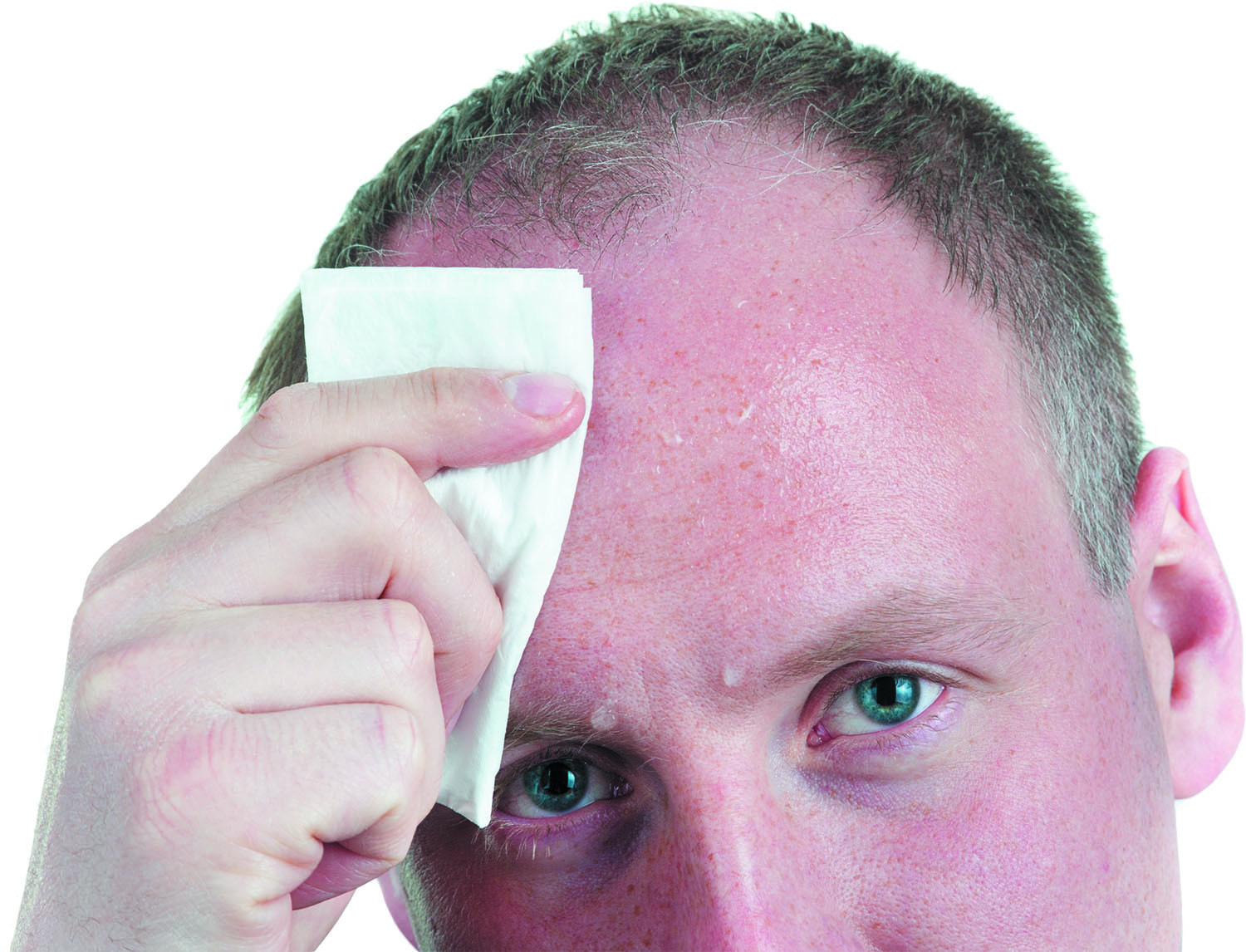
When is heavy sweating a problem?
On call
Image: © EunikaSopotnicka/Thinkstock
Q. I've noticed recently that I sweat excessively, regardless of the temperature. Should I be concerned?
A. Your genes can determine whether you sweat a lot, but a sudden change in your regular sweating may suggest an underlying condition. Sweating is regulated by your nervous system and can be triggered by a number of causes. The primary signal for perspiration originates in the brain in response to a temperature-related or emotional cue, and then is carried by the autonomic nervous system to the sweat glands in the skin.


Can your blood pressure be too low?
Recent findings raise concerns about lowering diastolic blood pressure — the second number in your blood pressure reading — too far.
Image: © Wavebreakmedia/Thinkstock
More of us than ever before are taking medications to lower our blood pressure. Longstanding guidelines suggest that most people should aim for a systolic blood pressure (the first number in a reading) no higher than 140 millimeters of mercury (mm Hg). But in 2015, the results of the Systolic Blood Pressure Intervention Trial (SPRINT) suggested that reaching a target of 120 mm Hg could further reduce the risks associated with high blood pressure, including heart attack, stroke, heart failure, and death.
Yet reaching that lower target often requires three blood pressure medications, which can increase the likelihood of side effects. Two observational studies and one clinical trial have raised concerns about lowering blood pressure — particularly diastolic pressure — too far. Diastolic blood pressure (the second number in a reading) represents the pressure between beats when the heart relaxes. "When your systolic blood pressure gets too low, it can manifest as lightheadedness, fainting, and weakness. But low diastolic pressure by itself doesn't have any symptoms," says Dr. Paul Conlin, professor of medicine at Harvard Medical School and chief of medicine at the VA Boston Healthcare System.

Do I need to worry about floaters
A Harvard Medical School doctor answers a common eyesight question
Q: Recently, I started to notice tiny threadlike shapes in my field of vision. My doctor says they are "floaters." Should I be concerned?
A: "Floaters" is a catchall term for what look like dots, threads, or cobwebs drifting across your line of vision.
Whole grains may improve several heart risk factors at once
Light exposure at night may raise risk for heart disease
Children of centenarians may stay healthier and live longer too, study finds
A lumbar belt may help ease low back pain
Signs of pneumonia: Sometimes vague and unexpected
Using a vibration plate: What it can — and can't — do for your body
The surprising link between ovarian cancer and the fallopian tubes
People who walk more or walk faster live longer, study finds
Rosacea treatments: What works?
For sleep apnea, a dental device may be as effective as CPAP
Free Healthbeat Signup
Get the latest in health news delivered to your inbox!
Sign Up
