

Healing after food poisoning

What is tempeh? Benefits, nutrition, and how to use it

Light exposure at night may raise risk for heart disease

Whole grains may improve several heart risk factors at once

A lumbar belt may help ease low back pain

Children of centenarians may stay healthier and live longer too, study finds

Signs of pneumonia: Sometimes vague and unexpected

The surprising link between ovarian cancer and the fallopian tubes

Using a vibration plate: What it can — and can't — do for your body

People who walk more or walk faster live longer, study finds
Prostate Cancer Archive
Articles
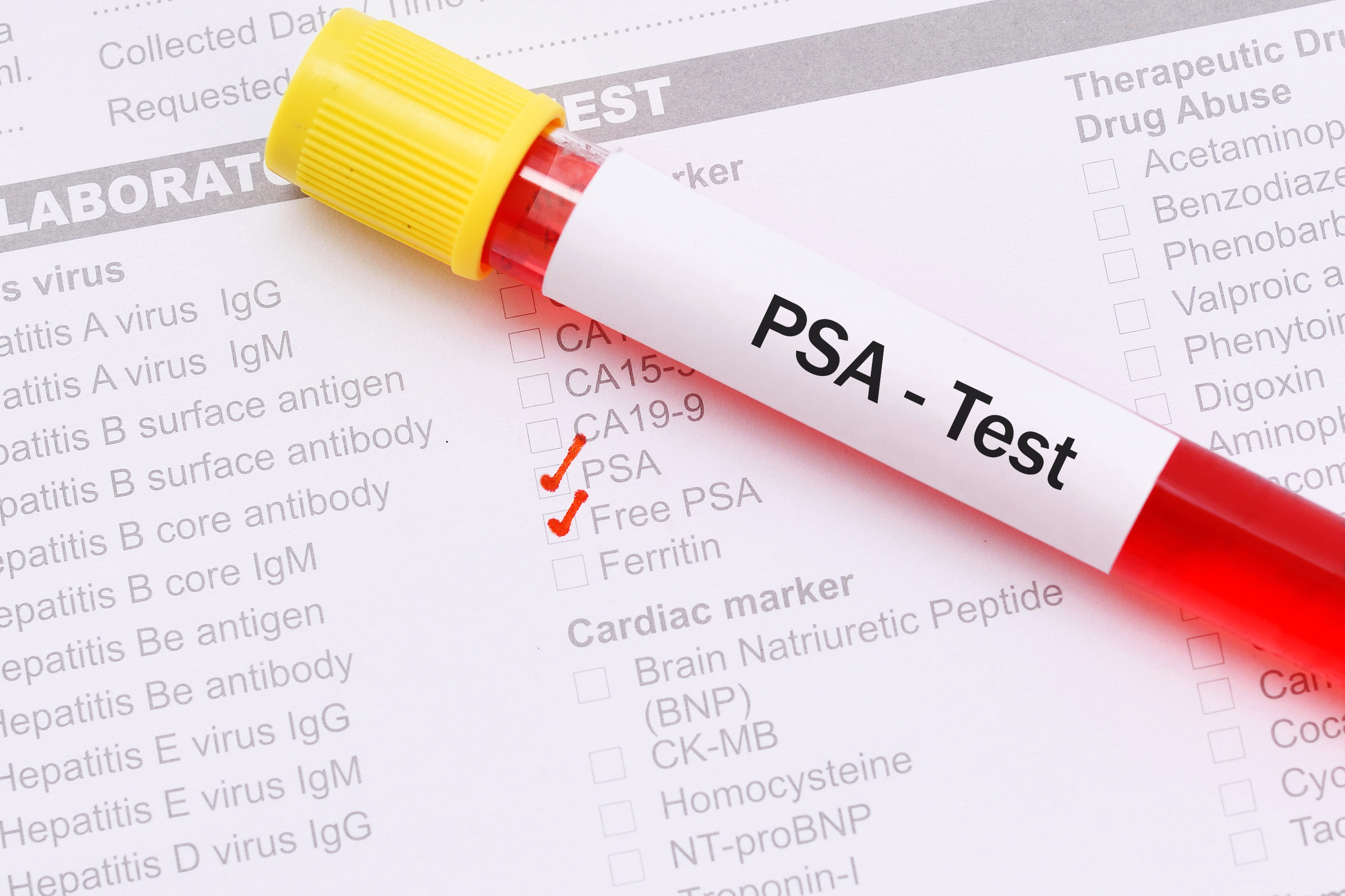
To PSA test or not to PSA test: That is the discussion
The recommended guidelines for whether men should have the prostate cancer screening test have changed in recent years. A man considering the test should talk with his doctor and understand all the pros and cons involved.

For men over 50: You can lower your health risks
What if men approached their health at midlife the same way that financial experts advise them to plan for retirement? Some of the same rules apply: take a close look at where things stand now, and then take steps to protect your future. Midlife is a good time to lower health risks and invest for long-term health benefits.
How? First, acknowledge what you can't control. Then put your energies into changing what you can — for the better.

Androgen deprivation therapy may not increase risk of Alzheimer’s disease after all
In the journals
A study of almost 31,000 men whose prostate cancer had not spread found that the use of androgen deprivation therapy (ADT) was not associated with a higher risk of Alzheimer's disease. This counters previous studies that suggested a possible link. The results were published in the January 2017 Journal of Clinical Oncology.
ADT is used in prostate cancer treatment to eliminate testosterone, since the hormone can fuel the disease. Testosterone levels also are traditionally lower in men with Alzheimer's compared with control groups, which suggests there may be a connection between lowering testosterone and an increased risk of Alzheimer's. Previous studies that have explored this connection found that a low testosterone level caused by ADT was associated with a higher probability of developing Alzheimer's. But these studies often covered a shorter time period — for instance, one year or less — and it is doubtful that men were on ADT long enough to cause Alzheimer's.
New way to use PSA test might identify men who need aggressive prostate cancer treatment
In the journals
Prostate-specific antigen (PSA) tests are used to help identify men who may have a higher risk of prostate cancer. But a study published online Jan. 12, 2017, by JAMA Oncology, describes a new way to use PSA that may pinpoint men who are likely to die early from prostate cancer that returns after initial treatment.
The researchers used data from a randomized trial of 157 men whose localized cancer was treated with either radiation alone or radiation along with six months of androgen deprivation therapy. The men were then followed for 16 years.
Emergencies and First Aid - Emergency Checklist
This list describes your priorities in an emergency situation. Follow these steps:
- Evaluate the scene to protect yourself and others from injury or danger.
- Be calm and reassuring.
- Do not move the person unless he or she is in imminent danger or unless you cannot provide assistance without moving the person.
- Get help. Call out for someone to phone 911 or, if the person does not need immediate assistance, make the call yourself.
- If the situation is a choking emergency, perform the Heimlich maneuver (see Choking).
- Look, listen, and feel for breathing (see Breathing Difficulties).
- Feel for a pulse to determine if the heart is beating.
- Control bleeding with direct pressure.
- Treat for shock.
- If the person is unconscious, move him or her into the recovery position.

Emergencies and First Aid - Recovery Position
Adult Recovery Position
This position helps a semiconscious or unconscious person breathe and permits fluids to drain from the nose and throat so they are not breathed in. If the person is unconscious or semiconscious after you have done everything on the Emergency Checklist, move the person into the recovery position while waiting for help to arrive.
Do not use the recovery position if the person has a major injury, such as a back or neck injury

Emergencies and First Aid - Removing a Stuck Ring
Removing a Stuck Ring
| ||||
Emergencies and First Aid - Choking
Choking
A person who is choking will instinctively grab at the throat. The person also may panic, gasp for breath, turn blue, or be unconscious. If the person can cough or speak, he or she is getting air. Nothing should be done.
Immediate care
If the person cannot cough or speak, begin the Heimlich maneuver immediately to dislodge the object blocking the windpipe. The Heimlich maneuver creates an artificial cough by forcing the diaphragm up toward the lungs.
Healing after food poisoning
What is tempeh? Benefits, nutrition, and how to use it
Light exposure at night may raise risk for heart disease
Whole grains may improve several heart risk factors at once
A lumbar belt may help ease low back pain
Children of centenarians may stay healthier and live longer too, study finds
Signs of pneumonia: Sometimes vague and unexpected
The surprising link between ovarian cancer and the fallopian tubes
Using a vibration plate: What it can — and can't — do for your body
People who walk more or walk faster live longer, study finds
Free Healthbeat Signup
Get the latest in health news delivered to your inbox!
Sign Up
