

Healing after food poisoning

What is tempeh? Benefits, nutrition, and how to use it

Light exposure at night may raise risk for heart disease

Whole grains may improve several heart risk factors at once

A lumbar belt may help ease low back pain

Children of centenarians may stay healthier and live longer too, study finds

Signs of pneumonia: Sometimes vague and unexpected

The surprising link between ovarian cancer and the fallopian tubes

Using a vibration plate: What it can — and can't — do for your body

People who walk more or walk faster live longer, study finds
Prostate health
- Reviewed by Marc B. Garnick, MD, Editor in Chief, Harvard Medical School Annual Report on Prostate Diseases; Editorial Advisory Board Member, Harvard Health Publishing
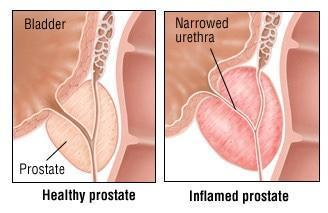
The prostate gland isn't big — about the size of a walnut — but its location virtually guarantees problems if something goes awry. The prostate gland is located just below the bladder and in front of the rectum. It also wraps around the upper part of the urethra, the tube that carries urine from the bladder out of the body. If problems arise, it can interfere with urination, causing prostate symptoms such as increased urgency, more frequent trips to the bathroom, and difficulty voiding the bladder completely. It can also lead to erectile dysfunction or difficulty in having and maintaining an erection. Sexual function can also be affected, and if there is an infection in the prostate gland (prostatitis), it can lead to issues like pain during or after ejaculation or blood in the semen.
The prostate is prone to three main conditions:
Prostatitis: infection or inflammation of the prostate
Benign prostatic hyperplasia (BPH): Also known as an enlarged prostate, aging-related enlargement of the prostate gland
Prostate cancer: the growth of cancerous cells inside the prostate, which may break out of the gland and affect other parts of the body.
To make sense of these conditions, it helps to first know what the prostate normally does.

Prostate function: What does my prostate do?
Your prostate plays a key role in reproduction. Although it’s the testicles that produce sperm, the prostate (along with tiny neighboring organs called seminal vesicles) helps produce semen, the viscous fluid in which sperm are kept alive and aid in reproduction during intercourse.
Here’s what happens when you ejaculate. Within the prostate, a series of ducts lined with fluid-producing cells pushes prostatic fluid out into the urethra (the tube that carries urine from the bladder) where it joins both the sperm produced by the testicles and the fluids generated by the seminal vesicles (narrow glands located on each side of the prostate).
The prostate consists of two lobes, right and left, and it’s wider at its base. The base of the prostate is higher up in your body, where the gland nestles against the seminal vesicles. The “apex” is the lower end, closer to the nerves that help with erections. Between the apex and the base lies the mid-gland. These terms are important in discussions about prostate cancer, since the area of the prostate in which a cancer appears can affect symptoms, treatment options, and outcomes.

Common prostate issues and symptoms
Unfortunately, most men will experience some kind of prostate problem during their lifetime. Prostate issues and their associated urinary problems are generally associated with three conditions: prostatitis, BPH, and cancer.
Prostatitis
Prostatitis refers to inflammation of the prostate. It is associated with two main types: acute prostatitis and chronic prostatitis/chronic pelvic pain syndrome.
Acute prostatitis is usually caused by a bacterial infection and tends to come on suddenly. Symptoms include the sudden onset of painful urination, difficulty urinating, a small stream, and often fever and chills, fatigue, and muscle pain. This can sometimes lead to hospitalization requiring intravenous antibiotics.
Chronic prostatitis or chronic pelvic pain syndrome is a less well-defined condition. Its symptoms include persistent or recurrent pelvic discomfort, pain or burning with urination, an increased urge to urinate, difficulty emptying the bladder, and/or painful ejaculation. The underlying cause can be chronic inflammation with or without an infection, and often the exact reason for symptoms can’t be found.
Chronic prostatitis is characterized by a group of symptoms including frequent urge to urinate, burning and pain during urination, inability to empty the bladder, pain or difficulty ejaculating, and pain in the pelvis, lower back, or perineum (the area between the scrotum and the rectum). Some men report a feeling of fullness in the rectum, and blood may appear in the semen. Some forms of prostatitis can cause spasming of the pelvic-floor muscles.
Benign prostatic hyperplasia (BPH)
Benign prostatic hyperplasia (BPH), commonly called enlarged prostate, refers to the excessive growth of the gland that usually occurs after age 50; it can double or triple in mass during the latter decades of life. BPH can be considered an expected part of the aging process for most men. About half of cases are asymptomatic, but some men will experience problems. As the prostate expands in size, it can squeeze off the urethra (the tube carrying urine from the bladder to the penis), making the muscular walls of the bladder work harder and causing problems with urination.
The hallmark of BPH is a cluster of symptoms known by the acronym LUTS (lower urinary tract symptoms). They include a weak, interrupted urine stream, more frequent urination (especially during the night), frequent urge to urinate, leaking or dribbling, and the feeling that you can’t quite empty the bladder. Over time, those symptoms may escalate to the point that the bladder can no longer push urine past the obstructing prostate, causing what’s known as acute urinary retention. This is a medical emergency. An inability to urinate at all is not just painful, but we emphasize a true medical emergency because it can damage the kidneys by urine blockage.
Prostate cancer
Prostate cancer results from the abnormal and uncontrolled growth of cells in the prostate gland. Prostate cancer can be localized (limited to the prostate itself), regionally advanced (spread to surrounding tissue), or metastatic (spread to more distant sites). Recent years have seen great advancements in prostate-cancer screening, testing, and treatment.
Most prostate cancer diagnoses do not come from patients reporting symptoms, but rather from blood tests that show high PSA levels, followed by biopsy. Patients with low-risk, non-aggressive cancers typically experience no symptoms at all. When men do notice signs of cancer, those symptoms tend to be difficulty urinating, or bone or back pain because the cancer has spread.
When to see a doctor if you have prostate symptoms
Talk to your doctor if you experience any of the lower urinary tract symptoms (LUTS), which include a weak urine stream, increased urgency to urinate, inability to void the bladder completely, and more frequent urination. Other symptoms that should prompt a doctor’s visit are persistent or recurrent pain during or after ejaculation, blood in the semen, and pain around the base of the penis, the perineum, the lower back, or the rectum.
A digital rectal exam, which allows the clinician to feel the size, shape, and firmness of the prostate, can often confirm whether it is enlarged or contains areas of hardness or lumps that may suggest the presence of cancer. A urine sample is usually taken to check for blood or signs of infection. Your doctor may also perform a general physical examination if an infection is suspected to check other organs, such as the kidneys. You may also be asked to empty your bladder so an ultrasound scan can measure how much urine is left. In some cases, additional tests may be ordered, such as a cystoscopy, where a thin, flexible tube with a light and camera is gently passed through the opening of the penis into the bladder to look for any problems.
If you are unable to urinate, you’re experiencing a medical emergency and should seek prompt urgent care. This is usually managed by the insertion of a tube, called a Foley catheter, into the bladder that bypasses the enlarged prostate gland. After several days to a week, the catheter is removed and urination is generally restored. However, additional testing is done to help prevent this from re-occurring.
You can gauge the severity of your symptoms by completing a simple, seven-question, multiple-choice questionnaire to get what’s called an International Prostate Symptom Score (IPSS). You’ll be asked questions such as, “Over the past month, how often have you had to push or strain to begin urination?” and “Over the past month, how often have you had a weak urinary stream?” Based on your responses, you’ll be able to tally up an overall score. If yours falls in the range of moderate to severe, you should talk to your doctor about current treatments.
Treatment for prostate problems
You and your doctor will weigh the risks versus the benefits of treatment. If your symptoms are mild and not very bothersome, your doctor may recommend monitoring over time. A major consideration is the extent to which your symptoms are interfering with your lifestyle. For example, if you work in an office or need to travel frequently, then having to use the bathroom often is probably more disruptive to your lifestyle than it would be if you’re retired or work from home. If your symptoms prevent you from engaging in enjoyable activities or if they’re noticeably worsening, discussing treatment options with your doctor is wise.
Prostatitis. Acute prostatitis is treated with antibiotics. If it’s a milder case, you’ll likely take oral antibiotic pills. Because it is difficult for antibiotics to get from the bloodstream into the prostate, the course of antibiotics is usually three or more weeks. If prostatitis is severe, you may need IV antibiotics in the hospital. Chronic pelvic pain syndrome is treated differently. Because it is not caused by bacteria, antibiotics don’t help. Instead, treatment may include nonsteroidal anti-inflammatory drugs (NSAIDs), like ibuprofen, to reduce pain and swelling; alpha blockers, such as tamsulosin (Flomax) to relax tight muscles in the prostate and bladder neck and improve urine flow; or PDE5 inhibitors, such as tadalafil (Cialis) to improve blood flow to the prostate and help relieve symptoms. Some patients have reported improvement with acupuncture.
Benign prostatic hyperplasia (BPH). For most men with BPH, the first step is making lifestyle changes to help control symptoms. Tips that can help alleviate enlarged prostate symptoms include keeping a healthy weight, avoiding certain medications such as antihistamines and decongestants, eating a balanced diet, and cutting back on caffeine, which can irritate the bladder and make you urinate more often.
If these steps don’t provide enough relief, your doctor may recommend alpha blockers, which have a good success rate (seven out of 10 men notice their symptoms improve within a few days to a few weeks after starting one of these drugs). Possible side effects include dizziness, tiredness, and low blood pressure. Common alpha blockers include tamsulosin (Flomax) and alfuzosin (UroXatral).
Another group of medications, called 5-alpha-reductase inhibitors, work by blocking the effects of testosterone in the prostate. This can slowly shrink the prostate and improve urine flow. However, these drugs can take three to six months to start working and may cause erection problems (ED) in about 4% of men. Medications in this group include finasteride (Proscar) and dutasteride (Avodart). These medications generally cause a 50% reduction in the levels of PSA. If you have been on a 5-alpha-reductase inhibitor for more than four to six months, any PSA result obtained should be doubled to estimate what the true value of your PSA would be without the medication.
In some cases, using an alpha blocker together with a 5-alpha-reductase inhibitor may provide more relief than taking either one alone.
Prostate cancer. When the cancer remains limited to the prostate, it is known as localized prostate cancer. If it is found to be a low-grade cancer on biopsy, often no immediate treatment is necessary. Periodic monitoring by your doctor, called active surveillance and mindful watching, can help determine if the cancer is still growing.
The are three main options for treatment of prostate cancer. Intermediate and high-grade localized cancer can be treated with surgery or radiation therapy. Men who don’t have surgery might also be treated with a hormonal therapy called androgen deprivation therapy (ADT) to block production of testosterone, a key hormone for the promotion of cancer growth. There are an increasing number of very effective medications that can be administered along with radiation, and the list continues to grow each year.
How common are prostate problems and what causes them?
Most men who live into old age will develop some form of prostate problem, although symptoms can range from mild inconvenience, like having to get up during the night to urinate, to invasive cancers that can cause debilitating changes or even death.
Prostatitis. Between 9% and 16% of men develop prostatitis (inflamed prostate) at some point during their lives. Unlike other prostate problems, prostatitis affects younger and older men equally. Each year, prostatitis leads to nearly two million doctor visits in the U.S.
The exact cause of chronic prostatitis/chronic pelvic pain syndrome is often not discovered. One possibility is that the immune system mistakenly targets the prostate, blasting the gland with inflammatory compounds. Another possibility is bacterial or fungal infections that go undetected by standard testing methods. Certain foods may also trigger symptoms, as might stress and depression, chronic pain conditions, trauma to the genitourinary area, and repeated biopsies. Men suffering from depression, anxiety, and stress may struggle more with prostatitis symptoms, and men with other chronic pain conditions may be more susceptible. Prostatitis is not contagious.
Benign prostatic hyperplasia (BHP), or an enlarged prostate, is extremely common in older men. It’s estimated that it affects more than 50% of men by age 60 and nearly 90% of men over 70 years
BPH is not caused by cancer, though it can occur alongside it. By far, the greatest risk factor for enlarged prostate is age. However, prostatitis, a sedentary lifestyle, obesity, high blood pressure, and diabetes have all been associated with the condition. And researchers have found correlations between BPH and a diet high in sugar, red meat, and refined grains. A very large prostate may cause urinary obstruction, an inability to empty the bladder, which if left untreated my cause kidney damage.
Prostate cancer. Prostate cancer is the most common cancer among men in the United States, accounting for 30% of male cancers in 2025, About one in 8 men will be diagnosed with prostate cancer during their lifetime. Low‑grade prostate cancers usually don’t affect day‑to‑day life and typically don’t lead to early death. In fact, men with prostate cancer that hasn’t spread far (localized or regional disease) have, on average, the same chance of being alive five years after diagnosis as men who don’t have prostate cancer.
No single, exact cause of prostate cancer has been identified, nor can researchers conclusively state that any given factor causes the disease. However, several factors are known to increase a man’s risk.
Age is an important risk factor, as is family history: men whose fathers or brothers had prostate cancer are two to three times likelier to get it themselves. Race appears to matter as well: prostate cancer among Black men is 60% higher than any other group in the U.S., especially the more aggressive forms.
Lifestyle factors may contribute as well. For example, a diet high in red meat and saturated fats, obesity, and infrequent ejaculation have been associated with increased risk.
Other factors that may play a role involve changes (mutations) in genes that control cell growth and DNA repair. Genetic defects can be either acquired during life or inherited. and our environment may play a role. One of the most common is the BRCA gene, which is associated with breast and ovarian cancer in females and prostate cancer in males. There are additional mutations which are tested and, if present, other members of the family may be asked to be tested as well.
Radiation, certain chemicals, and chronic inflammation can damage the DNA in prostate cells. When the cells divide, the mutations are repeated and can eventually lead to cancer. These types of mutations are acquired and are not inherited nor passed down to children.
An inherited genetic mutation is more likely to be present in men with a strong family history of either prostate cancer or breast cancer in both females and males. A man with two or more first-degree male relatives (father and brothers) who have developed prostate cancer has five to 10 times greater risk than a man with no affected first-degree relatives.
While other factors (such as age, race, diet, obesity, and exercise) no doubt contribute to a man’s overall risk profile, genetic defects and family history are probably the strongest predictors of who will and will not develop prostate cancer.
Screening and preserving prostate health
Since the causes of most prostate problems are unknown, you should think in terms of lowering risks rather than completely preventing them. Certain lifestyle considerations have been associated with lower risk of enlarged prostate and prostate cancer. Steps you can take to support prostate health include maintaining a healthy body mass, exercising, and following a Mediterranean-style diet.
The most common prostate cancer screening method is the PSA (prostate-specific antigen) test. PSA is a chemical made by the prostate, and this blood test measures how much PSA is in man's blood. However, PSA is produced by both cancerous prostate tissue and benign prostate tissue.
However, many conditions besides cancer might cause an elevated PSA score, so PSA tests often produce false-positive results. For example, BPH also can raise PSA levels above the normal range. Current guidance is to talk with your doctor about the pros and cons of prostate cancer screening and decide together whether it’s right for you.
PSA screening can lead to excessive, unnecessary biopsies and potential overtreatment. Many societies suggest that a frank discussion about the pros and cons of testing be undertaken with the patient and his physician. But it is also important what is done after a PSA test returns an elevated score. Many men will then be offered a prostate MRI examination, and then a determination about the need for subsequent diagnostic evaluations can be made.
Healing after food poisoning
What is tempeh? Benefits, nutrition, and how to use it
Light exposure at night may raise risk for heart disease
Whole grains may improve several heart risk factors at once
A lumbar belt may help ease low back pain
Children of centenarians may stay healthier and live longer too, study finds
Signs of pneumonia: Sometimes vague and unexpected
The surprising link between ovarian cancer and the fallopian tubes
Using a vibration plate: What it can — and can't — do for your body
People who walk more or walk faster live longer, study finds
Free Healthbeat Signup
Get the latest in health news delivered to your inbox!
Sign Up
