

People who walk more or walk faster live longer, study finds

For sleep apnea, a dental device may be as effective as CPAP

Rosacea treatments: What works?

Carb cycling: What is it, and does it work?

Understanding orthorexia: Have your healthy eating goals gone too far?

Salmonella, E. coli, Cyclospora, and other germs that cause food poisoning: What you need to know

Melatonin or magnesium: Can either supplement help you sleep?

Naturally gluten-free foods

Shingrix shingles vaccine linked with lower heart disease risks

Harvard study: Healthier fats linked to longer life after prostate cancer diagnosis
Medications and treatments Archive
Articles

Urine color and odor changes
Surprising factors influence urine color and odor including food and medication
Many things can alter the look and smell of your urine. When should you be concerned?
Nearly six and a half cups — that's how much urine the average person produces a day, usually in four to eight trips to the toilet. The ritual is so routine that most of us pay little attention to our urine — that is, unless it happens to look or smell different than usual.

Aspirin and your heart: Many questions, some answers
Taking an aspirin can protect you from heart attack, blood clots and more
First marketed by the Bayer Company in 1897, aspirin (acetylsalicylic acid) is one of our oldest modern medications — and its parent compound is much older still, since Hippocrates and the ancient Egyptians used willow bark, which contains salicylates, to treat fever and pain. Over the past 100 years, aspirin has made its way into nearly every medicine chest in America. Indeed, this old drug is still widely recommended to control fever, headaches, arthritis, and pain.
Although aspirin remains an excellent medication for fever and pain, other drugs can fill these roles equally well. But aspirin has a unique role that was not even suspected by its early advocates. In patients with coronary artery disease, aspirin prevents heart attacks.

Atrial fibrillation: Common, serious, treatable
Atrial fibrillation can be dangerous from a fast heart rate and a higher stroke risk
Is atrial fibrillation serious? People who are old enough to remember the sound of wind-up clocks often refer to their hearts as their "tickers." It's an affectionate term that pays tribute to the regular, rhythmic beat of the healthy heart. In fact, though, the healthy heart is much more sophisticated than the most precise Swiss timepiece.
Instead of maintaining a single, monotonous beat, the heart can speed up in response to exercise, strong emotions, and fever. Common chemicals can also jack up the heart rate; examples include caffeine, nicotine, and decongestants. And the healthy heart can also slow down when you rest, relax, or sleep.
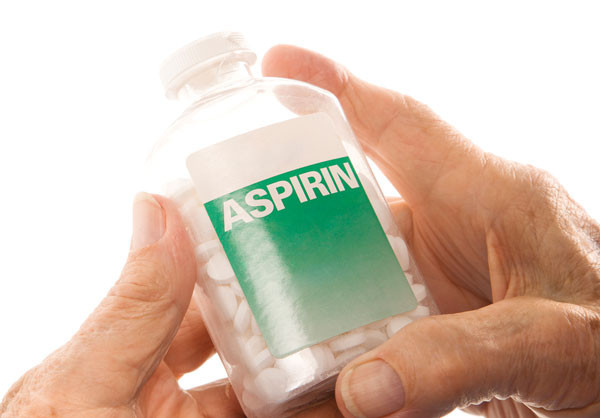
Does aspirin stop a heart attack?
Ask the doctor
Q. Should I take aspirin if I think I'm having a heart attack, and what kind of aspirin should I take?
A. First, what symptoms indicate you might be having a heart attack? The main symptom is a squeezing, tight sensation in the middle of the chest that can travel up into the jaw and shoulders, and even down the left arm. Along with the pain you may begin to sweat and to feel weak, like you might pass out, and be short of breath. While other conditions besides a heart at-tack can cause similar symptoms, you need to take such symptoms very seriously. First, call 911.

Can vitamin C prevent a cold?
The nutrient appears to have modest prevention power.
Image: Wavebreakmedia Ltd/Thinkstock
Vitamin C is often touted as a natural cold remedy. The nutrient is featured in supplements promising to boost the immune system. Nobel laureate Dr. Linus Pauling famously claimed that taking large doses of vitamin C helps thwart a cold. Is there something to these claims? "The data show that vitamin C is only marginally beneficial when it comes to the common cold," says Dr. Bruce Bistrian, chief of clinical nutrition at Harvard-affiliated Beth Israel Deaconess Medical Center.
About vitamin C
Our bodies don't make vitamin C, but we need it for immune function, bone structure, iron absorption, and healthy skin. We get vitamin C from our diet, usually in citrus fruits, strawberries, green vegetables, and tomatoes. The Recommended Dietary Allowance for men is 90 milligrams (mg) per day, and for women, it's 75 mg per day.

Study finds weak link between birth control and breast cancer
Overall risk is very small, and older women who used hormonal contraceptives many years ago aren't likely to have a higher risk.
Image: © designer491/Getty Images
Hormonal birth control — whether it comes as pills, injections, a ring, an intrauterine device (IUD), or an implant — may raise your risk of breast cancer, according to a study published Dec. 7, 2017, in The New England Journal of Medicine.
If you're like many women who currently use one of these contraceptive methods, or if you used one for years in the past, should you be worried?

What causes my feet to suddenly become numb?
On call
Q. My feet tingle or feel numb like they are asleep at times, mostly when I am in bed or with my legs elevated. What causes that?
A. The symptoms you describe may be related to peripheral neuropathy, which is nerve damage that affects multiple nerves leading out from the spinal cord to the arms and legs. Symptoms are often equal in both feet. If only one foot, or part of a foot, is affected, this suggests compression of an individual nerve.

When the arrival of menopause brings symptoms of depression
A new study suggests that hormone therapy might help with perimenopausal depression. But is it safe for you?
Hormone therapy has long been a controversial topic, and a new study about the role of hormones in depression is adding some fodder to the debate. A study published in the January 10 issue of JAMA Psychiatry determined that hormone therapy may help ward off symptoms of depression in women. Researchers found that perimenopausal and early postmenopausal women who were treated with hormones were less likely to experience symptoms of depression than women in the study who were given a placebo.
But while the findings of the study are important — particularly considering that a woman's risk of depression doubles or even quadruples during the menopausal transition — that doesn't mean hormone therapy should be widely used for preventing depression in women at this stage of life, says Dr. Hadine Joffe, the Paula A. Johnson Associate Professor of Psychiatry in Women's Health at Harvard Medical School, who wrote an editorial accompanying the study. "It's not a 'never,' but it shouldn't be a standard approach; in general, all of medicine has moved away from using hormones for prevention," she says.

High calcium score: What’s next?
Ask the doctor
Image: © Tinpixels/Getty Images
Q. I recently got a coronary artery calcium scan and the results showed that I have quite a bit of calcium in my heart arteries (my score was 900). Should I have an angiogram to confirm the results? I don't have any heart-related symptoms, but I'm worried about having a heart attack.
A. That is a very high coronary artery calcium score. But the short answer to your question is no. The main reason to have an angiogram is to locate a narrowed heart artery that is causing chest pain or other symptoms. For the test, a cardiologist injects a dye that is visible on x-rays into the blood vessels of your heart, then takes a series of x-ray images. This is done in preparation for angioplasty, in which a narrowed artery is opened, or as a prelude to referral for coronary artery bypass surgery.
People who walk more or walk faster live longer, study finds
For sleep apnea, a dental device may be as effective as CPAP
Rosacea treatments: What works?
Carb cycling: What is it, and does it work?
Understanding orthorexia: Have your healthy eating goals gone too far?
Salmonella, E. coli, Cyclospora, and other germs that cause food poisoning: What you need to know
Melatonin or magnesium: Can either supplement help you sleep?
Naturally gluten-free foods
Shingrix shingles vaccine linked with lower heart disease risks
Harvard study: Healthier fats linked to longer life after prostate cancer diagnosis
Free Healthbeat Signup
Get the latest in health news delivered to your inbox!
Sign Up
