Harvard study: Healthier fats linked to longer life after prostate cancer diagnosis
News briefs
- Reviewed by Robert H. Shmerling, MD, Senior Faculty Editor, Harvard Health Publishing; Editorial Advisory Board Member, Harvard Health Publishing
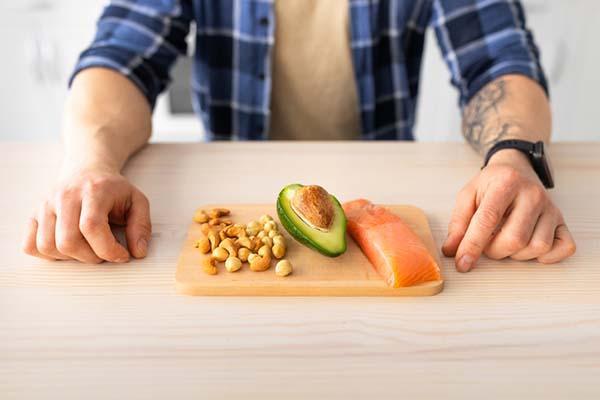
Some 3.5 million American men live with prostate cancer, often for many years. A new study suggests that changing the fats they eat might make a significant difference in the health and number of those years.
Published on Sept. 2, 2026, by JAMA Network Open, the analysis drew on data collected from 4,884 participants in the long-running Health Professionals Follow-Up Study who developed nonmetastatic prostate cancer (average age 69.5 at diagnosis). Researchers used the men’s dietary reports to estimate the types of fat they ate, and compared that to their health over the following years.
The researchers found that the men who ate the most saturated fat after diagnosis were 24% more likely to die during the follow-up period (which averaged nearly 13 years) compared with those who ate the least. That difference mostly reflected deaths from cardiovascular disease and from other, unrelated cancers; both of those causes carried a 42% higher risk of death. Notably, no dietary fat type was linked to deaths from prostate cancer.
The findings also suggested that swaps to healthier fats could make a big difference in long-term health and longevity. Changing 10% of total calorie intake from animal fat (found in meat and dairy products) to any plant-based fat — a broad category that includes both monounsaturated and polyunsaturated fats — was linked to a 16% lower risk of death. Monounsaturated fat predominates in olive oil and avocados, while polyunsaturated fat is found mostly in vegetable oils.
When the researchers looked at monounsaturated fat specifically, the results were even more striking: switching just 5% of calories from saturated to monounsaturated fat was tied to a 20% reduction.
Importantly, the researchers found no evidence that dietary changes after diagnosis were driven by how sick a person was, suggesting the results aren’t simply explained by healthier men happening to eat better. And the findings align with other research linking heart-healthy fats to better health outcomes, giving prostate cancer survivors — and indeed anyone — more reasons to make the switch.
Image: © Prostock-Studio/Getty Images
About the Author

Joyce Hendley, Staff Writer
About the Reviewer

Robert H. Shmerling, MD, Senior Faculty Editor, Harvard Health Publishing; Editorial Advisory Board Member, Harvard Health Publishing
Disclaimer:
As a service to our readers, Harvard Health Publishing provides access to our library of archived content. Please note the date of last review or update on all articles.
No content on this site, regardless of date, should ever be used as a substitute for direct medical advice from your doctor or other qualified clinician.