

Whole grains may improve several heart risk factors at once

Light exposure at night may raise risk for heart disease

Children of centenarians may stay healthier and live longer too, study finds

A lumbar belt may help ease low back pain

Signs of pneumonia: Sometimes vague and unexpected

The surprising link between ovarian cancer and the fallopian tubes

Using a vibration plate: What it can — and can't — do for your body

People who walk more or walk faster live longer, study finds

Rosacea treatments: What works?

For sleep apnea, a dental device may be as effective as CPAP
Exercise and Fitness Archive
Articles

Preventing sudden heart death in children and teens: 4 questions can help
It's extremely rare for a child or teen to die suddenly because of a heart problem, but several conditions can increase the risk of sudden death. A policy statement from the American Academy of Pediatrics outlines four questions about personal and family health history that can help identify children who may be at risk.

Tips to avoid constipation
There are many ways one can try to avoid constipation. For example, lifestyle remedies may help—such as increasing dietary fiber, getting regular exercise, and drinking three to six cups of water per day. If those approaches don't work, doctors recommend using fiber supplements, such as psyllium husk (Metamucil), methylcellulose (Citrucel), or wheat dextrin (Benefiber). Another supplement that might help is magnesium. When all strategies fail, it may be time to try over-the-counter medication. One option is an osmotic laxative such as polyethylene glycol (Miralax).

Looking for a mellow form of exercise? Try tai chi
Tai chi is a slow, flowing form of exercise that's sometimes described as "meditation in motion." It can be a good gateway exercise for people who cannot or will not engage in more conventional types of exercise. Tai chi may help lower cholesterol levels, reduce blood pressure, and dampen inflammation, all of which are linked to better heart health. Tai chi may also be a promising addition to cardiac rehabilitation.

Checking for an abdominal aortic aneurysm: Who, when, and why?
Guidelines recommend that men ages 65 to 75 who have ever smoked cigarettes be screened for an abdominal aortic aneurysm (AAA). But other people at high risk might also consider this one-time test. These include older men and women with a family history of AAA and those with chronic obstructive pulmonary disease or atherosclerotic heart disease. The screening test is simple and painless, and it costs roughly $50, which is fully covered by Medicare for men who meet the guideline criteria, as well as for people ages 65 to 75 with a family history of AAA.

Don't take back pain sitting down
Pain when sitting can be caused by a number of common problems, including problems with the discs that cushion the vertebrae in the back. Lying down can help the pain temporarily, but the goal should be to get up and move as soon as possible. People should see a doctor if your pain is extremely severe, if it comes back after getting better, or if it occurred after an injury.

Step up your walking game
Most people typically get around 3,000 to 4,000 steps per day doing things such as household chores, going to the mailbox, or grocery shopping. But people who walk 8,000 steps per day (about 4 miles in total) may live longer than those who walk just 4,000 steps per day—and walking speed doesn't seem to matter. People who walk 12,000 steps per day may live even longer than those who take 8,000 steps. But the added benefit was small, and walking even more may not make a difference.

What is a silent stroke?
Most strokes are caused by a clot that blocks a blood vessel in the brain. Those that damage small areas of brain tissue that don't control any vital functions are known as silent strokes because they don't cause any noticeable symptoms.
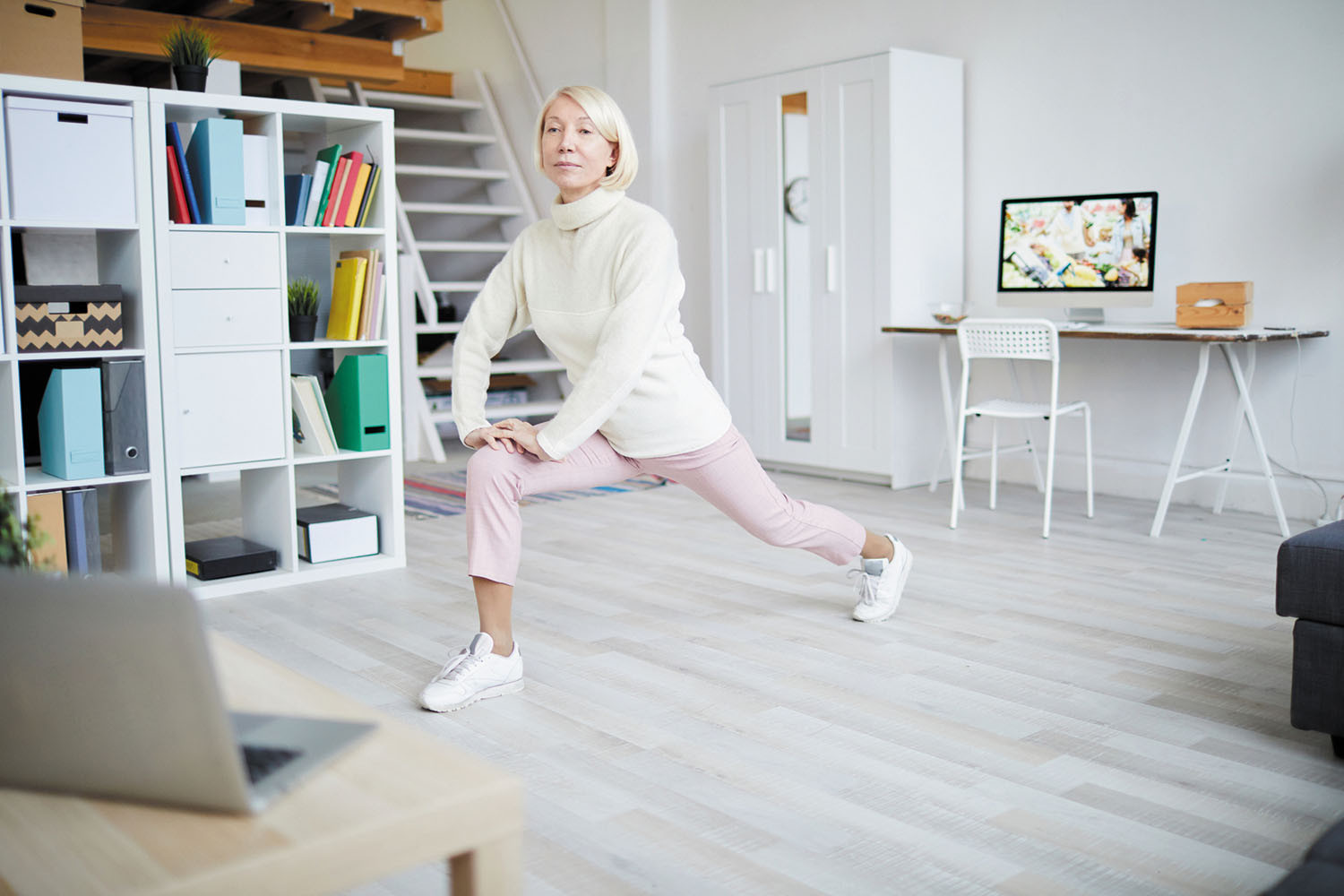
Why you should move — even just a little — throughout the day
People who sit for long, uninterrupted periods of time may increase their risk of cardiovascular disease, even if they get the recommended 30 minutes of daily exercise. Sedentary behavior appears to make people more prone to developing insulin resistance and inflammation, which are key players in the buildup of fatty plaque inside arteries. Experts say people should add short bursts of movement to their daily routine to break up long periods of sitting.

Move of the month: Stationary lunge
Lunges, which strengthen the entire lower body, are a good example of a functional exercise. These exercises mimic everyday actions (such as picking something up off the floor), thereby improving physical functioning throughout the day.

Try this: Take a step back
Performing reverse lunges helps develop key hip muscles for better stability and teaches how to better control backward movement and coordination.
Whole grains may improve several heart risk factors at once
Light exposure at night may raise risk for heart disease
Children of centenarians may stay healthier and live longer too, study finds
A lumbar belt may help ease low back pain
Signs of pneumonia: Sometimes vague and unexpected
The surprising link between ovarian cancer and the fallopian tubes
Using a vibration plate: What it can — and can't — do for your body
People who walk more or walk faster live longer, study finds
Rosacea treatments: What works?
For sleep apnea, a dental device may be as effective as CPAP
Free Healthbeat Signup
Get the latest in health news delivered to your inbox!
Sign Up
