










New resistance training guidance may simplify your workout
Any strength training is better than none, and it doesn't have to be complicated.
- Reviewed by Timothy Aceto, PT, MPT, CSCS, Contributor
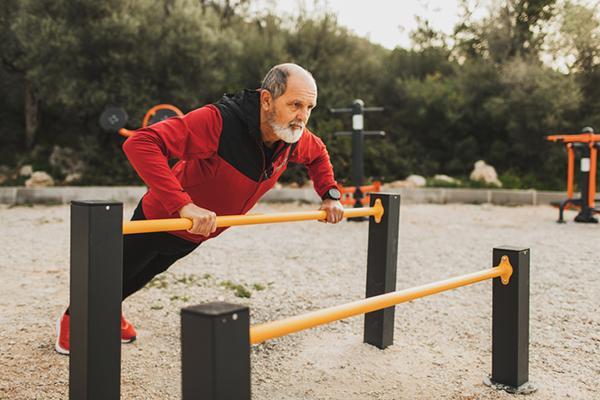
You probably know that doing regular strengthening exercises (also called resistance training) is an essential part of an overall fitness plan. But are you doing it?
Despite the well-known benefits, most adults do not get the recommended amount of strengthening exercise. Perhaps it’s a bit intimidating. You might think that you have to go to the gym every day and heft heavy weights or use unfamiliar equipment.
In fact, strength training does not have to be complicated or take a lot of time. A research overview that formed the basis of resistance training guidance from the American College of Sports Medicine (ACSM) found that the most meaningful gains come from going from no resistance training to any form of resistance training. Compared with no exercise, even modest amounts of strengthening exercise improves muscle strength, muscle size (hypertrophy), power (the ability to move quickly), endurance, and general physical function.
Why it matters
“Physical function is especially important as people get older,” says Timothy Aceto, a physical therapist with Harvard-affiliated Spaulding Rehabilitation. Everyone loses muscle mass over time. If you don’t work to build muscle, you can become deconditioned, which you’ll notice in your everyday life.
“Even healthy adults may not realize they’re losing strength until they start having difficulty standing up from a chair or walking upstairs,” says Aceto. Over time, people may develop balance issues, joint pain, and weakened bones. These can worsen with poor strength and can be improved by strengthening muscles.
What you should do
The ACSM recommends performing resistance training with as much effort as possible at least twice a week, engaging all major muscle groups (see “How to work the major muscle groups”).
Resistance training consists of exercises that make the muscles work against resistance. You can use free weights (such as dumbbells, kettlebells, or barbells), weight machines, resistance bands, or your own body weight. Home workouts with body-weight movements and resistance bands are as effective as using gym equipment.
What’s important is to get into the habit of doing something. Start with exercises such as squats, lunges, and push-ups (against a wall or counter or on the floor). Then add exercises with resistance bands or light weights.
How to work the major muscle groupsTo target the major muscle groups in your upper and lower body, perform exercises where you both push weight away from your body and pull weight toward your body. It’s also important to strengthen your core muscles (in the abdomen, back, pelvis, and buttocks) with body-weight exercises, such as the plank and bird dog.
|
How much and how hard
Guidance from the ACSM emphasizes the need for a progressive overload workout, which refers to gradually increasing the load placed on muscles to continue making gains. For example, if you’re using a 5-pound weight and can easily do three sets of 10 or more repetitions, you should increase the weight and reduce the number of repetitions. Then gradually increase the number of repetitions back to three sets of 10.
While you should increase the difficulty, the strength training concept of working your muscles to the point of complete fatigue is not necessary. For each exercise, aim for two to three sets of eight to 10 repetitions, and not more than four sets. “Once you get to five and six sets, you’re tiring the muscles too much,” says Aceto.
How to get help
Ultimately, try to find a strengthening program that suits you best. “If it piques your interest, you’re more likely to stick to it,” says Aceto. Sometimes, it’s helpful to have a way to keep yourself accountable. It may be easier to adhere to a routine if you join a class.
There are many gyms, with a wide range of membership fees. You can also check senior centers and Ys for affordable options.
If you are unsure where to start, consider consulting a physical therapist or certified personal trainer at a gym or Y. These professionals can design a personalized strength training program.
Image: © Oleg Breslavtsev/Getty Images
About the Author

Lynne Christensen, Staff Writer
About the Reviewer

Timothy Aceto, PT, MPT, CSCS, Contributor
Disclaimer:
As a service to our readers, Harvard Health Publishing provides access to our library of archived content. Please note the date of last review or update on all articles.
No content on this site, regardless of date, should ever be used as a substitute for direct medical advice from your doctor or other qualified clinician.


