










Kinesio taping offers only modest relief for musculoskeletal disorders
News briefs
- Reviewed by Robert H. Shmerling, MD, Senior Faculty Editor, Harvard Health Publishing; Editorial Advisory Board Member, Harvard Health Publishing
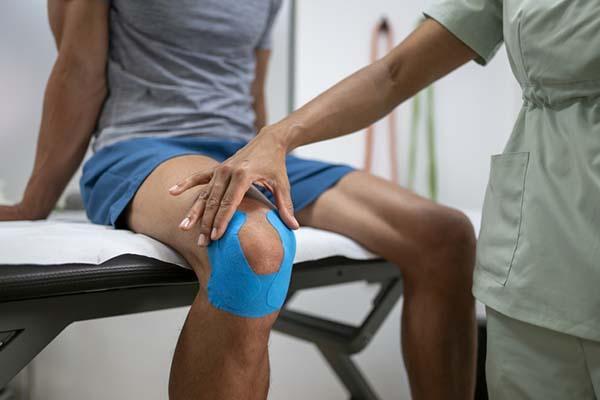
You may have seen athletes with strips of tape (often in bright colors) placed on their skin to enhance their performance. Strategic placement of this kinesiology tape — a practice known as kinesio taping — is also thought to have pain-relieving effects for people with osteoarthritis and other musculoskeletal disorders involving the knee, ankle, back, shoulder, or elbow.
Kinesiology tape limits motion in a painful joint, while being stretchy enough to allow for some motion in cases where it’s preferable to not completely immobilize the joint (as a brace would).
According to an analysis published online March 31, 2026, by BMJ Evidence-Based Medicine, this approach may be less effective than previously believed. Researchers looked at 128 scientific reviews of kinesiology taping, involving 310 trials with a total of over 15,000 participants. The research included 29 musculoskeletal conditions, mostly focused on the lower body. Findings indicated that the use of kinesiology tape may reduce pain and improve function modestly in the short term, but the effects do not seem to last. There was little to no effect on pain or function over longer periods of time. Possible adverse effects of kinesiology taping include skin irritation and itching.
Image: © simonkr/Getty Images
About the Author

Lynne Christensen, Staff Writer
About the Reviewer

Robert H. Shmerling, MD, Senior Faculty Editor, Harvard Health Publishing; Editorial Advisory Board Member, Harvard Health Publishing
Disclaimer:
As a service to our readers, Harvard Health Publishing provides access to our library of archived content. Please note the date of last review or update on all articles.
No content on this site, regardless of date, should ever be used as a substitute for direct medical advice from your doctor or other qualified clinician.


