










The problem with "classic" Lyme disease symptoms
Oversimplified symptom checklists can undermine accurate diagnosis and prompt treatment.
- Reviewed by Allen Steere, MD, Contributor
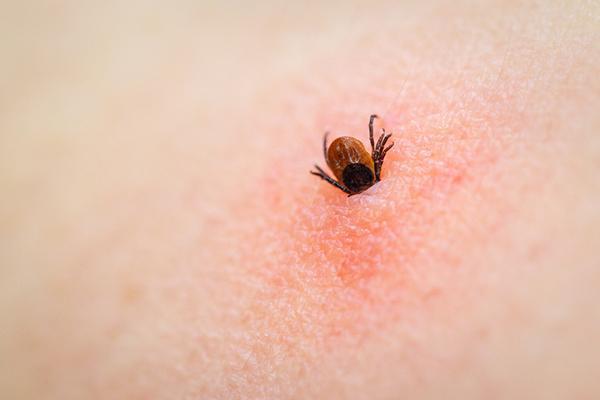
One day, Wendy noticed a quarter-sized rash at the top of her thigh. By the next day, it had grown to the diameter of a half-dollar. But since the flat, red patch didn’t resemble the bullseye rash Wendy had seen listed among Lyme disease symptoms, it didn’t even occur to her she might have the infection.
Wendy was wrong. She was one of the nearly 500,000 Americans infected each year with Lyme disease, which spreads through tick bites (primarily from deer ticks) transmitting the bacterium Borrelia burgdorferi.
Most people with early stage Lyme disease symptoms do indeed show up with a rash (known medically as erythema migrans), a Harvard expert says. But it often lacks bull’s-eye features — creating a mismatch in expectations that can delay diagnosis and treatment. What’s more, the bullseye pattern may be less visible on darker skin.
“Lyme disease is a complex infection, so it has different symptoms at different stages,” says rheumatologist Dr. Allen Steere, director of the Lyme Arthritis Program at Harvard-affiliated Massachusetts General Hospital. “In early disease, the most characteristic symptom is a skin rash at the site of a tick bite.”
“It’s often not so classic as the bullseye rash, so consequently, it can be confused with other things,” adds Dr. Steere, one of the world’s foremost experts on the condition. “The most characteristic feature is that the rash expands slowly.”
Other signs of Lyme disease
The media sometimes overstate the pervasiveness of a bullseye rash in hopes of simplifying Lyme disease detection for the public, Dr. Steere notes. But while that approach can be problematic, certain other symptoms tend to reliably show up, including
- headache
- neck pain
- joint and muscle aches
- fatigue or malaise.
Over all, you may feel like you have the flu. But another misconception is that fever is always present — which not the case for most adults with early Lyme disease, Dr. Steere says. “Fever is not common, except in children,” he says.
Symptoms can vary
In reality, there’s no single script for early-stage Lyme disease symptoms. Some people never develop a noticeable rash, for example, while others get only mild or vague clues that Lyme disease is the culprit.
Other early signs of Lyme disease can even differ by sex, with men experiencing more sleep difficulty and irritability, and women — particularly those before menopause — reporting more frequent nausea, vomiting, and heart palpitations, according to a study published online Feb. 7, 2026, by Clinical and Experimental Medicine.
The analysis underscored how Lyme disease symptoms don’t look the same in everyone and adds underrecognized factors — sex and menopause status — to variables doctors should consider when diagnosing the condition, Dr. Steere says.
“Gastrointestinal symptoms are usually not due to Lyme disease, but all these patients had a red rash — that’s how they were diagnosed,” he says. “So if you have an enlarging skin rash and gastrointestinal symptoms and you’re a premenopausal woman, well, Lyme disease can look like that.”
Diagnostic tests
This symptom variability can also make Lyme disease more challenging to diagnose, Dr. Steere says. To start, your doctor will ask about symptoms and perform a complete physical exam. Blood tests are also commonly used, though they may be negative in the first few weeks after infection — and in some cases can be positive in someone who doesn’t have the illness.
“Medical diagnosis can be challenging, and there is variation in how any disease, really, can show up. Lyme disease is no different,” Dr. Steere says.
Could it be Lyme disease?Wondering if you might have Lyme disease? Dr. Allen Steere, director of the Lyme Arthritis Program at Massachusetts General Hospital, offers the following strategies to help shape your next steps. Don’t rely on a single, “classic” symptom. While a circular, red rash is highly common, it often doesn’t resemble the much-touted bullseye rash. Be wary of new, unexplained symptoms such as aches or fatigue. Consider any recent tick exposure. Late spring and early summer are the peak times of year for Lyme disease to be diagnosed (though later-stage cases are identified all year long). Lyme disease is most common in the Northeastern, mid-Atlantic, and upper Midwestern states. If you feel “off” after time outdoors, or discover a tick on your body, see your doctor. “Many people don’t remember a tick bite, but if you have an expanding skin rash — particularly if it’s associated with flulike symptoms — seek medical attention,” Dr. Steere says. |
Image: © rbkomar/Getty Images
About the Author

Maureen Salamon, Executive Editor, Harvard Women's Health Watch
About the Reviewer

Allen Steere, MD, Contributor
Disclaimer:
As a service to our readers, Harvard Health Publishing provides access to our library of archived content. Please note the date of last review or update on all articles.
No content on this site, regardless of date, should ever be used as a substitute for direct medical advice from your doctor or other qualified clinician.


