

Signs of pneumonia: Sometimes vague and unexpected

The surprising link between ovarian cancer and the fallopian tubes

Using a vibration plate: What it can — and can't — do for your body

People who walk more or walk faster live longer, study finds

Rosacea treatments: What works?

For sleep apnea, a dental device may be as effective as CPAP

Carb cycling: What is it, and does it work?

Understanding orthorexia: Have your healthy eating goals gone too far?

Melatonin or magnesium: Can either supplement help you sleep?

Salmonella, E. coli, Cyclospora, and other germs that cause food poisoning: What you need to know
Diseases & Conditions Archive
Articles

Atrial fibrillation: Living with a common heart condition
Preventing stroke is the top priority if your heart is beating irregularly. A variety of options can control symptoms.
A flutter in the chest and a racing heartbeat could be just a passing cardiac blip, perhaps triggered by emotional stress or too much caffeine. But sometimes it's a sign of atrial fibrillation—the irregular quivering of the heart's upper chambers, or atria.

One in 10 men may be taking aspirin unnecessarily
Many men consider taking a daily low-dose aspirin to reduce the chance of having a heart attack or stroke. You should do so only if the chance of being helped outweighs the chance of triggering unwanted bleeding, since aspirin interferes with normal clotting. But about one in 10 men who take protective aspirin may not really qualify, according to a national study in the Journal of the American College of Cardiology.
Experts recommend that aspirin might be considered in someone whose chance of experiencing a cardiovascular problem is at least 6% in the next 10 years. At that tipping point, the chance of being helped is great enough to justify the risk of unwanted bleeding.

Blood sugar on the brain
In people with heart disease, Image: Thinkstock |
High blood sugar may add to mental decline in people with cardiovascular disease.
Portable ultrasound reveals early signs of heart disease
A portable ultrasound device that detects plaque buildup in arteries may offer a simple, cost-effective way to detect heart disease before it causes any symptoms. A report in the December 2014 Global Heart journal describes findings from a large-scale test of the technology in India, the United States, and Canada.
The innermost layer of an artery's wall (the intima) provides a smooth surface for blood to flow through. The middle layer (the media) contains muscle and elastic fibers that let the vessel expand and contract with each heartbeat. The thicker the intima and the media, the more likely the artery is choked with cholesterol-filled plaque. Using ultrasound, a doctor can easily measure the intima-media thickness in the arteries of the neck and upper leg.

Stressful job may raise stroke risk
Job strain—defined as having a demanding job in which you have little control—may slightly increase the risk of a stroke. The findings, in the February 2015 Stroke, echo earlier results that show a similar link between heart disease and job strain.
Researchers gleaned the results from 14 different studies that included more than 190,000 men and women from six European countries. Their average age was 42, and the follow-up lasted just over nine years, on average. Job strain was associated with a roughly 20% higher risk of ischemic stroke (the type that occurs when a clot blocks a blood vessel supplying the brain).
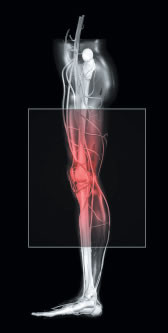
Could that leg pain be peripheral artery disease?
The pain of peripheral artery disease may be felt above or below the knee during activity, and will fade with rest. Image: Thinkstock |
The telltale sign is leg pain and fatigue that comes on with activity and goes away with rest.

When are opioids safe to take?
Opioids are commonly used to control acute, intense pain. Meditation, yoga, and acupuncture may help control pain when tapering off opioids. |
Although these powerful pain relievers can be addictive, opioids are safe for most people when used properly.

Ask the doctor: Which bone density test should I have?
Q. My doctor has recommended a bone density screening, but the medical center with the full-body scanner is a 45-minute drive from my house. A health fair at a neighborhood church offers a bone density test using a foot scanner. Would that be as accurate?
A. The foot scan is called a quantitative ultrasound, and it usually measures the bone density of the heel bone.
It appears to be at least as good as clinical risk factors—such as older age, family history of bone fractures, low body mass index, smoking, corticosteroid use, and excessive alcohol consumption—for identifying people at high risk for osteoporosis.

"Advanced" cholesterol testing: Is it for you?
A discussion with your doctor can help to determine whether an advanced cholesterol test will be beneficial for you. |
For most people, there is no advantage to tests that measure cholesterol and triglyceride particle size.

Healthy travel: Don't let this common hazard spoil your best-laid plans
Long road trips also carry a risk of deep-vein thrombosis. Take a break to stretch your legs every hour or so. Image: Thinkstock |
Long trips come with an increased risk of blood clots deep in the leg veins, which can have serious complications.
Signs of pneumonia: Sometimes vague and unexpected
The surprising link between ovarian cancer and the fallopian tubes
Using a vibration plate: What it can — and can't — do for your body
People who walk more or walk faster live longer, study finds
Rosacea treatments: What works?
For sleep apnea, a dental device may be as effective as CPAP
Carb cycling: What is it, and does it work?
Understanding orthorexia: Have your healthy eating goals gone too far?
Melatonin or magnesium: Can either supplement help you sleep?
Salmonella, E. coli, Cyclospora, and other germs that cause food poisoning: What you need to know
Free Healthbeat Signup
Get the latest in health news delivered to your inbox!
Sign Up
