

Naturally gluten-free foods

Harvard study: Healthier fats linked to longer life after prostate cancer diagnosis

Shingrix shingles vaccine linked with lower heart disease risks

Estrogen-only hormone therapy tied to lower dementia risk

Should you have a hysterectomy?

Stair climbing may significantly lower cardiovascular risks

Why do I sweat so much?

Walking pneumonia: The "mild" illness that can still pack a punch

What causes knee pain: How doctors make a diagnosis

Where you carry excess weight matters in predicting heart disease risk
Brain health Archive
Articles

Anticholinergic drugs linked with dementia
In the journals
Anticholinergic medications used to treat bladder conditions, Parkinson's disease, and depression are associated with an increased risk of dementia, according to a large study published online April 25, 2018, by The BMJ. Anticholinergic drugs help to contract and relax muscles. They work by blocking acetylcholine, a substance that also transmits messages in the nervous system. In the study, researchers compared the medical records of 40,770 people older than 65 who were diagnosed with dementia and 283,933 seniors without.
They found that people diagnosed with dementia were up to 30% more likely to have been prescribed anticholinergic medications for Parkinson's, bladder problems, or depression. Frequently prescribed anticholinergic drugs include procyclidine (Kemadrin) for Parkinson's; tolterodine, oxybutynin, and solifenacin (Vesicare) for urological conditions like overactive bladder or incontinence; and amitriptyline, dosulepin, and paroxetine for depression. However, there was no association between dementia and anticholinergic drugs used to treat other common conditions like hay fever, travel sickness, and stomach cramps.

Eat an egg for breakfast, prevent a stroke?
Research we're watching
Image: © Twomeows_IS/Getty Images
Eating an egg a day may help protect against cardiovascular disease, according to a study published online May 21 by the journal Heart. Researchers found that people who ate an egg every day had an 18% lower risk of dying from cardiovascular disease and a 28% lower risk of experiencing a deadly hemorrhagic stroke, compared with people who didn't eat eggs.
The study included more than 400,000 adults ages 30 to 79. Participants were from 10 survey sites in China. Researchers looked at how often study subjects reported eating eggs and then tracked their health for nearly nine years using registries and other methods.

Is coffee harmful to my health?
Ask the doctors
Q. I recently read about the decision by the state of California to require cancer warnings on coffee. I drink a cup a day. Should I be concerned?
A. The recent decision by a California judge to require cancer warning labels on coffee stemmed from concerns about a specific substance found in coffee, acrylamide, which is a chemical that is produced when coffee is roasted. Coffee isn't the only food or beverage that contains acrylamide. Acrylamide is produced during the high-temperature cooking process used for numerous common foods, including cookies, crackers, and potato chips, according to the American Cancer Society (ACS). But before you panic, while there definitely is acrylamide in coffee, scientists have yet to conclusively prove that this chemical causes cancer, according to the ACS. Most of the research on humans hasn't found any increased risk of cancer in people who eat foods containing acrylamide. Other studies looking at specific types of cancers have produced mixed results but found no conclusive links, according to the ACS. In addition, there is evidence that drinking coffee can bring some health benefits, such as reductions in the risks for stroke and liver disease. A 2015 study in Circulation also found that moderate coffee drinkers (defined as those having less than five cups a day) had lower risks for heart disease and neurological disease, according to the American Heart Association. So, the final message is this: if you are healthy and drink coffee moderately, there is no evidence that it's going to raise your risk of developing cancer.

Even one cigarette a day is too many
Research we're watching
It seems the old adage "everything in moderation" might have an exception — smoking. A study in the January 24 issue of The BMJ found that smoking even one cigarette a day carries significant health consequences, namely a higher risk of heart attack and stroke.
Using data from 141 different studies, involving millions of participants, researchers compared people who smoked either one, five, or 20 cigarettes each day. They found, counter to what many people assume, that rates of heart disease and stroke were not reduced as much as expected in casual smokers compared with pack-a-day smokers.

How atrial fibrillation may affect your brain
This heart rhythm disorder is linked to thinking and memory problems. But anti-clotting drugs may lower the risk.
Bouts of atrial fibrillation, or afib — a rapid, chaotic heartbeat — make some people feel lightheaded and dizzy, while others don't notice any symptoms. But the most serious threat of this condition is the higher risk of stroke among people with afib compared with those without the disorder (see "Blood clot dangers, large and small"). Now, there's a growing recognition that people with afib also face an increased risk of thinking and memory problems — even if they do not experience a stroke.
Known as cognitive impairment, these problems include trouble remembering, learning new things, concentrating, or making routine decisions. The presumed underlying cause? Tiny blood clots that cause "silent" (that is, unrecognized) strokes and gradually injure parts of the brain involved with cognition.
Harnessing big data to help the heart
Machine learning may improve the way doctors detect heart disease.
Image: © exdez/Getty Images
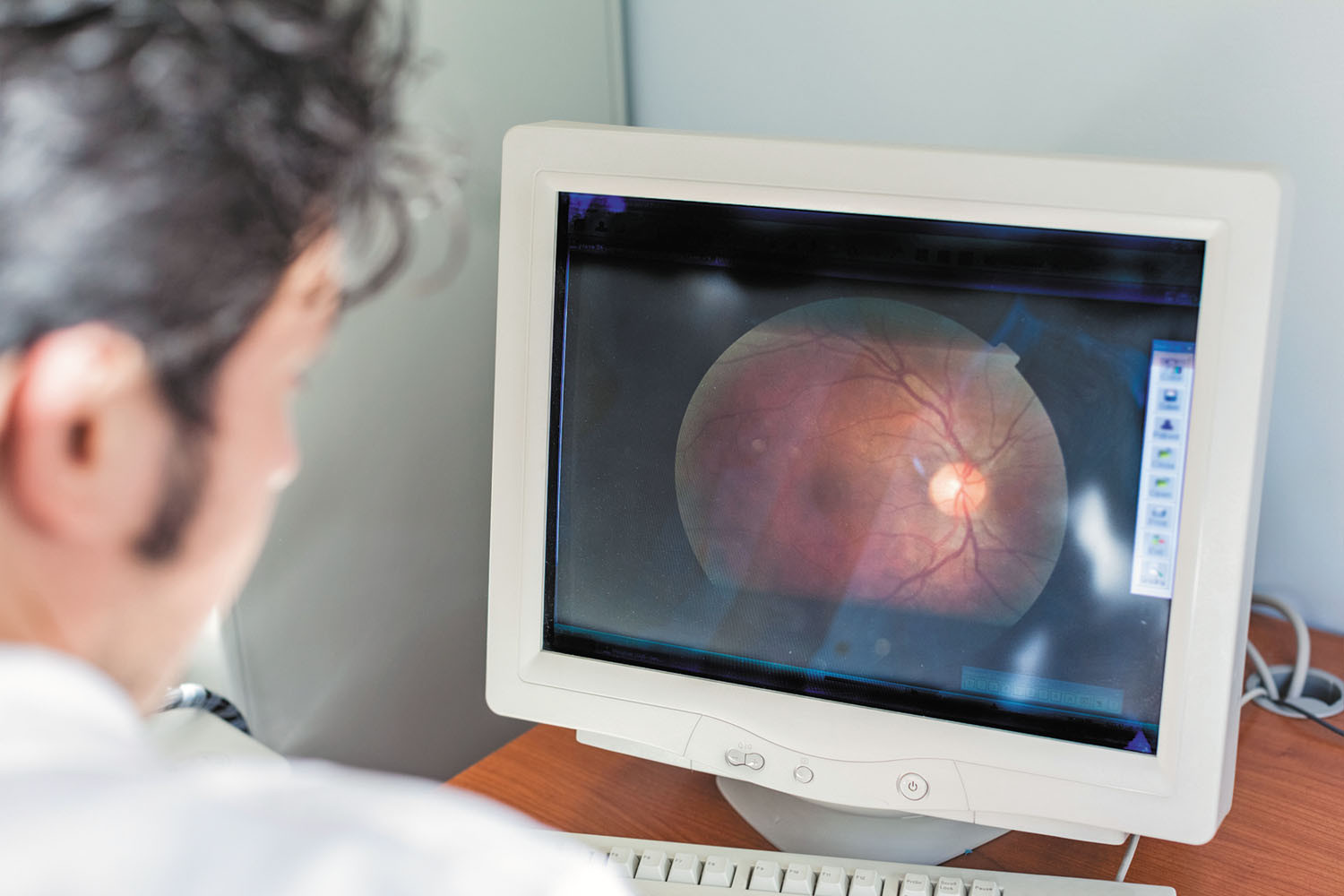
Imagine a world in which a photo of your eye — taken with your smartphone — could determine your risk of a heart attack, and your smartwatch could estimate your odds of experiencing a stroke. Sounds pretty futuristic, right?
In fact, preliminary studies showing the feasibility of both approaches have already been published. They're just two examples of the new wave of technology-based innovations (see "Transformative technologies") that are beginning to change health care as we know it.

Midlife fitness linked to less dementia later in life
Research we're watching
Image: © radyreese/Getty Images
High cardiovascular fitness during middle age may lower the likelihood of dementia late in life, according to a decades-long study.
For the study, researchers asked 191 middle-aged women to ride an exercise bike until they were exhausted. They then grouped the women according to their peak cardiovascular capacity. Just 40 women met the criteria for high fitness, while 92 were in the medium category, and 59 were in the low category.

A personalized approach to preventing Alzheimer’s disease
These strategies may offer greater protection.
Image: © shapecharge/Getty Images
While there's no cure for Alzheimer's disease, ongoing research has suggested there may be ways to lower your risk.
"Much of the existing science supports how certain behavioral changes made in middle age can protect people as they grow older," says Dr. Kirk Daffner, director for the Center for Brain/Mind Medicine at Harvard-affiliated Brigham and Women's Hospital. "However, there is evidence that adopting certain healthy lifestyle habits can benefit older adults too."

Alzheimer's guide: Protect your loved one from wandering
One of the most dangerous and distressing symptoms of Alzheimer's is wandering. It may seem unfathomable that a person might suddenly get up at night to go to the post office or leave home at any hour for no apparent reason. But wandering may be prompted by deep-seated memories of work, chores, or hobbies, or a longing to return to a former home.
The inability to control wandering is what often drives families to decide to place a loved one in a nursing home. However, there are some simple measures to prevent wandering that often work well for a time and can even help postpone that difficult decision.
Brain training may help with mild cognitive impairment
In the journals
So far, research has been mixed on whether brain training programs can improve or slow memory decline. Yet a new study published online Jan. 4, 2018, by the Journal of the American Geriatrics Society found that brain training may help people with mild cognitive impairment (MCI), the stage between normal brain aging and dementia.
Researchers recruited 145 adults, average age 72, who were diagnosed with MCI. They were split into three groups. Those in one group did two hours of brain training every week for two months. The training focused on improving memory by learning new strategies to better encode information. For example, they remembered errands by associating tasks with specific locations in their home, a process called method of loci. They also practiced how to better control their attention.
Naturally gluten-free foods
Harvard study: Healthier fats linked to longer life after prostate cancer diagnosis
Shingrix shingles vaccine linked with lower heart disease risks
Estrogen-only hormone therapy tied to lower dementia risk
Should you have a hysterectomy?
Stair climbing may significantly lower cardiovascular risks
Why do I sweat so much?
Walking pneumonia: The "mild" illness that can still pack a punch
What causes knee pain: How doctors make a diagnosis
Where you carry excess weight matters in predicting heart disease risk
Free Healthbeat Signup
Get the latest in health news delivered to your inbox!
Sign Up
