










What causes knee pain: How doctors make a diagnosis
Get ready for the questions you'll be asked when you get your knee pain evaluated.
- Reviewed by Richard Wilk, MD, Contributor

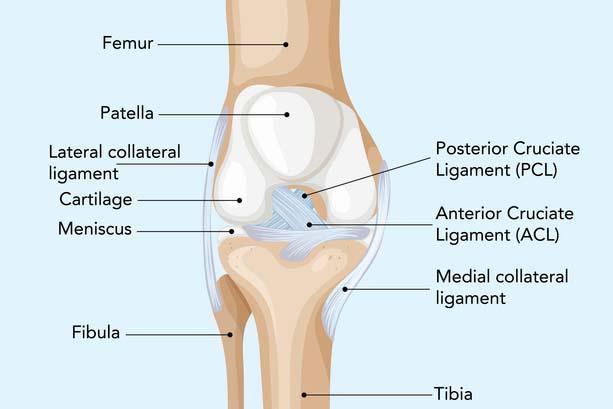
Knee pain can affect every step you take. If you’re middle-aged or older, you might blame osteoarthritis for your achy knees. You may be right. But knee pain can stem from problems with several structures in and around the joint (see “Knee anatomy”).
To narrow down the cause and determine the right treatment, a doctor will perform a thorough evaluation — ask questions, examine the knee, and possibly order imaging studies.
Knee anatomy
At the knee joint, the end of the upper leg bone (femur) meets the two bones of the lower leg (tibia and fibula). Cushioning articular cartilage covers the ends of the femur and tibia, allowing smooth movement. The back surface of the kneecap (patella) is also covered with articular cartilage. Between the femur and tibia, two C-shaped structures made of fibrocartilage, called menisci, act as shock absorbers. Several ligaments (strong fibrous tissues that connect bones at a joint) hold the knee joint together. The joint is surrounded by tendons, which connect muscles to bones, and by muscles, which provide support and stability and allow for movement. Image: © blueringmedia/Getty Images |
Questions to pinpoint the cause
“When someone comes to my office saying my knee hurts, I always start with the fundamental questions,” says Dr. Richard M. Wilk, an orthopedic surgeon at Harvard-affiliated Brigham and Women’s Hospital. “Was there an injury? Did this come on suddenly or did it develop gradually over time?”
He follows these questions by asking about the nature of the knee symptoms and what brings them on.
- Where does it hurt? Is it the front, side (inside or outside), or back of the knee? Or all over?
- Does the knee catch or lock in place? Is there buckling or a sensation of the knee giving way?
- Are there any clicking, popping, snapping, or grinding sounds from your knee?
- Does the pain travel up toward the hip or down the leg toward the foot?
- Does walking or standing trigger pain?
- Is it worse going up or down stairs?
- Does it hurt when you get up from a chair or get in or out of a car?
- Do you have pain when you aren’t doing anything, perhaps after sitting for a long time, first thing in the morning, or sleeping at night?
What doctors look for in a physical examination
The next step is a physical examination. “I look for swelling in and around the knee, and I check whether the person can bend and fully straighten the knee,” says Dr. Wilk.
He then examines the knee for evidence of a problem with the ligaments. “We can perform various maneuvers with the leg to see if any of the ligaments might be loose,” says Dr. Wilk.
He also gently presses on the knee looking for tenderness on the front, back, inside, or outside of the knee.
What imaging studies reveal
“After going through all of that, we often get an x-ray,” says Dr. Wilk. A knee x-ray can show the amount of space between the upper leg bone (femur) and lower leg bone (tibia) and behind the patella (kneecap). A narrow space indicates that the cartilage has worn down, suggesting that the cause of knee pain may be osteoarthritis.
X-rays don’t show soft tissues such as ligaments, tendons, and menisci. This requires magnetic resonance imaging (MRI). Nonetheless, “we don’t usually get an MRI right away,” says Dr. Wilk.
Based on the answers to the questions, the physical examination, and the findings on the x-ray, your doctor can usually make a diagnosis (see “What can go wrong with the knee?”).
With a diagnosis of osteoarthritis, damaged meniscus or ligaments, or tendinitis, treatment often starts with activity modification, use of nonsteroidal anti-inflammatory drugs (such as ibuprofen or naproxen) for pain, physical therapy, and exercise.
“If knee pain doesn’t improve after a few weeks of this treatment, we would order an MRI, which provides more information to help us figure out the problem and what to do about it,” says Dr. Wilk.
Depending on the diagnosis, other treatment options include immunosuppressant medicines, corticosteroid injections, or surgery.
Your hip may be causing your knee pain
“Sometimes, a person comes in with knee pain, and after I’ve done all the tests, I see that the knee looks fine,” says Dr. Wilk. “But when I examine the hip and move it around, the person grabs their knee in pain.” This shift in sensation from the hip to the knee is called referred pain and occurs for a variety of reasons.
Osteoarthritis in the hip may cause pain that’s felt in the knee. Hip impingement, a painful pinching that occurs when the bones in the hip don’t fit together as they should, usually causes hip pain. However, pain can also radiate down toward the knee.
“Because of the possibility for referred pain, I always check the joints above and below the knee,” says Dr. Wilk.
What can go wrong with the knee?Here are some of the most common causes of knee pain: Osteoarthritis. This occurs when the smooth cartilage in the joints wears down. Symptoms include achy pain and joint stiffness. Torn meniscus. The menisci can be damaged due to squatting or a twisting injury. They can also develop small tears as part of the normal aging process. This may cause pain on one side of the knee joint. There may be a popping sensation, or the knee may catch and lock. Tendinopathy. Tendons can become inflamed or develop partial or complete tears from overuse or traumatic injuries. There might be pain below the kneecap and tenderness with pressure on the area. Injured ligaments. Ligaments in the knee, particularly the anterior cruciate ligament, can suffer a sprain or tear if stretched beyond their normal range, often from an injury. |
Image: © Jirapong Manustrong/Getty Images
About the Author

Lynne Christensen, Staff Writer
About the Reviewer

Richard Wilk, MD, Contributor
Disclaimer:
As a service to our readers, Harvard Health Publishing provides access to our library of archived content. Please note the date of last review or update on all articles.
No content on this site, regardless of date, should ever be used as a substitute for direct medical advice from your doctor or other qualified clinician.


