

Whole grains may improve several heart risk factors at once

Light exposure at night may raise risk for heart disease

Children of centenarians may stay healthier and live longer too, study finds

A lumbar belt may help ease low back pain

Signs of pneumonia: Sometimes vague and unexpected

Using a vibration plate: What it can — and can't — do for your body

The surprising link between ovarian cancer and the fallopian tubes

People who walk more or walk faster live longer, study finds

Rosacea treatments: What works?

For sleep apnea, a dental device may be as effective as CPAP
Back Pain Archive
Articles

Ask the doctor: What can I do for bunions?
Image: Thinkstock |
Q. I have developed bunions, making it impossible to wear most of my shoes without pain. Is there anything I can do to help the problem without undergoing surgery?
A. There are several things that can be done for bunions, which develop when the first metatarsal bone of the foot turns outward and the big toe points inward (toward the other toes), causing the joint to bulge outward. A podiatrist would be able to suggest ways to relieve your pain and prevent your bunions from getting worse. He or she will likely recommend different types of shoes, especially if you've been wearing shoes with pointed toes, high heels, or both. Podiatrists often prescribe custom-fitted padded inserts, known as orthotics, that are worn inside your shoes to help relieve pressure on your bunions. Surgery is usually a last resort, but your podiatrist will also be able to discuss the risks and benefits of different types of bunion surgery.

Neck pain: Core exercises can help
Neck aches are often the result of wear and tear, poor posture, and weak core muscles. Image: Thinkstock |
Better support for your spine is key in avoiding neck ache.

Pelvic organ prolapse: You're not alone
Exchanging information with friends is one way to remove the stigma of pelvic organ prolapse. Image: Thinkstock |
Few women realize how common pelvic prolapse is—and how easily treated. Here are five things you should know.
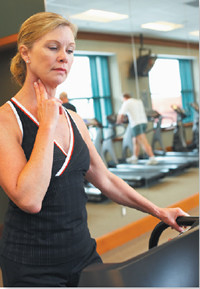
Safe exercise: Know the warning signs of pushing too hard
Your heart should beat Image: Thinkstock |
Chest pain, dizziness, and shortness of breath mean you should back off and call your doctor.

Common pain relievers add bleeding risk to afib treatment
The abnormal heart rhythms from atrial fibrillation (afib) can form clots that, in turn, trigger strokes. To prevent that, people with afib take a blood-thinning medication to prevent clotting. But also taking common over-the-counter painkillers can block clotting too much and lead to dangerous bleeding, according to a study in Annals of Internal Medicine.
Danish researchers examined health records of more than 150,000 people with afib. A third of them had also been prescribed nonsteroidal anti-inflammatory drugs (NSAIDs), such as ibuprofen (Advil, Motrin) and naproxen (Aleve). These common pain relievers interfere with the body's natural clotting function. Paradoxically, some NSAIDs have also been linked to higher risk of thromboembolism, or a clot that forms in the body and travel to the lungs, brain, or elsewhere.

Whole grains may improve several heart risk factors at once
Light exposure at night may raise risk for heart disease
Children of centenarians may stay healthier and live longer too, study finds
A lumbar belt may help ease low back pain
Signs of pneumonia: Sometimes vague and unexpected
Using a vibration plate: What it can — and can't — do for your body
The surprising link between ovarian cancer and the fallopian tubes
People who walk more or walk faster live longer, study finds
Rosacea treatments: What works?
For sleep apnea, a dental device may be as effective as CPAP
Free Healthbeat Signup
Get the latest in health news delivered to your inbox!
Sign Up
