

Oat vs. dairy milk: Nutrition, benefits, and downsides

Microplastics: A hidden health threat?

Healing after food poisoning

What is tempeh? Benefits, nutrition, and how to use it

Light exposure at night may raise risk for heart disease

Whole grains may improve several heart risk factors at once

A lumbar belt may help ease low back pain

Children of centenarians may stay healthier and live longer too, study finds

Signs of pneumonia: Sometimes vague and unexpected

The surprising link between ovarian cancer and the fallopian tubes
Alzheimer's Disease Archive
Articles

Pelvic organ prolapse: You're not alone
Exchanging information with friends is one way to remove the stigma of pelvic organ prolapse. Image: Thinkstock |
Few women realize how common pelvic prolapse is—and how easily treated. Here are five things you should know.

Music can boost memory and mood
Dan Cohen watches Mary Lou Thompson, who has Alzheimer's, respond to the playlist he made for her. Image: Photo Courtesy of BOND 360 |
By Dr. Anne Fabiny, Editor in Chief, Harvard Women's Health Watch

iPad can disrupt sleep, study suggests
Image: Thinkstock |
Using an iPad or other backlit electronic tablet in the hours before bedtime not only prevents you from falling asleep, it may also affect your alertness the next day, according to a report published in the Proceedings of the National Academy of Sciences, Dec. 22, 2014. Researchers at Harvard-affiliated Brigham and Women's Hospital found that the light emitted by the devices reset the body's circadian clock, which synchronizes the daily rhythm of sleep to daylight. As a result, people reading e-books took longer to fall asleep and were less alert the next morning than when they read print books instead.
During the two-week study, 12 men and women read digital books on an iPad for four hours before bedtime each night for five consecutive nights. They also followed the same routine using printed books. When they read the iPad, participants were less sleepy before bedtime but were less alert the following morning, even after eight hours of sleep.
Ask the doctor: Any health benefits in dessert drinks?
It appears that moderate |
Q. Do the protective effects of alcohol extend to dessert wines and liqueurs, or do those have too much sugar?
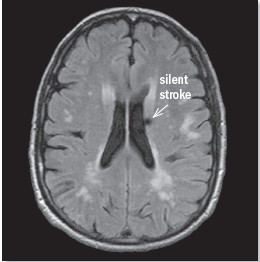
Reduce your risk of silent strokes
As seen on this MRI scan, a silent stroke |
Exercise, eat a healthy diet, and manage blood pressure and cholesterol to lower your odds.

Stay a step ahead of urinary tract infections
Drink plenty of fluids to help flush out bacteria in the urinary tract. Drink enough each day so that your urine is almost clear in color. Image: Thinkstock |
Keep hydrated, and empty your bladder often to stave off these risky infections.

Poor sleep linked to dementia and ministrokes
Images: Thinkstock |
Poor sleep is linked to high blood pressure, diabetes, obesity, and heart disease. Now a study published in Neurology Dec. 10, 2014, suggests that people with conditions that rob them of oxygen and deep sleep are more likely to have changes in the brain that may lead to dementia. Researchers say conditions such as emphysema and sleep apnea reduce the amount of oxygen in the blood during sleep, which can lead to silent, undetectable "ministrokes." Researchers also found that people who spend less time in deep sleep, called slow-wave sleep, are more likely to have loss of brain cells than people who spend more time in slow-wave sleep. Slow-wave sleep is important in processing new memories and remembering facts. The researchers noted that past evidence has shown that using a continuous positive airway pressure (CPAP) machine for obstructive sleep apnea may improve cognition, even after dementia has developed. "Sleep quantity and quality are important to maintain optimal health and prevent disease," says sleep expert Dr. Lawrence Epstein, an instructor in medicine at Harvard Medical School. "By getting enough sleep, you ensure that you are getting all the types of sleep, which is necessary to maintain proper functioning."

Ask the doctor: Calcium supplements: Not routinely recommended
Dairy products are good sources of calcium. |
Q. My internist told me to take calcium because I have osteoporosis. However, I heard that blockages in heart arteries could also contain calcium. Am I hurting my arteries by taking calcium supplements?
A. Doctors often recommend calcium supplements for people with osteoporosis, and I'd advise you to follow your physician's advice, as calcium is important for bone health. The Recommended Dietary Allowance for calcium for adults is 1,000 to 1,200 milligrams (mg) a day; dairy products are the best sources. For healthy people who get enough calcium in their diets, the role of calcium supplements is less clear, although some people hope that taking them may help preserve bone strength.

Can memory woes foretell a stroke?
Well-educated people who report memory problems may face a higher risk of stroke.
Minor memory slips—such as losing your keys or forgetting an acquaintance's name—are common as we age. However, people who express concern about their memory may have a heightened risk of stroke, particularly if they're highly educated, according to a study in the January 2015 Stroke.

Ask the doctor: Diagnosing restless legs syndrome
Image: Thinkstock |
Q. For many years, I have felt like my legs have to constantly move, and sometimes I feel crawling sensations when I am resting. Do I need to be tested for restless legs syndrome?
A. Your symptoms are consistent with restless legs syndrome (RLS), a common condition marked by uncomfortable sensations in the legs or a need to move them to relieve the discomfort. There is no test to confirm RLS, so it's diagnosed based on symptoms alone.
Oat vs. dairy milk: Nutrition, benefits, and downsides
Microplastics: A hidden health threat?
Healing after food poisoning
What is tempeh? Benefits, nutrition, and how to use it
Light exposure at night may raise risk for heart disease
Whole grains may improve several heart risk factors at once
A lumbar belt may help ease low back pain
Children of centenarians may stay healthier and live longer too, study finds
Signs of pneumonia: Sometimes vague and unexpected
The surprising link between ovarian cancer and the fallopian tubes
Free Healthbeat Signup
Get the latest in health news delivered to your inbox!
Sign Up
