

Oat vs. dairy milk: Nutrition, benefits, and downsides

Microplastics: A hidden health threat?

Healing after food poisoning

What is tempeh? Benefits, nutrition, and how to use it

Light exposure at night may raise risk for heart disease

Whole grains may improve several heart risk factors at once

A lumbar belt may help ease low back pain

Children of centenarians may stay healthier and live longer too, study finds

Signs of pneumonia: Sometimes vague and unexpected

The surprising link between ovarian cancer and the fallopian tubes
Alzheimer's Disease Archive
Articles

Portable ultrasound reveals early signs of heart disease
A portable ultrasound device that detects plaque buildup in arteries may offer a simple, cost-effective way to detect heart disease before it causes any symptoms. A report in the December 2014 Global Heart journal describes findings from a large-scale test of the technology in India, the United States, and Canada.
The innermost layer of an artery's wall (the intima) provides a smooth surface for blood to flow through. The middle layer (the media) contains muscle and elastic fibers that let the vessel expand and contract with each heartbeat. The thicker the intima and the media, the more likely the artery is choked with cholesterol-filled plaque. Using ultrasound, a doctor can easily measure the intima-media thickness in the arteries of the neck and upper leg.
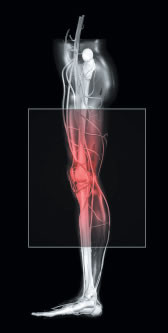
Could that leg pain be peripheral artery disease?
The pain of peripheral artery disease may be felt above or below the knee during activity, and will fade with rest. Image: Thinkstock |
The telltale sign is leg pain and fatigue that comes on with activity and goes away with rest.
New concerns about anticholinergic medications
Anticholinergics, a group of medications that includes many over-the-counter and prescription drugs, are well known for causing confusion in older adults. Common medications with anticholinergic properties include medications to treat overactive bladder, such as oxybutynin (Ditropan); medications to treat allergies and sleeping problems, such as diphenhydramine (Benadryl, Sominex, Unisom); and medications used to treat depression, such as amitriptyline (Elavil). It's generally believed that confusion that may develop from anticholinergics clears up when someone stops taking the drugs. But now it appears that the medications are associated with a more permanent effect. A study published online Jan. 26, 2015, in JAMA Internal Medicine linked daily anticholinergic use among older adults for three or more years to an increased risk for developing dementia and Alzheimer's disease.
The study didn't prove that anticholinergics cause dementia; it only found an association between people who take the medications and people who develop dementia. Nevertheless, the researchers suggest that doctors avoid prescribing anticholinergics when possible, or at least limiting the medications to the lowest doses possible. If you're taking an anticholinergic, talk to your doctor about the risks the medication poses, including the risk of falls as a result of confusion.

When are opioids safe to take?
Opioids are commonly used to control acute, intense pain. Meditation, yoga, and acupuncture may help control pain when tapering off opioids. |
Although these powerful pain relievers can be addictive, opioids are safe for most people when used properly.
Ask the doctor: Which bone density test should I have?
Q. My doctor has recommended a bone density screening, but the medical center with the full-body scanner is a 45-minute drive from my house. A health fair at a neighborhood church offers a bone density test using a foot scanner. Would that be as accurate?
A. The foot scan is called a quantitative ultrasound, and it usually measures the bone density of the heel bone.
It appears to be at least as good as clinical risk factors—such as older age, family history of bone fractures, low body mass index, smoking, corticosteroid use, and excessive alcohol consumption—for identifying people at high risk for osteoporosis.

"Advanced" cholesterol testing: Is it for you?
A discussion with your doctor can help to determine whether an advanced cholesterol test will be beneficial for you. |
For most people, there is no advantage to tests that measure cholesterol and triglyceride particle size.

Why you should thank your aging brain
At middle age, the brain begins to draw on more of its capacity for improved judgment and decision making.
If you forget a name or two, take longer to finish the crossword, or find it hard to manage two tasks at once, you're not on the road to dementia. What you're experiencing is your brain changing the way it works as you get older. And in many ways it's actually working better. Studies have shown that older people have better judgment, are better at making rational decisions, and are better able to screen out negativity than their juniors are.
Although it may take you a little longer to get to the solution, you're probably better at inductive and spatial reasoning at middle age than you were in your youth. |
Common drugs linked to dementia
Medications called anticholinergics are used to treat a host of conditions—overactive bladder, depression, allergies, and Parkinson's disease. They usually aren't recommended for older adults because one of the most common side effects is confusion and difficulty reasoning. Early studies have also indicated that long-term anticholinergic use is associated with an increased risk of dementia, and a recent study by researchers at the University of Washington adds more evidence to support that connection. The results were published online Jan. 26, 2015, by JAMA Internal Medicine.
The researchers tracked almost 3,500 men and women ages 65 and older who were free of dementia. When they matched prescription data for the previous 10 years with the participants' health outcomes, they determined that using anticholinergics was associated with an increased risk of developing dementia. Moreover, dementia risk increased with the dosage of the drugs and the length of time they were used. While people who had taken these drugs daily for the equivalent of three months had no increase in risk, those who had used them for over three years had a 54% greater risk than nonusers.

Healthy travel: Don't let this common hazard spoil your best-laid plans
Long road trips also carry a risk of deep-vein thrombosis. Take a break to stretch your legs every hour or so. Image: Thinkstock |
Long trips come with an increased risk of blood clots deep in the leg veins, which can have serious complications.

Ask the doctor: I'm 75. Do I need a geriatrician?
Q. My doctor, an internist, just retired, and my health plan is asking me to designate a new primary care physician. I'm 75. Would there be advantages to choosing a geriatrician as my new doctor?
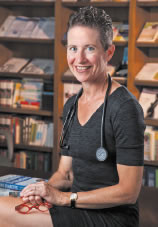
A. First, a disclaimer: I am a geriatrician. So my short answer is, "Yes, of course!" But my reasoned, unbiased answer would be, "It depends." If you are a generally healthy 75-year-old woman, a family physician or internist will be able to take excellent care of you. Geriatricians are trained to care for older adults with complex illnesses and are expert in managing the care of people who are frail. Improving your ability to function, and the quality of your life, are the guiding principles of geriatric medicine. We are expert at managing complexity and uncertainty, working with families, and caring for people with serious illnesses who are approaching the end of life. A geriatrician would be a good choice if you have physical or cognitive impairment, if you take a lot of medications, or if your friends and family are involved in your medical care. For people who have several medical problems, we emphasize the role of patient and family preference in making medical decisions, with the patient's goals as our primary focus.
Oat vs. dairy milk: Nutrition, benefits, and downsides
Microplastics: A hidden health threat?
Healing after food poisoning
What is tempeh? Benefits, nutrition, and how to use it
Light exposure at night may raise risk for heart disease
Whole grains may improve several heart risk factors at once
A lumbar belt may help ease low back pain
Children of centenarians may stay healthier and live longer too, study finds
Signs of pneumonia: Sometimes vague and unexpected
The surprising link between ovarian cancer and the fallopian tubes
Free Healthbeat Signup
Get the latest in health news delivered to your inbox!
Sign Up
