

Oat vs. dairy milk: Nutrition, benefits, and downsides

Microplastics: A hidden health threat?

Healing after food poisoning

What is tempeh? Benefits, nutrition, and how to use it

Light exposure at night may raise risk for heart disease

Whole grains may improve several heart risk factors at once

A lumbar belt may help ease low back pain

Children of centenarians may stay healthier and live longer too, study finds

Signs of pneumonia: Sometimes vague and unexpected

The surprising link between ovarian cancer and the fallopian tubes
Alzheimer's Disease Archive
Articles

Writing to ease grief and loss
Some research suggests that disclosing deep emotions through writing can boost immune function as well as mood and well-being. Conversely, the stress of holding in strong feelings can ratchet up blood pressure and heart rate, and increase muscle tension.
Deeply troubling situations, such as suicide or a violent death, are best explored with the help of an experienced therapist. You might want to seek professional support to help you start to deal with your grief before trying journal writing. If you'd like to try keeping a journal to help you process feelings of grief, keep these things in mind:

Surviving the flu season
The odds of beating the bug are increasing as another new vaccine for seniors debuts.
Image: Bigstock
The flu season is upon us. Like that other season—winter—it can be unpredictable. But the Centers for Disease Control and Prevention (CDC) is doing its best to see that we're informed and as prepared as possible for whatever is in store. For updates throughout the flu season, check the CDC website, www.cdc.gov/flu.
How well does the flu shot work?
Why the flu shot is worthwhile
Flu vaccination may make your illness milder if you do get sick. A 2016 study indicated that people 50 or older who got a flu vaccination had a 57% lower risk of hospitalization for the flu than their contemporaries who weren't vaccinated. Flu vaccination has been associated with lower rates of heart attacks and related problems among people with heart disease and with reduced hospitalizations among people with diabetes and chronic lung disease.
Getting vaccinated yourself also protects people around you, including those who are more vulnerable to serious flu illness, like babies and people with certain chronic health conditions.
Vaccines for seniors
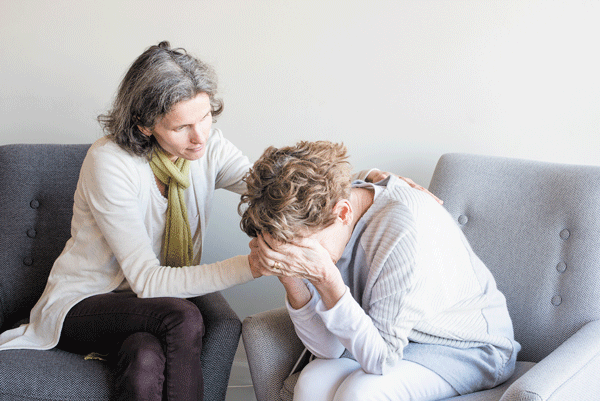
Getting through grief
At a time of loss, it's important to focus on maintaining your health and getting the support you need.
Image: natalie_broad/iStock
Losing a family member, a close friend, or even a beloved pet can be devastating. All the small details of daily life—getting out of bed, making meals, going to appointments, taking care of children, handling responsibilities at work—may seem monumentally hard or inconsequential. Yet, even as you grieve, you've probably been reminded that life must go on. But working through the emotional pain can be difficult, particularly during the holidays, when you may feel you are supposed to be celebrating.
The normal process of grieving
Help with coping
If you're grieving, it may help to do the following:
Take care of yourself. This means eating well, exercising, and getting enough sleep. It also means asking yourself, "What would help me most today?" and taking care of the need, be it having a good cry, talking to a friend, or going to the movies.
Let people know what helps. Often, people aren't sure how to act around you when you are grieving. They will be relieved if you tell them how they can help you, whether you want someone to pitch in with the laundry, sit quietly by, or share stories about your loved one. It's also fine to let people know if you'd like to be left alone.
Accept mixed feelings. It is entirely normal to have mixed emotions about the loss and about your loved one. It helps to express these so that other people understand what you are going through. Chances are, they've been there themselves.
Find others who understand. People who have also lost a loved one are likely to be more understanding. Many hospitals, religious organizations, and community groups have support groups for mourners, in which participants offer comfort and share coping strategies. When friends and family can't help in these ways, support groups often can.
Seek professional help. Grief and depression are hard to tell apart. The symptoms are similar, and so are the therapies. If you are finding yourself overwhelmed by grief, you may want to seek help from a professional. Psychiatrists, psychologists, and spiritual leaders are trained to help people through the grieving process. "We all want to help you to feel better and move through the world more easily," Dr. Miller says.

Numb fingers? Icy toes? It may be Raynauds.
Raynaud's phenomenon—an extreme reaction to cold—can be annoying, or it may signal a serious chronic condition.
Image: Bigstock
If you live in the northern latitudes, you may have already had an episode in which your fingers froze or your nose, toes, or earlobes grew cold, pale, and numb. And if you're a southerner, you might have neighbors who migrated to avoid such episodes. While some people with chilly fingers just have cold sensitivity, others—especially women—may have Raynaud's phenomenon.
What is Raynaud's?
Two forms of Raynaud's
Primary Raynaud's phenomenon, which has no known cause, is much more common in women than in men and often begins in adolescence. Although it can be annoying and even painful, it usually doesn't require medical attention.
Secondary Raynaud's phenomenon occurs later in life in people who have injuries from operating vibrating tools or who have autoimmune disorders that affect connective tissue, such as scleroderma, rheumatoid arthritis, or lupus. These conditions can damage blood vessels and change their response to cold or stress. If you develop Raynaud's later in life, you should get a medical evaluation to determine whether you have secondary Raynaud's and, possibly, another underlying condition that warrants treatment.
Living with Raynaud's

Mobile app reduces stress incontinence episodes in small trial
Women who used Tät, a smartphone app, did more pelvic floor exercises and had greater reductions in episodes of stress incontinence.
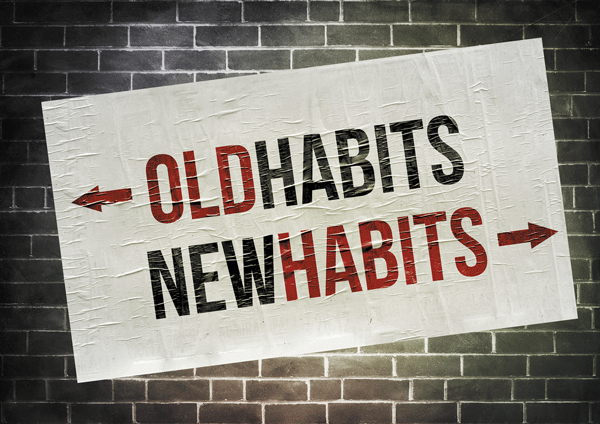
Trade bad habits for good ones
Understanding the three Rs —reminder, routine, and reward—can help you create healthful habits.
Image: gguy44/ThinkStock
Everyone has bad habits they want to break, but instead of scorning yourself for being helpless to break them, use the fundamentals of forming habits to your advantage.
Habits, good or bad, follow a typical three-step pattern. One way to describe this is as three Rs: reminder, routine, and reward. By breaking down the cycle of a bad habit, you can identify what triggers the routine and begin to address what really needs to change. This way you can establish a pattern for new and healthier habits.
Study links busy schedules to better cognitive function
Older adults who stay busy scored higher on cognitive function scores compared with more idle people. The greatest effect is with episodic memory, which is the memory of past events like times and places.

Is it too late to get a flu shot?
The best time to get an annual flu shot is in mid-October. However, it’s not too late to get the shot in December, since people are still at risk of getting flu for several more months.

Is your antidepressant making life a little too blah?
Some drugs go too far, dulling emotions across the spectrum. A dose adjustment or a switch to a different medication can help.
Image: Wavebreakmedia/Thinkstock
When your doctor prescribes a medication for depression, the goal is to reduce painful feelings of sadness or hopelessness. The majority of people taking the most commonly prescribed antidepressants—selective serotonin reuptake inhibitors (SSRIs)—improve substantially. But sometimes, SSRIs go beyond improving mood and make a person feel too little emotion. "Some people feel like they've lost the richness of daily life," says Dr. Michael Craig Miller, assistant professor of psychiatry at Harvard Medical School.
Serotonin and SSRIs
Too effective?
Scaling back the intensity of moods is often the goal. "It's a huge relief if you're very irritable, easily upset, or feeling overly burdened by stress," says Dr. Miller.
But for some people, the reduction in intensity can be experienced as a "blunting" or "dulling" of their emotions. "You might not cry at a movie's happy ending or laugh with the same gusto. Or you might feel apathetic and not get the same kick out of doing things you enjoy, like playing golf or painting," Dr. Miller explains.
Sometimes the blunting affects sexual response. "Some people will say they're not having the same sexual pleasure," says Dr. Miller.
What you should do

Ask the doctor: Checking for blocked arteries in heart failure?
When a person develops heart failure without a good explanation for the underlying cause, a heart catheterization to check for blockages in the coronary arteries may be appropriate.
Oat vs. dairy milk: Nutrition, benefits, and downsides
Microplastics: A hidden health threat?
Healing after food poisoning
What is tempeh? Benefits, nutrition, and how to use it
Light exposure at night may raise risk for heart disease
Whole grains may improve several heart risk factors at once
A lumbar belt may help ease low back pain
Children of centenarians may stay healthier and live longer too, study finds
Signs of pneumonia: Sometimes vague and unexpected
The surprising link between ovarian cancer and the fallopian tubes
Free Healthbeat Signup
Get the latest in health news delivered to your inbox!
Sign Up
