










Artificial sweeteners may speed declines in memory and thinking
News briefs
- Reviewed by Robert H. Shmerling, MD, Senior Faculty Editor, Harvard Health Publishing; Editorial Advisory Board Member, Harvard Health Publishing
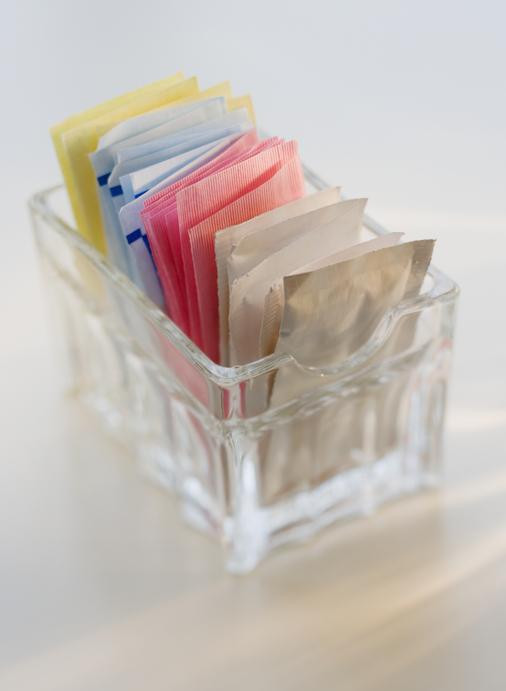 Consuming greater amounts of artificial sweeteners may be linked to faster declines in memory and thinking skills, according to a study published Oct. 7, 2025, in the journal Neurology.
Researchers tracked 12,772 people (average age 52, 55% women) over about eight years, estimating their consumption of seven artificial sweeteners (aspartame, saccharin, acesulfame, erythritol, sorbitol, xylitol, and tagatose) from food frequency questionnaires completed at the study's start. Participants also underwent cognitive tests at the start, middle, and end of the study to track memory, language, and thinking skills.
Participants under age 60 who consumed the largest total amounts of artificial sweeteners showed 62% faster declines in thinking and memory skills compared to those who consumed the lowest amounts. The effect was equivalent to about a year and a half of extra brain aging, researchers said.
Notably, no link between artificial sweetener consumption and cognitive decline was found in people older than 60 - a result Dr. Andrew Budson, a lecturer in neurology at Harvard Medical School, described as "curious." The study's results likely reflect how hard it is to detect small effects in older adults - whose rates of memory change vary widely - rather than evidence that sweeteners are harmless after 60, he says.
Image: © Tetra Images/Getty Images
About the Author

Maureen Salamon, Executive Editor, Harvard Women's Health Watch
About the Reviewer

Robert H. Shmerling, MD, Senior Faculty Editor, Harvard Health Publishing; Editorial Advisory Board Member, Harvard Health Publishing
Disclaimer:
As a service to our readers, Harvard Health Publishing provides access to our library of archived content. Please note the date of last review or update on all articles.
No content on this site, regardless of date, should ever be used as a substitute for direct medical advice from your doctor or other qualified clinician.


