








Prostate cancer screening keeps getting better
Scientific advances offer more options to help you make the best decision for your needs.
- Reviewed by Howard E. LeWine, MD, Chief Medical Editor, Harvard Health Publishing; Editorial Advisory Board Member, Harvard Health Publishing

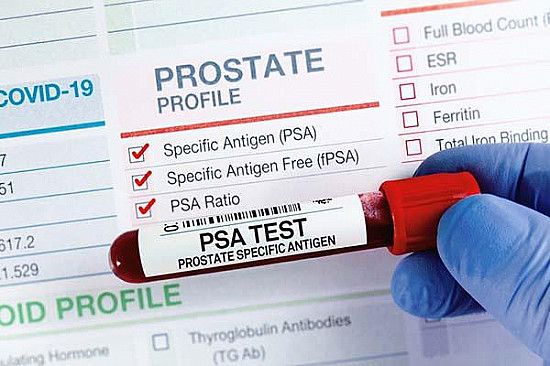
For many years, men have received mixed messages about the value of prostate cancer screening. The primary screening tool has been a blood test that measures prostate-specific antigen (PSA), a chemical naturally produced by the prostate gland. But with advances beyond PSA blood testing, men and their doctors now have additional - and better - information to guide diagnosis and potential treatment.
The role of PSA
Prostate cancer screening began in the 1990s, when the PSA test became the main screening tool for prostate cancer (in combination with a digital rectal exam to check the prostate gland for abnormalities). Interpreting PSA test results has been complicated ever since.
A PSA level of less than 4 nanograms per milliliter (ng/mL) means a man is unlikely to have cancer (although it's still possible it can exist). A PSA of 10 ng/mL or higher is more worrisome, and a very high PSA almost always indicates prostate cancer.
But many men fall into the range of 4 to 9.9 ng/mL, where the elevated PSA levels are often due to common conditions such as an enlarged prostate (benign prostate hypertrophy, or BPH) or prostatitis (inflammation of the prostate). And even if a midlevel PSA is due to prostate cancer, the disease is most likely to be low-grade (slow growing and at low risk of spread) and is unlikely to affect a man's quality of life or longevity.
More worrisome than a single, slightly elevated PSA reading is a fast-rising PSA that might indicate a higher-grade cancer that needs prompt attention. For example, a man might have a PSA of 3 ng/mL (generally considered safe) and have it repeated in six to 12 months. If there's little or no change on the repeat test, regular periodic monitoring will likely be recommended. But a rise to 3.8 ng/mL or higher warrants more thought and possibly additional testing.
Previous standards
In the past, having a high PSA or a fast-rising PSA, even at lower levels, often meant a choice of getting a prostate biopsy (an invasive sampling of prostate tissue that can lead to side effects such as pain, bleeding, infection, or even unnecessary follow-up treatment) or continuing to repeat PSA blood tests, with or without a digital rectal exam.
Doctors might also have used two modifications of PSA testing to help guide this binary decision:
- Free PSA. PSA circulates in the blood in two forms - bound to other proteins or unbound (also called "free"). A regular PSA test measures both bound and unbound PSA (total PSA). A free PSA test measures only unbound PSA. A lower percentage of free PSA (less than 25%) indicates a higher risk of cancer, and a very low PSA percentage (less than 10%) suggests a more advanced and faster-growing prostate cancer.
- PSA density. PSA density is the total PSA level (ng/mL) divided by the prostate gland volume (mL). A PSA density of 0.15 ng/mL or higher may be associated with prostate cancer.
The evolving story of screening
Prostate cancer screening has undergone significant transformation in the past decade. It is now a multistep process. "Gone are the days of getting a PSA reading that is above normal and getting whisked off for a biopsy," says Dr. Marc B. Garnick, an oncologist and editor in chief of the Special Health Report Harvard Medical School Guide to Prostate Diseases.
Advances in how PSA testing is used, the addition of technology, and new screening methods have made diagnosing prostate cancer more precise than ever. "We are now much better at finding low-grade cancer that can be monitored and more aggressive cancer that needs treatment," says Dr. Garnick.
Advances in prostate cancer screening
A number of scientific advances have helped revolutionize prostate cancer screening. Perhaps the biggest is the use of magnetic resonance imaging (MRI). A confirmed abnormal PSA test now is often followed by an MRI scan, which can identify areas of the prostate gland that look suspicious for cancer.
Men with abnormal PSA and a negative MRI scan can avoid a biopsy and continue monitoring their PSA with follow-up tests. If the MRI results are positive, a biopsy is usually needed. But here MRI can also play a vital role by helping doctors perform a targeted biopsy that focuses on areas where the scan showed evidence of cancer.
Another advancement to determine if a biopsy is needed is the use of special urine tests in conjunction with MRI. The urine tests look for biological markers of cancer. One test measures levels of a protein, PCA3, that prostate cells produce; when prostate cells become cancerous, PCA3 increases. Another test looks for elevated levels of two biomarkers - HOXC6 and DLX1 mRNA - that are associated with prostate cancer that is more likely to spread. Very low levels in the urine suggest less aggressive cancer.
These advances don't necessarily simplify the hunt for prostate cancer. But they do give men and their doctors a more accurate and appropriate diagnostic and therapeutic approach than ever.
What changed this doctor's mind"Until recently, I chose not to get PSA testing for myself to screen for prostate cancer," says Dr. Howard LeWine, assistant professor of medicine at Harvard Medical School and chief medical editor of Harvard Health Publishing. According to Dr. LeWine, two advancements changed his mind, and he now gets periodic blood tests for PSA:
|
Image: © atakan/Getty Images
About the Author

Matthew Solan, Former Executive Editor, Harvard Men's Health Watch
About the Reviewer

Howard E. LeWine, MD, Chief Medical Editor, Harvard Health Publishing; Editorial Advisory Board Member, Harvard Health Publishing
Disclaimer:
As a service to our readers, Harvard Health Publishing provides access to our library of archived content. Please note the date of last review or update on all articles.
No content on this site, regardless of date, should ever be used as a substitute for direct medical advice from your doctor or other qualified clinician.