









How femtech can empower women at midlife and beyond
From menopause to mood, female-focused technology is offering women new tools to take charge of their health.
- Reviewed by Angelika Fretzen, PhD, MBA, Contributor
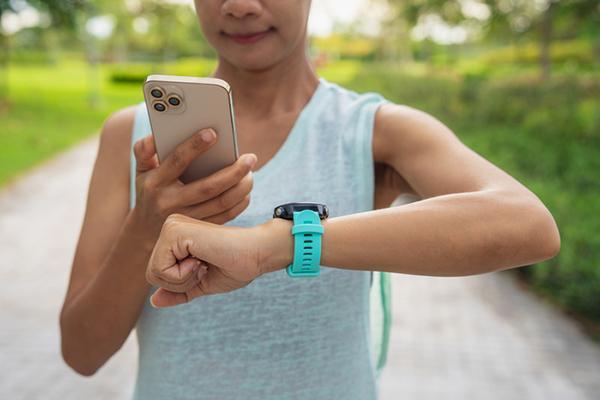
Women's health extends far beyond our reproductive organs - so the technologies designed to support it should reach well beyond our childbearing years.
Such is the sentiment behind the recent expansion of femtech (short for female technology), a sector of digital health that has grown dramatically since its genesis about a decade ago. Encompassing apps, wearable devices, connected medical hardware, and online platforms, femtech once focused mainly on fertility, pregnancy, and period tracking for younger women.
The field has since evolved to meet the needs of women in their 40s, 50s, and beyond, tracking an array of symptoms related to midlife and aging, as well as chronic conditions that strike mostly women such as autoimmune disease and osteoporosis.
Some femtech platforms also offer personalized treatment suggestions or specialized clinicians who can steer women toward faster, more targeted solutions.
"Femtech's essential goal is to better manage diseases and conditions that uniquely or disproportionately affect women, or affect them differently," says Angelika Fretzen, chief operating officer and director of technology translation at the Wyss Institute at Harvard University, a nonprofit organization that shepherds discoveries from the lab into the real world.
"There's a much bigger focus on menopause now than in the beginning," adds Fretzen, who is also the founding director of the Wyss Women's Health Catalyst, which aims to accelerate technological breakthroughs in women's health. "The next step needs to be disease solutions."
Diverse tools
Valued at nearly $40 billion in 2024, the global femtech market is projected to reach $97 billion by 2030. Companies that have already developed femtech are increasingly designing products with older women in mind.
What prompted innovators to widen their lens? Fretzen believes that Gen X women - born between 1964 and 1980 - have been more outspoken about menopause than their mothers and grandmothers, garnering greater attention. "During our parents' time, it was a hidden life transition no one talked about," she says.
Here are some examples of femtech tools now available:
- apps to track menopause-related symptoms such as hot flashes, vaginal dryness, sleep disruptions, urine leakage, libido fluctuations, brain fog, and mood shifts
- wearable devices such as a bracelet that uses thermal sensations from the skin to predict nighttime hot flashes, triggering a connected cooling device in a mattress to help offset sleep disturbances
- wearable pelvic floor trainers designed to improve bladder control or sexual intimacy; they use either vaginal sensors or external devices to measure muscle contractions and link to an app to guide users through targeted pelvic floor exercises
- digital health care platforms that connect with virtual clinics, connecting women to menopause specialists and using telehealth for consultations.
Array of advantages
Femtech tools offer many benefits, Fretzen says. Data-driven insights can propel women to adopt lifestyle changes or seek medical treatment before symptoms worsen.
The convenience factor is also a major advantage. "Especially for women in the middle of the most productive years of their life, if they can access care better and quicker, that's incredibly valuable to them," Fretzen says.
Additionally, femtech empowers women at a time when they might otherwise feel swallowed up by all the changes happening within their bodies.
"A lot of us want to understand more about our health," she says. "If you have tools to track it and understand it, that might help you ask the right questions. Those discussions didn't even happen a few years ago."
Beware when sharing dataIf you're using femtech tools (or you want to), Angelika Fretzen, chief operating officer and director of technology translation at Harvard's Wyss Institute, offers a note of caution: anyone considering uploading personal health data on apps or digital health platforms should first learn how the data might be shared, whether with advertisers, data brokers, or other third parties who can profit off the information. Ways to do this include reading the product or platform's privacy policy or looking for data sale disclosures. "A lot of data are collected in these femtech applications, and before you sign up, you need to understand the terms and how far they want to share those data," Fretzen says. "That's true for any information that is collected." |
Image: © TravelCouples/Getty Images
About the Author

Maureen Salamon, Executive Editor, Harvard Women's Health Watch
About the Reviewer
Angelika Fretzen, PhD, MBA, Contributor
Disclaimer:
As a service to our readers, Harvard Health Publishing provides access to our library of archived content. Please note the date of last review or update on all articles.
No content on this site, regardless of date, should ever be used as a substitute for direct medical advice from your doctor or other qualified clinician.