

Fatty liver disease: Should you be tested?

Even a little exercise linked with lower stroke risk in people with afib

Testosterone therapy without evidence of deficiency may boost heart risk

Weight-loss drug may lower risk of heart attacks and infections

Migraine: How it's diagnosed and what that means

Tricep workouts you can do at home

Mindfulness practices to reduce stress and improve focus

Antihistamines may not offer meaningful relief from eczema symptoms

Overweight and taking blood pressure medications: Study finds it's a trend that's working

FDA approves first mRNA-based flu vaccine
Vitamins, minerals & supplements Archive
Articles


How medications can affect your balance
Medications can be lifesaving by performing critical tasks such as keeping blood sugar at safe levels, hearts thumping rhythmically, and moods afloat. Yet side effects and interactions between drugs (both prescription and nonprescription drugs) may increase your fall risk in numerous ways. Prime examples include blurred vision, dizziness or lightheadedness stemming from low blood pressure, drowsiness, delirium, and impaired alertness or judgment. Some medications may affect the inner ear, spurring temporary or permanent balance disorders.
Often, problems stem from the sheer number of medicines you take, rather than a single drug. According to a national health survey, a third of 45- to 64-year-olds and two-thirds of people 65 and older take three or more prescription drugs over the course of a month. And 16% of 45- to 64-year-olds, as well as 39% of people 65 and over, take five or more drugs. Some gerontologists say they rarely see patients who take fewer than six or seven. Taking many medications at the same time can boost the severity and frequency of side effects among people of any age. Older adults are especially vulnerable, because people's bodies absorb and respond to drugs differently with age.



Food truck fare: Trendy eats, but are they safe?
Pay attention to healthy ingredients, inspection documents, and online reviews.
Image: © valentinrussanov/Getty Images
Food trucks — once the catering staples of construction sites — are no longer just about convenience. These rolling kitchens bring innovative gourmet food to busy streets and crowded parking lots, with diverse menus that attract hordes of hungry customers and discerning foodies.
But as popular as food trucks are — nationally, a billion-dollar industry that defines the landscape in places like Los Angeles; Miami; Austin, Tex.; and Portland, Ore. — they still serve restaurant fare, which is typically loaded with saturated fat, salt, refined carbo-hydrates, sugar, and calories.

Medications we're watching
News briefs
Three newly approved medications are garnering national attention. The first is an oral form of a powerful opioid painkiller that's been available by injection since 1984. Dsuvia is the sublingual (under the tongue) version of sufentanil, and it was approved by the FDA in November 2018. Dsuvia is 1,000 times more potent than morphine. The FDA says it may be helpful for use on the battlefield or in hospitals. Critics worry the drug will wind up on the streets, furthering the country's opioid crisis. Another medication of note is the first prescription drug made from marijuana. The FDA approved cannabidiol (Epidiolex) in June 2018 for the treatment of seizures associated with rare forms of epilepsy. The medication is made from a component of marijuana that does not cause intoxication or euphoria. And finally, baloxavir marboxil (Xofluza), the first new antiviral in 20 years to help fight the flu, received FDA clearance in October 2018. The drug is a one-dose pill that may help shorten the duration of the flu if it's taken within 48 hours of the start of symptoms. One caution: the new antiviral has not yet been tested in older adults, so talk to your doctor if the drug is prescribed and you have concerns.
Image: SheilaFitzgerald/Thinkstock

Choosing oils for cooking: A host of heart-healthy options
Olive oil is just one of many plant-based oils rich in unsaturated fats, the more healthful type of fat.
When you're cooking or baking, choose a fat that's liquid instead of solid at room temperature. That advice, from the federal Dietary Guidelines for Americans, is based on a large body of evidence showing that replacing solid fat (mainly saturated fat) with liquid fat (mostly unsaturated fat) is linked to a lower risk of heart attack and death from heart disease.
To be clear, all fat — whether it comes from seeds, nuts, meat, milk, olives, or avocados — contains a mixture of different fatty acids, the basic building blocks of fats. However, butter, lard, coconut oil, and palm oil contain mostly saturated fatty acids. Most plant-based oils, on the other hand, consist predominantly of unsaturated fatty acids, which include both monounsaturated and polyunsaturated fatty acids (see "The fats of life: Healthy oils").
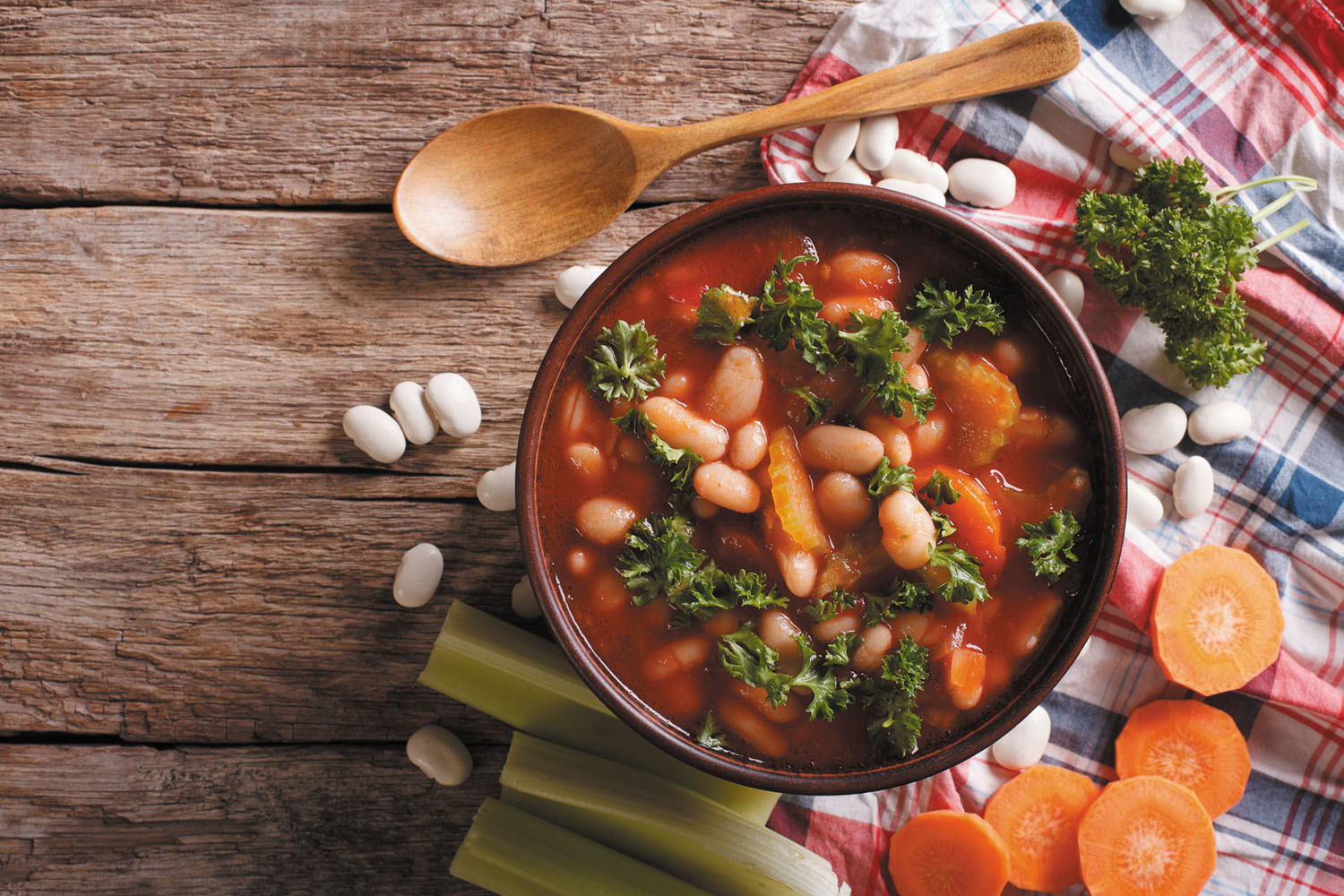
Legume of the month: White beans
Image: © ALLEKO/Getty Images
All beans are rich in fiber, but the top-ranking variety is the navy bean, allegedly named for its popularity in the U.S. Navy in the early 20th century. These pea-sized, cream-colored beans provide 10 grams of fiber per half-cup serving. Most Americans are woefully deficient in dietary fiber, which helps lower harmful LDL cholesterol and is linked to a lower risk of heart disease.
Navy beans are just one of many varieties of white beans, which include cannellini, great northern, and white kidney beans. Cook's Illustrated magazine describes cannellini beans as having a "meaty, lush texture with a buttery, subtle mushroomlike flavor" whereas great northerns are "slightly chalky and mealy, with strong mineral notes." Lima and baby lima beans (also known as butter beans) are also considered white beans.

Less heart-damaging inflammation with a vegan diet?
Research we're watching
Image: © Anna_Shepulova/Getty Images
A vegan diet may help lower heart-damaging inflammation more than the diet recommended by the American Heart Association (AHA), a new study finds.
The study included 100 people with heart disease, which was defined as having at least one narrowed heart artery. Half were randomly selected to follow a vegan diet, which excludes meat, poultry, dairy, eggs, seafood, and fish. The others followed the AHA diet, which encourages lean poultry, fish, and low-fat dairy products, along with plant-based foods. All of the participants received weekly groceries, a cookbook, and sample menus. They also provided 24-hour diet recall records twice a week on random days.

Eating more fruits and vegetables may help men with memory loss
In the journals
Need another reminder to eat your fruits and vegetables? Doing so might lower your risk of memory loss, according to a study published online Nov. 21, 2018, by Neurology. The study looked at almost 28,000 men, average age 51, who filled out questionnaires every four years for 20 years about how many servings of fruits, vegetables, and other foods they ate each day. The participants also took tests of their thinking and memory skills at least four years before the end of the study, when the average age was 73.
The researchers found that men who consumed the most daily servings of vegetables and fruit (six or more servings) were less likely to develop poor thinking skills than the men who consumed the fewest (about two daily servings or less). A serving of fruit was defined as a cup of whole fruit or half a cup of fruit juice. A serving of vegetables was a cup of raw vegetables or two cups of leafy greens.
Fatty liver disease: Should you be tested?
Even a little exercise linked with lower stroke risk in people with afib
Testosterone therapy without evidence of deficiency may boost heart risk
Weight-loss drug may lower risk of heart attacks and infections
Migraine: How it's diagnosed and what that means
Tricep workouts you can do at home
Mindfulness practices to reduce stress and improve focus
Antihistamines may not offer meaningful relief from eczema symptoms
Overweight and taking blood pressure medications: Study finds it's a trend that's working
FDA approves first mRNA-based flu vaccine
Free Healthbeat Signup
Get the latest in health news delivered to your inbox!
Sign Up
