

Healing after food poisoning

What is tempeh? Benefits, nutrition, and how to use it

Light exposure at night may raise risk for heart disease

Whole grains may improve several heart risk factors at once

A lumbar belt may help ease low back pain

Children of centenarians may stay healthier and live longer too, study finds

Signs of pneumonia: Sometimes vague and unexpected

The surprising link between ovarian cancer and the fallopian tubes

Using a vibration plate: What it can — and can't — do for your body

People who walk more or walk faster live longer, study finds
Urinary incontinence Archive
Articles

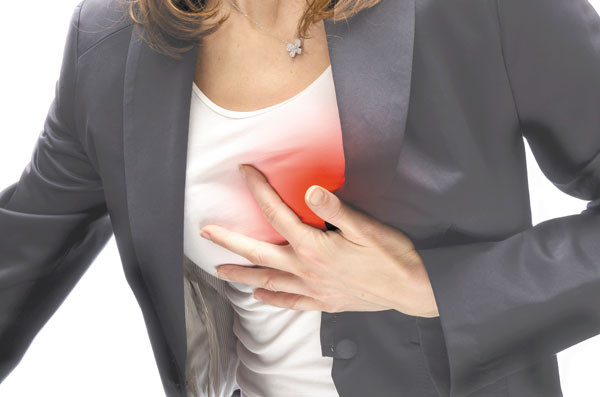
The heart attack gender gap
Heart attacks strike men at younger ages than women. But survival rates are worse in women. Why?
Compared with men, women are less likely to recognize and act upon the symptoms of a heart attack.
Image: zaganDesign/Thinkstock
Imagine someone in the throes of a heart attack. If you picture a man clutching his chest in agony, that's understandable. At younger ages, men face a greater risk of heart disease than women. On average, a first heart attack—the most common manifestation of this prevalent disease—strikes men at age 65. For women, the average age of a first heart attack is 72.

Over 35 and expecting: Is it safer to give birth “early”?
For women having children over age 35, the decision to induce labor is usually based on an increased risk of stillbirth. The duration of labor also factors into the decision, as does the possibility that induction could increase the chance of a cesarean birth, though current medical evidence does not necessarily support this assertion.

Thyroid disease and breast cancer: Is there a link?
Researchers have wondered for a long time whether there might be a link between excess thyroid hormone and an increased risk of breast cancer. High levels of thyroid hormone have been shown to mimic estrogen, which fuels many breast cancers. A new study has suggested that there may indeed be a link — but it’s important to put the results into context.



An obstetrician (who is also a feminist) weighs in on the CDC’s “no birth control, no drinking” recommendation
The CDC recently advised all sexually active women of childbearing age, and who aren’t on birth control, to avoid alcohol completely because of potential harmful effects to an unborn child. The science behind the recommendation is sound, but the way it was delivered has raised quite a few eyebrows. In this piece, Dr. Ricciotti examines where the message fell short and describes how she emphasizes shared decision-making and autonomy when she counsels her patients.

Retired men at work
Retirement is your reward for a long work life, but research suggests that continuing to work in some way may offer a big payday for your health.
Image: Thinkstock
If you are retired, or counting the days, you may want to rethink leaving the workforce behind forever. Recent research has found that seniors who continue to work after age 65 are healthier than retirees.
"For many men, work defines who they are, and they still need to benefit from something meaningful and productive as they age, whether it's in their current job or field or something new," says Dr. William S. Pollack, assistant clinical professor in the Department of Psychiatry at Harvard Medical School. "Work can boost confidence, self-esteem, and happiness, all of which can help men stay active and live longer."

Test may diagnose prostate cancer more accurately
A study in the December 2015 issue of The Lancet Oncology found that a new test, called STHLM3, is more helpful at detecting aggressive cancer than traditional tests for prostate-specific antigen (PSA).
The STHLM3 test is a blood test that analyzes a combination of six protein markers, more than 200 genetic markers, and various clinical data, such as age, family history, and previous prostate biopsies.
Men's hearts age differently from women's
Here is one more way men and women are different: research published online Oct. 20, 2015 in Radiology found that male and female hearts do not age the same way.
For the study, researchers reviewed MRI heart scans performed on almost 3,000 older adults, ages 54 to 94, without existing heart disease. (Scans were given 10 years apart.) The scans showed that in both sexes, the main heart chamber—the left ventricle, which fills with and then forces out blood—gets smaller with time. As a result, less blood enters the heart, and less gets pumped out to the rest of the body.
Healing after food poisoning
What is tempeh? Benefits, nutrition, and how to use it
Light exposure at night may raise risk for heart disease
Whole grains may improve several heart risk factors at once
A lumbar belt may help ease low back pain
Children of centenarians may stay healthier and live longer too, study finds
Signs of pneumonia: Sometimes vague and unexpected
The surprising link between ovarian cancer and the fallopian tubes
Using a vibration plate: What it can — and can't — do for your body
People who walk more or walk faster live longer, study finds
Free Healthbeat Signup
Get the latest in health news delivered to your inbox!
Sign Up
