

Whole grains may improve several heart risk factors at once

Light exposure at night may raise risk for heart disease

Children of centenarians may stay healthier and live longer too, study finds

A lumbar belt may help ease low back pain

Signs of pneumonia: Sometimes vague and unexpected

Using a vibration plate: What it can — and can't — do for your body

The surprising link between ovarian cancer and the fallopian tubes

People who walk more or walk faster live longer, study finds

Rosacea treatments: What works?

For sleep apnea, a dental device may be as effective as CPAP
Stroke Archive
Articles

Ask the doctor: Stroke danger from a hole in the heart?
Q. I just discovered that I have a hole in my heart that my doctor called a patent foramen ovale, which was found during an ultrasound. What are the pros and cons of having it repaired?
A. All people start off with an oval, flap-like opening (called a foramen ovale) between the right and left upper chambers of their hearts. This small hole usually closes during infancy. But in about one in four people, it stays open and is known as a patent foramen ovale (PFO). Most people with the condition have no symptoms and never know they have it unless it's discovered by accident, as happened to you.

Can memory woes foretell a stroke?
Well-educated people who report memory problems may face a higher risk of stroke.
Minor memory slips—such as losing your keys or forgetting an acquaintance's name—are common as we age. However, people who express concern about their memory may have a heightened risk of stroke, particularly if they're highly educated, according to a study in the January 2015 Stroke.

Ask the doctor: Diagnosing restless legs syndrome
Image: Thinkstock |
Q. For many years, I have felt like my legs have to constantly move, and sometimes I feel crawling sensations when I am resting. Do I need to be tested for restless legs syndrome?
A. Your symptoms are consistent with restless legs syndrome (RLS), a common condition marked by uncomfortable sensations in the legs or a need to move them to relieve the discomfort. There is no test to confirm RLS, so it's diagnosed based on symptoms alone.
Common pain relievers add bleeding risk to afib treatment
The abnormal heart rhythms from atrial fibrillation (afib) can form clots that, in turn, trigger strokes. To prevent that, people with afib take a blood-thinning medication to prevent clotting. But also taking common over-the-counter painkillers can block clotting too much and lead to dangerous bleeding, according to a study in Annals of Internal Medicine.
Danish researchers examined health records of more than 150,000 people with afib. A third of them had also been prescribed nonsteroidal anti-inflammatory drugs (NSAIDs), such as ibuprofen (Advil, Motrin) and naproxen (Aleve). These common pain relievers interfere with the body's natural clotting function. Paradoxically, some NSAIDs have also been linked to higher risk of thromboembolism, or a clot that forms in the body and travel to the lungs, brain, or elsewhere.

Short of breath? Here's what you can do
Image: Thinkstock |
Both asthma and chronic obstructive pulmonary disease (COPD) can be managed successfully with the right medications.
Shortness of breath, persistent coughing, and wheezing are well-known symptoms of both asthma and chronic obstructive pulmonary disease (COPD). Yet the two disorders have separate causes. COPD, which includes emphysema and chronic bronchitis, is primarily due to changes in lung tissues brought on by smoking and abetted by aging. Asthma is essentially an allergic reaction that causes muscle spasm and mucus secretions that close the airways.
What you can do for dizzy spells
When you sense the ground spinning under your feet, it could be vertigo. But there may be a simple remedy.
An episode of dizziness is one of the things most likely to drive you to the doctor—and for good reason. The sense that you're literally losing your footing can be terrifying.
Ask the doctor: Tips to reduce neuropathy pain
Q. Is there something to relieve severe neuropathy in someone's feet?
A. You are not alone: neuropathy is a remarkably common problem. Fortunately, there are several treatments that bring relief to most people who suffer with this condition. There are different types of neuropathy (more formally called polyneuropathy). I'll assume you have the most common type, called axonal neuropathy.
Diabetes in midlife may hasten dementia in later life
Image: Thinkstock |
If you have diabetes or prediabetes and you need motivation to get your blood sugar under control, consider this: a study published Dec. 2, 2014, in Annals of Internal Medicine suggests that diabetes in midlife appears to age the mind at a faster rate in later life. Researchers analyzed changes in the thinking skills of more than 15,000 people during a 20-year period. The average age at the start of the study was 57. Twenty years later, among people with a history of diabetes, there was 19% more decline than expected. There were even declines, although smaller, among people with a high blood sugar condition known as prediabetes. "We know that over time, diabetes, like hypertension, will cause mini-strokes in the brain that will impair one's thinking and memory. This study strengthens the claim that addressing cardiovascular risk factors like diabetes early may prevent dementia in the future," says Dr. David Hsu, a psychiatrist in the Center for Alzheimer Research and Treatment at Harvard-affiliated Brigham and Women's Hospital. You can lower your blood sugar—and your risk of diabetes—by exercising, losing weight, and cutting back on refined grains and added sugars.
Fatty liver disease linked to clogged heart arteries
As many as one in four adults has nonalcoholic fatty liver disease (NAFLD), a condition marked by excess fat in the liver. Although often symptomless, it can eventually damage the liver, leading to fatigue, weakness, abdominal pain, and other symptoms. NAFLD tends to occur in people who are overweight or obese, or who have diabetes—problems that are also common in people with heart disease. Now, new research finds a strong link between NAFLD and dangerous plaque inside in the heart's arteries.
The study, in the Nov. 4, 2014, issue of Radiology, included 445 people who were admitted to emergency rooms with suspected heart attacks. Researchers used computed tomography (CT) scans, a type of enhanced x-ray imaging, to assess the participants' livers and coronary arteries. People with NAFLD were six times as likely to have high-risk plaque—the type most likely to cause a heart attack—than those without the liver condition. There are no treatments for NAFLD, but eating a healthy diet, exercising regularly, and losing weight if needed may help prevent or even reverse possible liver damage from the condition.
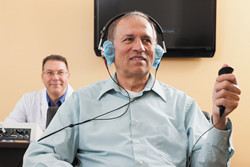
Ringing in the ears: Get it checked
Men with tinnitus should get a comprehensive hearing exam, with education on therapy options. Image: Thinkstock |
Tinnitus can't be cured, but find out about proven treatments for persistent and bothersome sounds.
Whole grains may improve several heart risk factors at once
Light exposure at night may raise risk for heart disease
Children of centenarians may stay healthier and live longer too, study finds
A lumbar belt may help ease low back pain
Signs of pneumonia: Sometimes vague and unexpected
Using a vibration plate: What it can — and can't — do for your body
The surprising link between ovarian cancer and the fallopian tubes
People who walk more or walk faster live longer, study finds
Rosacea treatments: What works?
For sleep apnea, a dental device may be as effective as CPAP
Free Healthbeat Signup
Get the latest in health news delivered to your inbox!
Sign Up
