

Healing after food poisoning

What is tempeh? Benefits, nutrition, and how to use it

Light exposure at night may raise risk for heart disease

Whole grains may improve several heart risk factors at once

A lumbar belt may help ease low back pain

Children of centenarians may stay healthier and live longer too, study finds

Signs of pneumonia: Sometimes vague and unexpected

The surprising link between ovarian cancer and the fallopian tubes

Using a vibration plate: What it can — and can't — do for your body

People who walk more or walk faster live longer, study finds
Stress Archive
Articles

How yoga may enhance heart health
In addition to boosting fitness and easing stress, yoga may also help you embrace a healthier lifestyle.
Many people think of yoga mainly as an activity that promotes flexibility and balance. But this ancient tradition also includes breathing exercises, relaxation, and meditation. Together, these practices can lead to measurable improvements in factors connected with cardiovascular health, such as lower blood pressure, better sleep, and less artery-damaging inflammation.
"There are four distinct but interconnected areas in which yoga has specific benefits, not just for heart disease but any disease," says yoga researcher and neuroscientist Dr. Sat Bir Singh Khalsa, assistant professor of medicine at Harvard Medical School. Following are summaries of the four areas.

The mental side of recovery
Dealing with the emotional effects from a physical setback can be a challenge. These three strategies can help.
The physical repercussions of a major health issue, like surgery, an injury, or a heart attack, are tough enough without having to also confront the stress, anxiety, and depression that often accompanies it. Yet managing your mental health is just as important as your physical health when it comes to making a full recovery.
"There is no question that your state of mind can dictate how quickly you can return from a physical setback," says Dr. Jeff Huffman, director of the cardiac psychiatry research program at Harvard-affiliated Massachusetts General Hospital.
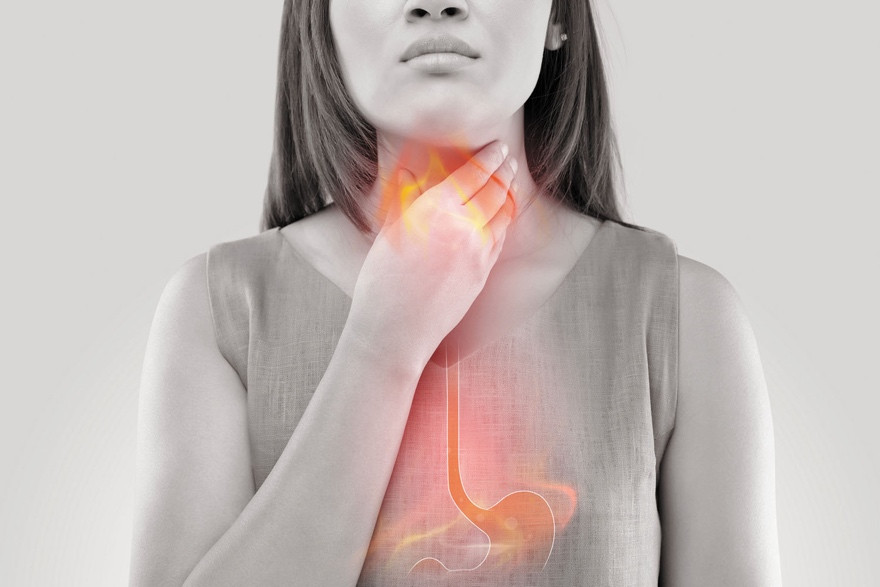
Feeling the burn? Antacids can provide some relief
But these remedies aren't the best choice if you have frequent heartburn.
You feel the familiar sensation in your chest: heartburn. Again, you find yourself reaching for the bottle of antacids in the medicine cabinet. It's something you've done a few times a week for the past six months. Is it okay to keep popping over-the-counter acid reducers, or is it time to see a doctor?
We asked two experts, Dr. Jennifer Nayor and Dr. Molly Linn Perencevich, both instructors in medicine at Harvard Medical School, for their thoughts on heartburn, including when it's okay to use over-the-counter antacids and when you should seek other treatments. Below are their responses.



Spring cleaning: Why more people are uncluttering the mind for better health
The benefits of meditation go beyond stress reduction.
Image: © FatCamera/Getty Images
Most of us sense instinctively that clutter is unhealthy. Sure, we may joke about a disorganized desk or a teenager's messy room, but we feel that a clean, organized space is a healthier, more soothing environment. What about a cluttered mind — a mind constantly presented with different simultaneous challenges and distractions? Is that unhealthy, and is there a fix?
Uncluttering — or, as is usually said, "emptying" — your mind through meditation has a host of health-related benefits, and maybe that's why more people are taking up the practice. Data from a national survey conducted by the CDC's National Center for Health Statistics, published online by the CDC in November 2018, found that 14% of American adults reported meditating in 2017, compared with just 4% in 2012.

Lessons about brain health from a landmark heart study
At 70 years and counting, the Framingham Heart Study continues to help doctors better understand stroke, dementia, and heart disease.
Image: © BHPix/Getty Images
In 1948, more than 5,200 people living in a town just west of Boston volunteered for what has evolved into the longest running and best-known study of the causes of heart disease. But the multigenerational Framingham Heart Study has also revealed important clues about brain disorders — most notably stroke but also cognitive decline and dementia (see "Framingham's brain health findings").
In the early 1960s, Framingham researchers coined the term "risk factor," which refers to a characteristic or exposure that raises a person's odds of developing a disease. Over the following decades, they uncovered many such factors for heart disease, including cigarette smoking, obesity, lack of physical activity, and high blood pressure. These habits and conditions also turned out to predispose people to stroke and dementia, thereby establishing that what harms the heart is also bad for the brain.

More trees, fewer heart risks?
Research we're watching
Living in a leafy, green neighborhood may lead to lower levels of some telltale markers for heart disease and stroke, new research suggests.
During the five-year study, researchers collected blood and urine samples from 408 people recruited from a cardiology clinic in Louisville, Ky. The researchers also estimated green space exposure using satellite imagery that showed the vegetation density in each of the participants' neighborhoods.

A noisy problem
People often become more sensitive to noise as they age, which can affect their mental and physical health.
Image: © Juanmonino/Getty Images
Are you more sensitive to noises than you used to be? Do certain sounds now feel too loud and jarring? Don't worry; it's actually quite normal.
Age-related hearing loss is common among older adults and affects about two-thirds of men in their 70s and 85% of men ages 80 and older. Although it's not clear why, this can also make people hypersensitive to sounds that they used to tolerate easily, which in turn can affect their well-being.

Eating more fruits and vegetables may help men with memory loss
In the journals
Need another reminder to eat your fruits and vegetables? Doing so might lower your risk of memory loss, according to a study published online Nov. 21, 2018, by Neurology. The study looked at almost 28,000 men, average age 51, who filled out questionnaires every four years for 20 years about how many servings of fruits, vegetables, and other foods they ate each day. The participants also took tests of their thinking and memory skills at least four years before the end of the study, when the average age was 73.
The researchers found that men who consumed the most daily servings of vegetables and fruit (six or more servings) were less likely to develop poor thinking skills than the men who consumed the fewest (about two daily servings or less). A serving of fruit was defined as a cup of whole fruit or half a cup of fruit juice. A serving of vegetables was a cup of raw vegetables or two cups of leafy greens.
Healing after food poisoning
What is tempeh? Benefits, nutrition, and how to use it
Light exposure at night may raise risk for heart disease
Whole grains may improve several heart risk factors at once
A lumbar belt may help ease low back pain
Children of centenarians may stay healthier and live longer too, study finds
Signs of pneumonia: Sometimes vague and unexpected
The surprising link between ovarian cancer and the fallopian tubes
Using a vibration plate: What it can — and can't — do for your body
People who walk more or walk faster live longer, study finds
Free Healthbeat Signup
Get the latest in health news delivered to your inbox!
Sign Up
