

Healing after food poisoning

What is tempeh? Benefits, nutrition, and how to use it

Light exposure at night may raise risk for heart disease

Whole grains may improve several heart risk factors at once

A lumbar belt may help ease low back pain

Children of centenarians may stay healthier and live longer too, study finds

Signs of pneumonia: Sometimes vague and unexpected

The surprising link between ovarian cancer and the fallopian tubes

Using a vibration plate: What it can — and can't — do for your body

People who walk more or walk faster live longer, study finds
Prostate Cancer Archive
Articles

Can diet help fight prostate cancer?
Can adopting a healthier diet help fight prostate cancer? That's a question men newly diagnosed with prostate cancer often ask their doctors.
Several studies have shown that in countries where men eat a typical "Western" diet containing a large amount of meat, the incidence of prostate cancer, especially aggressive prostate cancer, is higher than in countries where plant-based foods are a primary part of the diet. Unfortunately, these studies weren't designed to prove cause and effect. So for now, definitive answers about prostate cancer and diet aren't yet in — although researchers are actively studying this topic.

Can I take ED drugs after a heart attack?
On call
Q. I had a major heart attack earlier this year and received a drug-eluting stent. My doctor tells me that it's now safe to exercise and engage in sexual activity. But is it safe to use erectile dysfunction (ED) medications?
A. Most men who have recovered from a heart attack can resume their usual sex life. Once your doctor allows you to engage in moderate aerobic activity — sexual activity is often equated to the exercise level of brisk walking — you may safely use ED medications with certain precautions.

New ways to test for prostate cancer
Recent advances can help men with a worrisome PSA result avoid immediate biopsy.
Prostate-specific antigen (PSA) blood testing receives high marks as an effective way to monitor disease activity in men diagnosed with prostate cancer. Yet, as a screening tool for prostate cancer, PSA testing is problematic.
PSA naturally tends to increase as men get older, but levels that get too high may suggest prostate cancer. A PSA level of less than 4 nanograms per milliliter (ng/mL) is often reassuring, unless there has been a sudden jump from a much lower number. Many doctors consider a total PSA level higher than 10 ng/mL as the threshold for getting a biopsy to check for cancer.

Improving PET scans are good news for doctors and patients alike
A recent blog post discussed a newly approved imaging agent with an unwieldy name: gallium-68 PMA-11. Delivered in small amounts by injection, this minimally radioactive tracer sticks to prostate cancer cells, which subsequently glow and reveal themselves on a positron emission tomography (PET) scan. Offered to men with rising PSA levels after initial prostate cancer […]

Focusing on your future
Make your remaining years the best possible with these strategies.
There's a saying: "The trouble is, you think you have the time." People may understand their lives are limited, but they often don't internalize how much time they actually have left. This mindset can delay goal setting and long-term preparation, which increases the chances of later problems — for instance, with finances, housing, or health.
"People don't like to talk about their mortality because they don't want to see themselves as 'old,'" says Joan Gillis, a geriatric clinical social worker and senior clinical team manager with Harvard-affiliated McLean Hospital. "But embracing this reality can help people grasp a sense of urgency, so they get the most from their remaining years."


Can gout be prevented?
Gout, a debilitating form of arthritis, is on the rise compared with rates in prior decades. Obesity is probably a significant factor in this increase. Now, a new study suggests that three-quarters of gout cases in men might be completely avoidable by following certain protective health habits.

Hormonal therapies for advanced prostate cancer linked to a higher risk of falls and fractures
Falls rank among the top causes of death and injuries among the elderly, and the risk increases significantly in older people being treated for cancer. Now, investigators are reporting that a newer class of drugs for advanced prostate cancer is associated with a significant increase in fall risk. Called androgen receptor inhibitors, or ARIs, these […]

Predicting low-risk prostate cancer
New calculators can estimate the chance your cancer might — or might not — become more aggressive.
Active surveillance is a popular option for men with low-risk prostate cancer, defined as a tumor that is confined to the prostate gland and unlikely to grow or spread. It involves monitoring prostate-specific antigen (PSA) levels in the blood for changes and having regular digital rectal exams to look for abnormal areas on your prostate.
During active surveillance, you have a PSA test and a digital rectal exam every six months and prostate biopsies approximately every other year. If your PSA level rises, your doctor will likely recommend a prostate MRI or an immediate prostate biopsy to see if the cancer has become more aggressive. If so, you and your doctor can decide whether to continue with active surveillance and have another biopsy six months or a year later, or move ahead to treatment, such as radiation, hormonal therapy, or surgery.
Radiation after prostate cancer surgery may not be necessary
In the journals
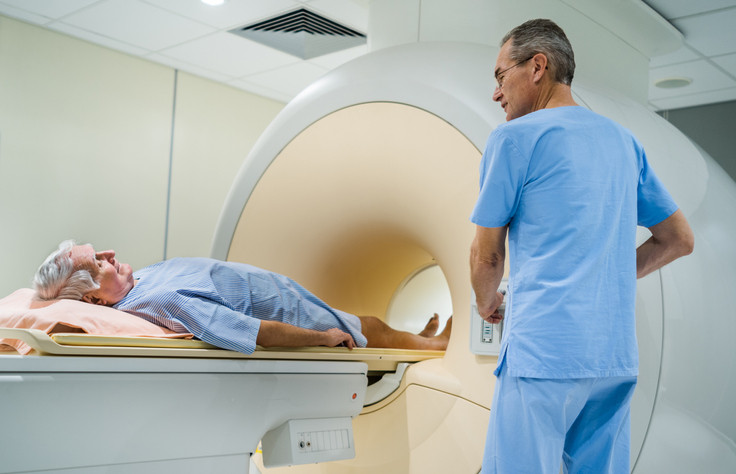
Many men with prostate cancer who have a radical prostatectomy (prostate removal) receive radiation therapy afterward to wipe out any residual cancer cells. Alternatively, men can choose to delay radiotherapy and be monitored for evidence of prostate cancer activity, such as a rising blood level of prostate-specific antigen (PSA). If PSA testing or an imaging test like an MRI shows cancer, these men can then consider radiation therapy.
According to the findings of an analysis published online Sept. 28, 2020, by The Lancet, there is no clear benefit of immediate radiation over monitoring with later radiation therapy as necessary. Since some men will never need radiotherapy, this means that by forgoing immediate treatment, they can avoid potential side effects like incontinence and bowel problems.
Healing after food poisoning
What is tempeh? Benefits, nutrition, and how to use it
Light exposure at night may raise risk for heart disease
Whole grains may improve several heart risk factors at once
A lumbar belt may help ease low back pain
Children of centenarians may stay healthier and live longer too, study finds
Signs of pneumonia: Sometimes vague and unexpected
The surprising link between ovarian cancer and the fallopian tubes
Using a vibration plate: What it can — and can't — do for your body
People who walk more or walk faster live longer, study finds
Free Healthbeat Signup
Get the latest in health news delivered to your inbox!
Sign Up
