

Fast-walking "super-movers" may have sharper brains as they age

Healthy breakfast ideas to support energy and metabolism

Greek yogurt: Health benefits, protein content, and how to choose the best option

Harvard study: Early sweet-drink habits tied to high blood pressure later in life

How to save money on medication

The 5 pillars of longevity: Movement, nutrition, sleep, stress reduction, and social connection

Newly approved pill cuts LDL cholesterol levels by more than half

C-reactive protein: Should healthy people be tested for it?

PRP injection for knee osteoarthritis: Does it work?

Strength training over decades linked to longer life
Mind & Mood Archive
Articles

Sour mood getting you down? Get back to nature
Research suggests that mood disorders can be lifted by spending more time outdoors.
Image: © Sidekick/Getty Images
Looking for a simple way to help reduce stress, anxiety, and depression, and maybe even improve your memory? Take a walk in the woods.
"Many men are at higher risk for mood disorders as they age, from dealing with sudden life changes like health issues, the loss of loved ones, and even the new world of retirement," says Dr. Jason Strauss, director of geriatric psychiatry at Harvard-affiliated Cambridge Health Alliance. "They may not want to turn to medication or therapy for help, and for many, interacting with nature is one of the best self-improvement tools they can use."

Numb from the news? Understanding why and what to do may help
The daily onslaught of news during the past year has left many people in a steady state of fatigue, resignation, and grief. The symptoms of collective trauma are widespread and familiar, but one merits special attention: numbness, which is one possible response to an overwhelming situation.
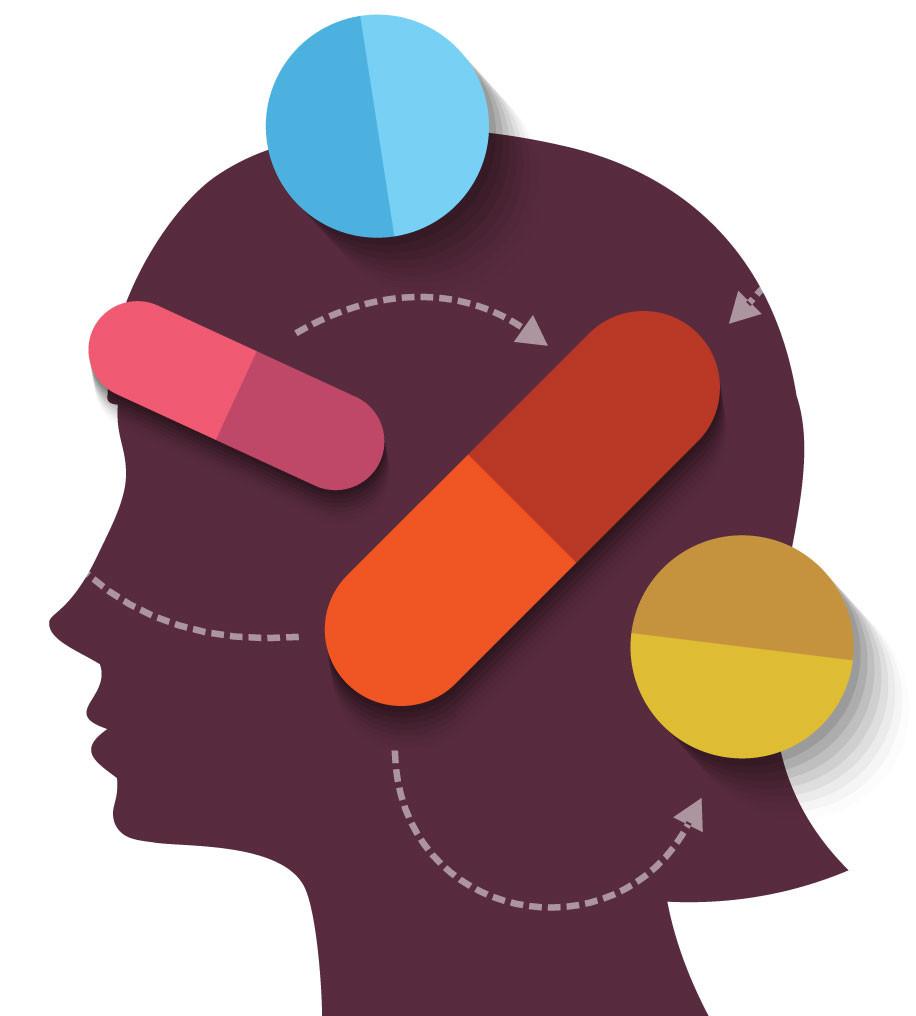
Two types of drugs you may want to avoid for the sake of your brain
Benzodiazepines and drugs with strong anticholinergic effects have been linked to Alzheimer's disease in people who take them. There are alternatives to both types.

Coping with relationship fatigue
Too much time together makes for tense moments. Cutting each other some slack and setting ground rules will help.
There's such a thing as too much togetherness at home, no matter if you're with a romantic partner, an adult child, a grandchild, or a friend. "Because of the pandemic, we're frozen in place with people, but we aren't meant to be in the same space all day long," says Dr. Robert Waldinger, a psychiatrist with Harvard-affiliated Massachusetts General Hospital.
Keeping the peace starts with understanding why you may be getting on each other's nerves. Then you can try following a few rules to get along better.

A flavanol-rich diet may increase brain function
In the journals
Flavanols give fruits and vegetables their bright colors. They are also found in tea and cocoa. Observational studies have shown that eating foods rich in flavanols is linked with less cognitive decline as people age. New research suggests a possible reason why: flavanols appear to improve blood flow to the brain.
Researchers gave cocoa flavanols to 18 healthy adults in two separate trials. In one, the people consumed a cocoa drink with about 681 milligrams (mg) of flavanols. In the other, they had a cocoa drink with about 4 mg of flavanols. About two hours after having the cocoa drink, participants briefly inhaled air with high concentrations of carbon dioxide to raise their blood level above normal. (The brain's normal response to high blood carbon dioxide levels is to increase both blood flow to the brain and its uptake of oxygen.) The researchers then measured the speed of brain oxygenation and administered a set of mental tasks to assess cognitive performance. People had a faster brain oxygenation response after consuming high amounts of flavanols compared with lower amounts. They also scored higher on the cognitive tests and correctly solved problems 11% quicker.

Want to feel more connected? Practice empathy
Empathy helps people get along with others, but the ability to understand another person’s experience comes more easily to some people than to others. However, the capacity for empathy can be honed and improved like any other skill.

How to overcome grief’s health-damaging effects
The deaths of friends and family members become more common as you age. Here is how to endure the grieving process.
Image: © kali9/Getty Images
Most men don't face much personal loss early in their lives. Yet, once they reach a certain age, they will encounter the experience of losing someone important to them — a spouse, a friend, a relative — and the feelings of grief that often follow.
"Grief is a natural response to loss, but it is something that men are not prepared for, and they often struggle to understand how it can affect their lives," says Dr. Eric Bui, associate director for research at the Center for Anxiety and Traumatic Stress Disorders and Complicated Grief Program at Harvard-affiliated Massachusetts General Hospital.

Food and mood: Is there a connection?
Here's what the research says about diet and depression.
Image: © ogichobanov; © Foxys_forest_manufacture/Getty Images
If you've ever found yourself in front of the TV after a bad day, mindlessly digging ice cream out of the container with a spoon, you know that mood and food are sometimes linked. But while stress eating is a verified phenomenon, the relationship between food and actual mood disorders, such as depression, is less clear. Or, to put it another way: can the things you eat influence your risk for depression — and can dietary changes potentially improve your mental health?
"The research regarding dietary factors and depression is still inconclusive," says Patricia Chocano-Bedoya, a visiting scientist in the Department of Nutrition at the Harvard T.H. Chan School of Public Health. But there have been hints that food may play a role in depression.

Protect your brain from stress
Stress management may reduce health problems linked to stress, which include cognitive problems and a higher risk for Alzheimer's disease and dementia.
Image: © iMrSquid/Getty Images
It's not uncommon to feel disorganized and forgetful when you're under a lot of stress. But over the long term, stress may actually change your brain in ways that affect your memory.
Studies in both animals and people show pretty clearly that stress can affect how the brain functions, says Dr. Kerry Ressler, chief scientific officer at McLean Hospital and professor of psychiatry at Harvard Medical School. Scientists have seen changes in how the brain processes information when people experience either real-life stress or stress manufactured in a research setting. (For the latter, researchers might challenge subjects to perform a difficult task, such as counting backward from the number 1,073 by 13s while being graded.) Either type of stress seems to interfere with cognition, attention, and memory, he says.

Six steps to cognitive health
So how do you keep your brain healthy, stay cognitively fit, and build your cognitive reserve? It's easier for some people than for others. And though genetics set the stage for your brain health, you can do something to improve your brain health and cognitive fitness.
First it is important to remember that you need a healthy body to have a healthy brain. Therefore, ensuring your brain health depends upon regularly seeing your doctor, following her or his recommendations, and managing any health conditions you have.
Fast-walking "super-movers" may have sharper brains as they age
Healthy breakfast ideas to support energy and metabolism
Greek yogurt: Health benefits, protein content, and how to choose the best option
Harvard study: Early sweet-drink habits tied to high blood pressure later in life
How to save money on medication
The 5 pillars of longevity: Movement, nutrition, sleep, stress reduction, and social connection
Newly approved pill cuts LDL cholesterol levels by more than half
C-reactive protein: Should healthy people be tested for it?
PRP injection for knee osteoarthritis: Does it work?
Strength training over decades linked to longer life
Free Healthbeat Signup
Get the latest in health news delivered to your inbox!
Sign Up
